During summer some of the most beautiful Greek islands host international festivals, each with a unique theme that allows visitors to experience local culture, gastronomy and traditions.
Here we have rounded up our favourite festivals on the Greek islands that you should not miss in 2024!
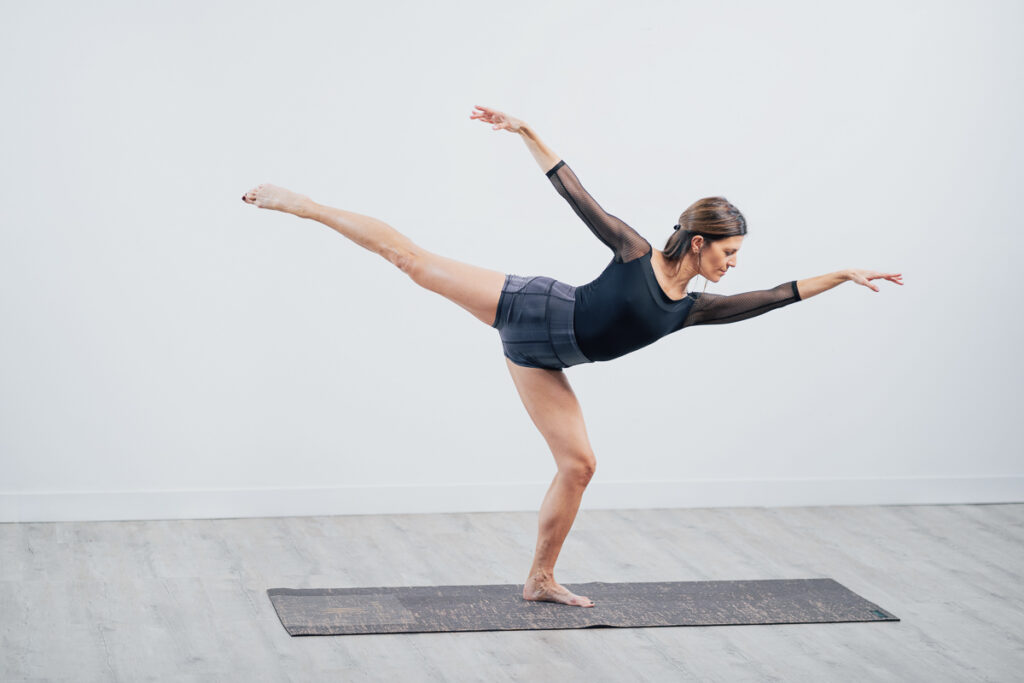
Syros: Akropoditi DanceFest
Akropoditi DanceFest (Syros)
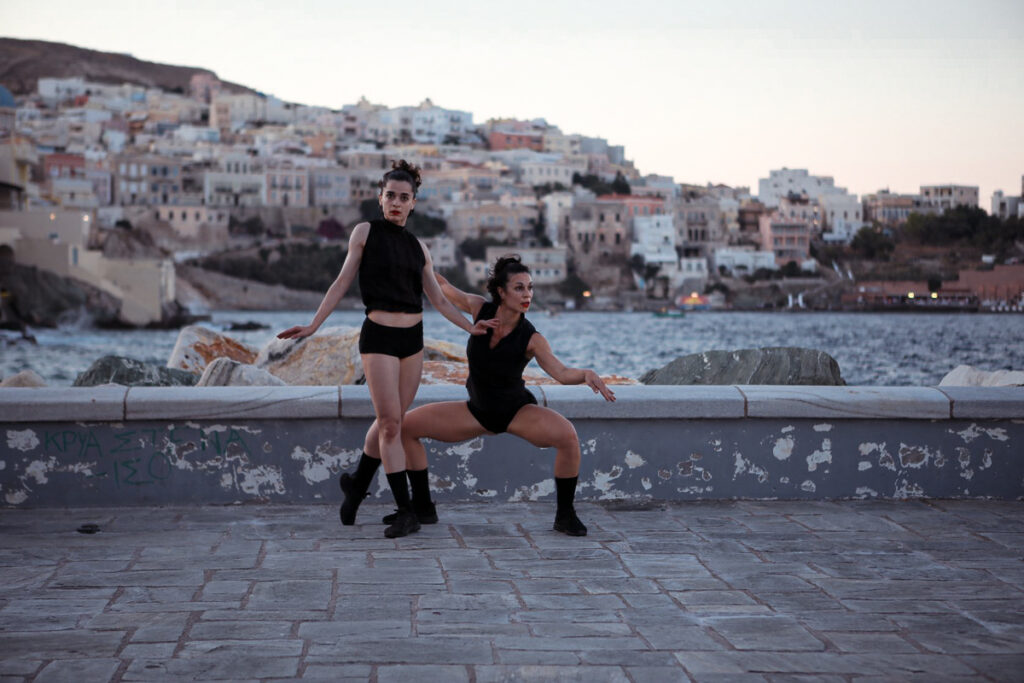
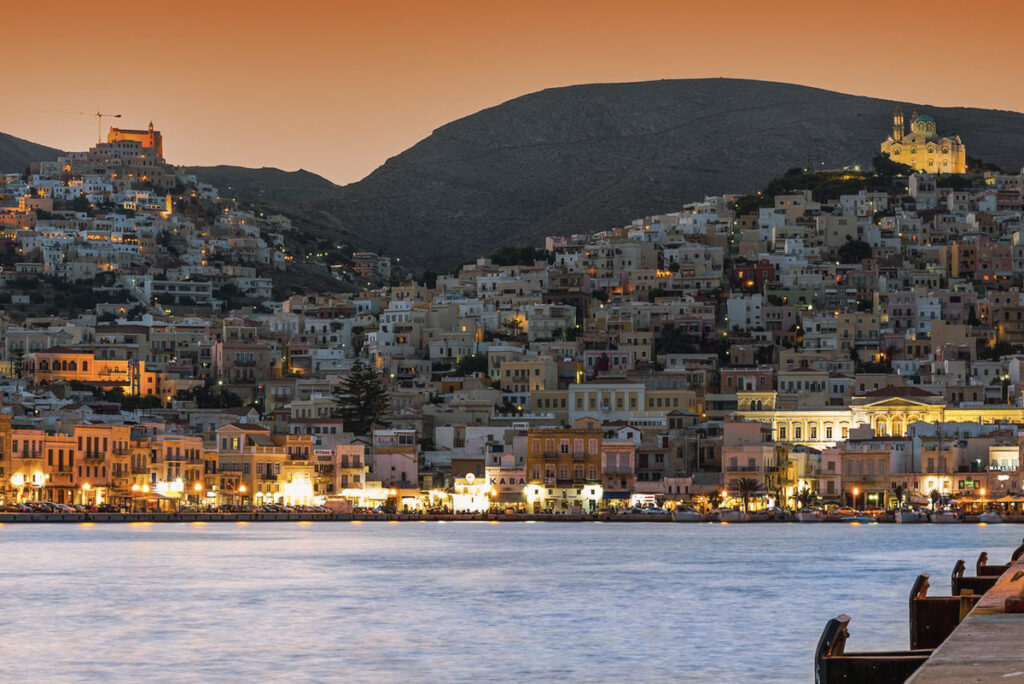
Syros is well known for its huge cultural heritage and the plenty of artistic events taking place across the island. The last 11 it has hosted the popular event- Akropoditi DanceFest. It features masterclasses, performances, and workshops by local and international artists. Its goal is to promote the passion of dance and promise a vibrant for all the visitors.
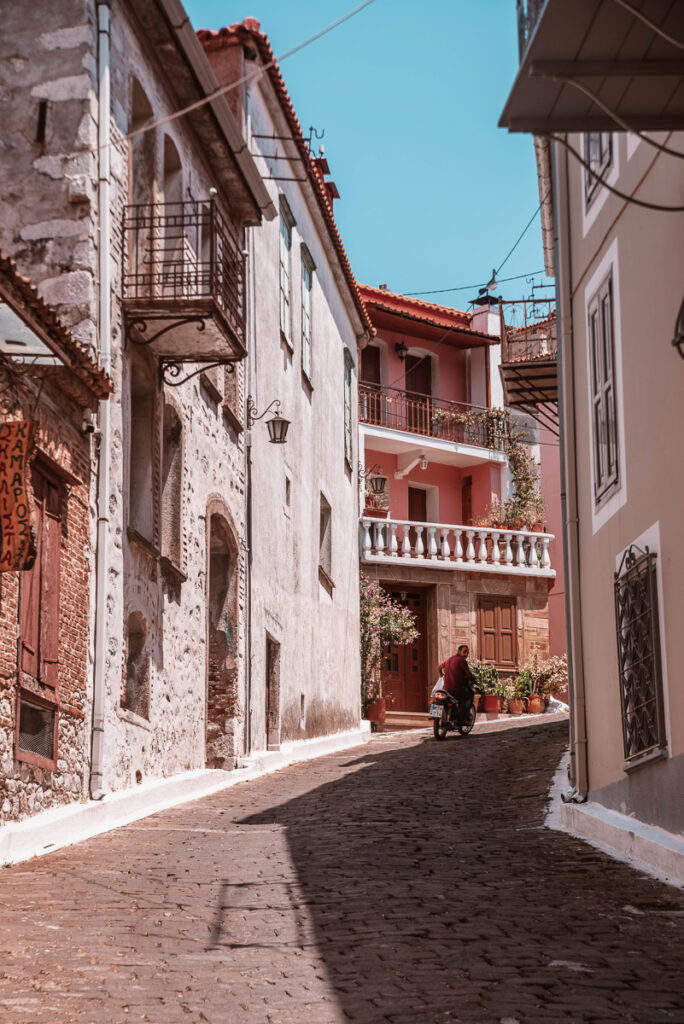
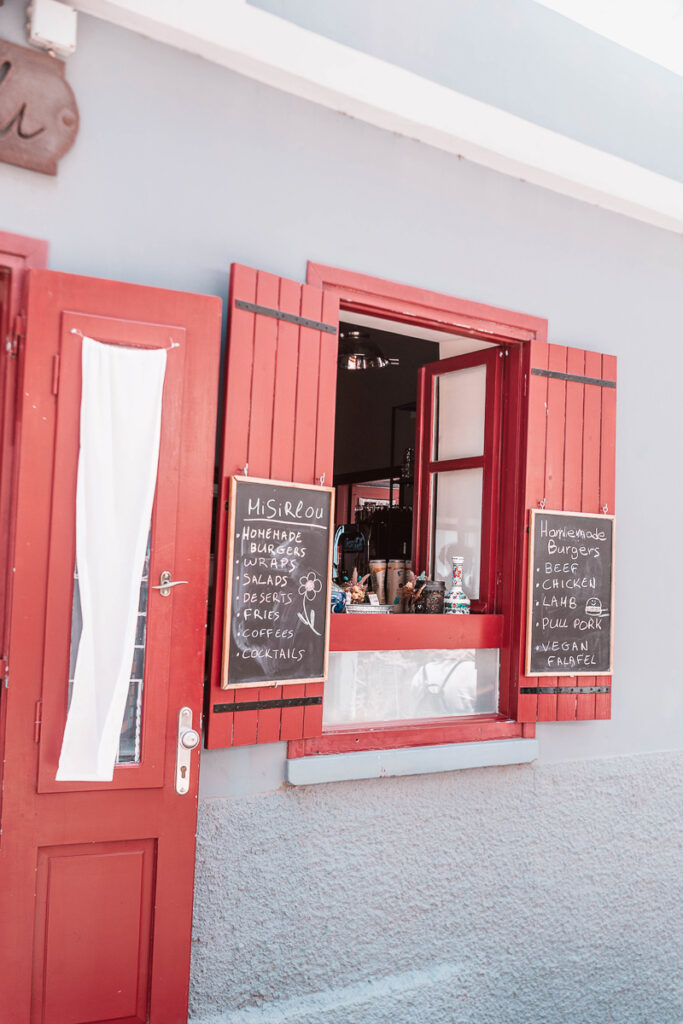
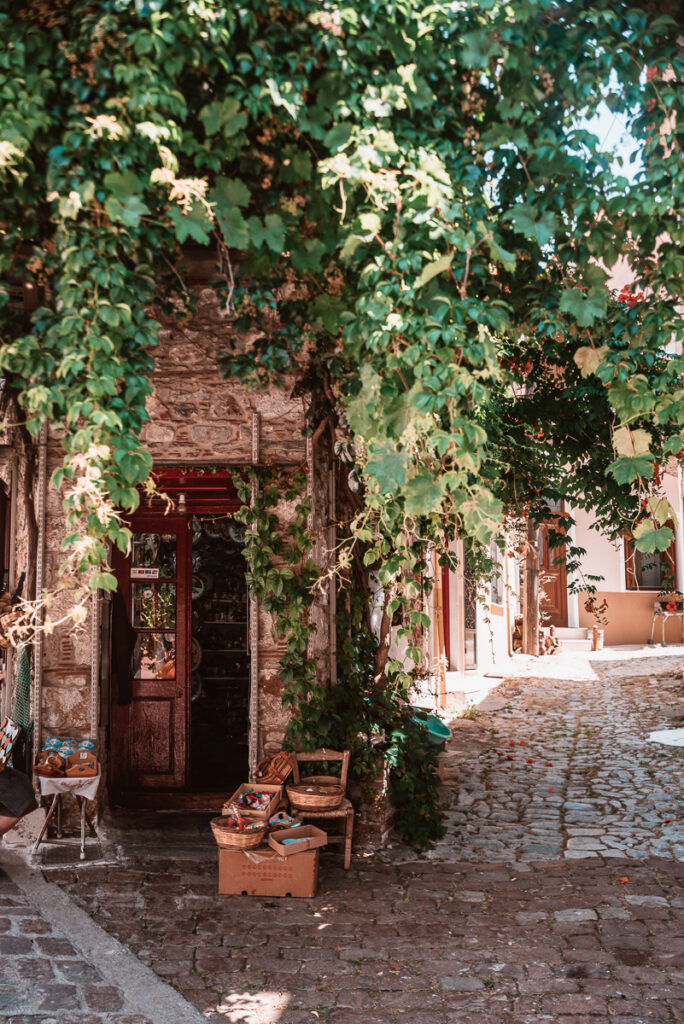
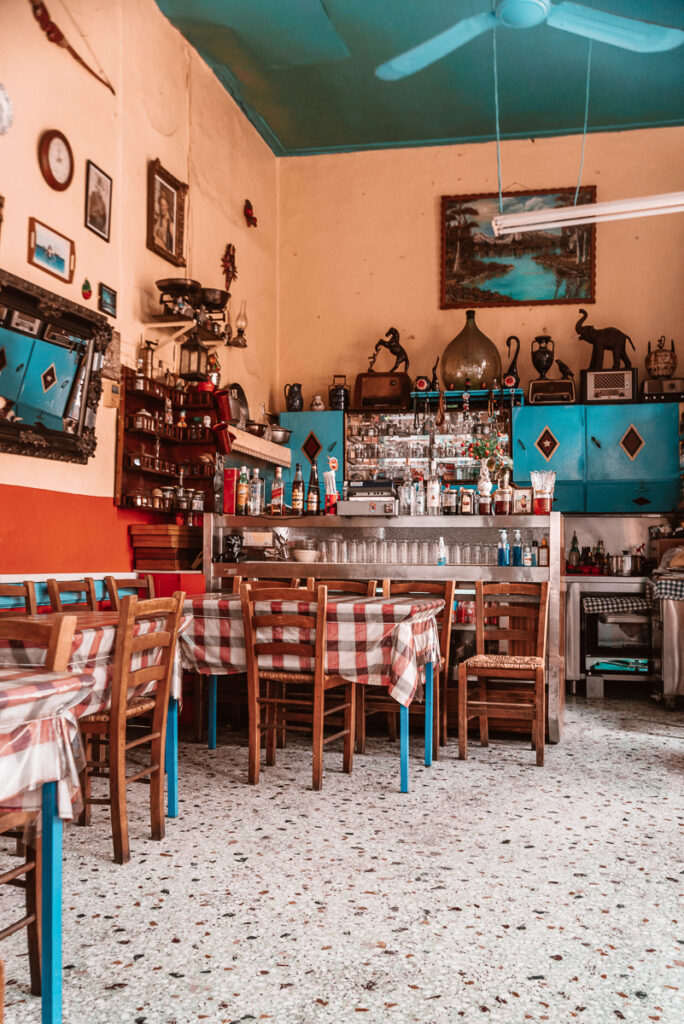
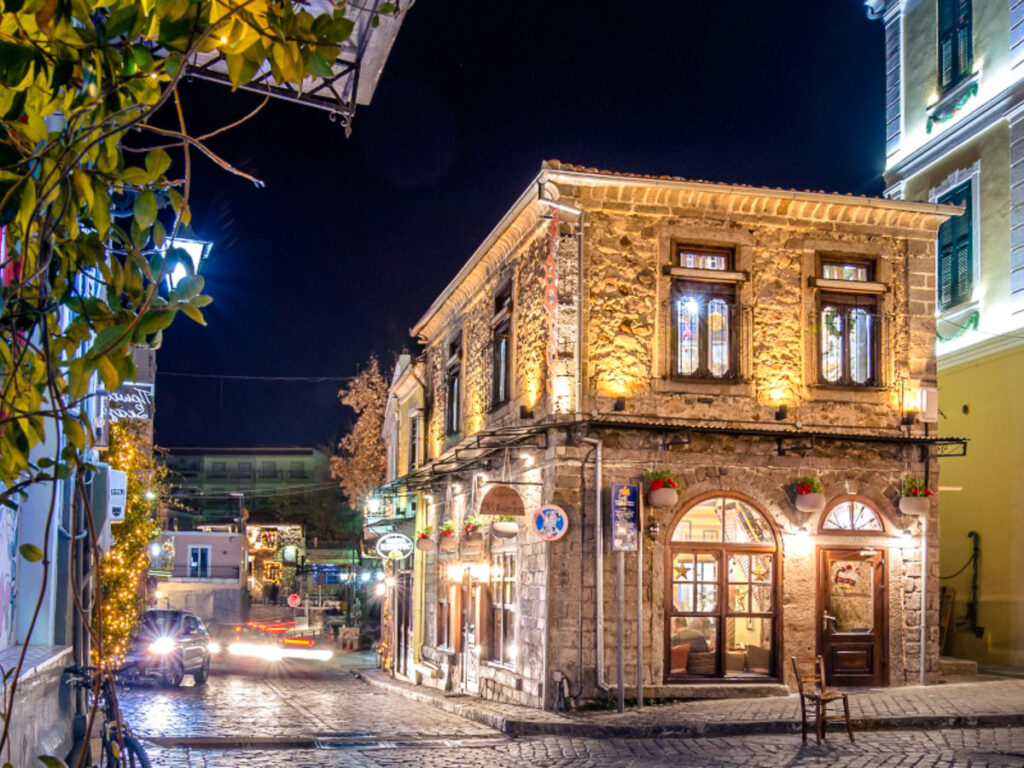
The Molyvos International Music Festival (MIMF) was founded in 2015 by Danae and Kiveli Dörken. It’s a unique project in the northern Aegean that invites the greatest international young music talents for a four-day celebration of classical music. Taking place in the picturesque town of Molyvos on the island of Lesvos, this festival features classical music concerts in historic venues. This year’s edition of the Molyvos International Music Festival has the motto PHILIA – ΦΙΛΙΑ – FRIENDSHIP and marks the 10th edition of this unique celebration.
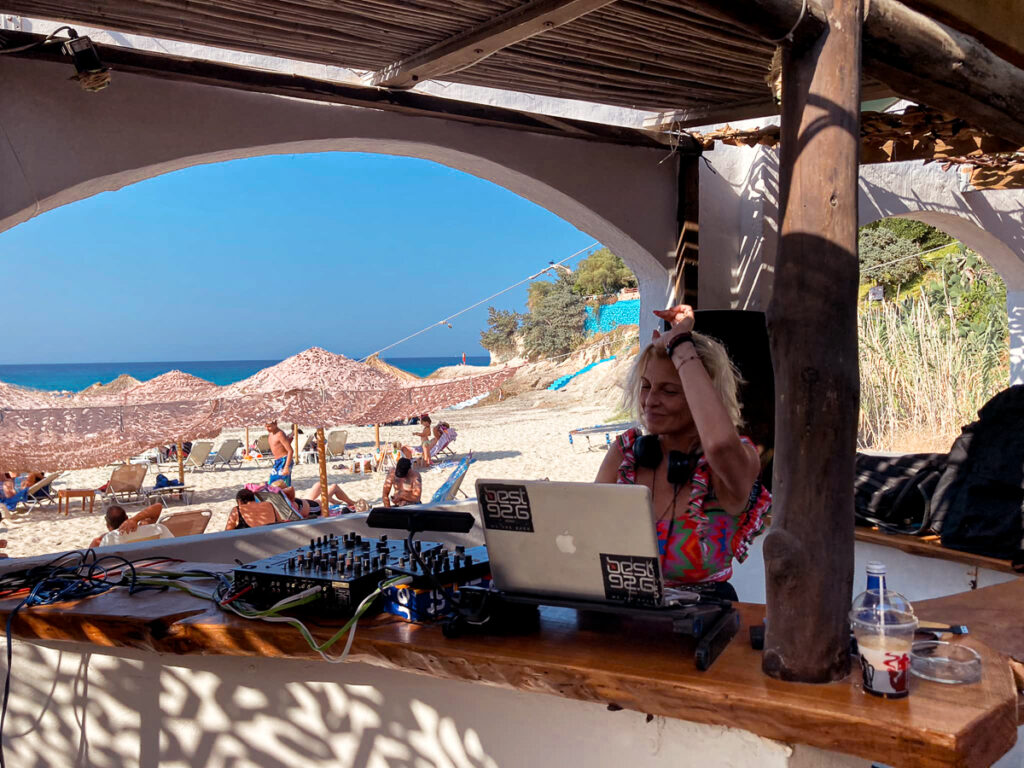
During the month of August, 30 artists will perform in 8 different DJ Booths, across 12 bars in Ikaria and they promise to take guests on a vibrant celebration intertwining rhythm, movement, and melody! Set against ethereal landscapes, various music genres reverberate through the air, igniting a palpable energy that transcends boundaries. The day turns into night on the most vibrant island of all in the Greek seas.
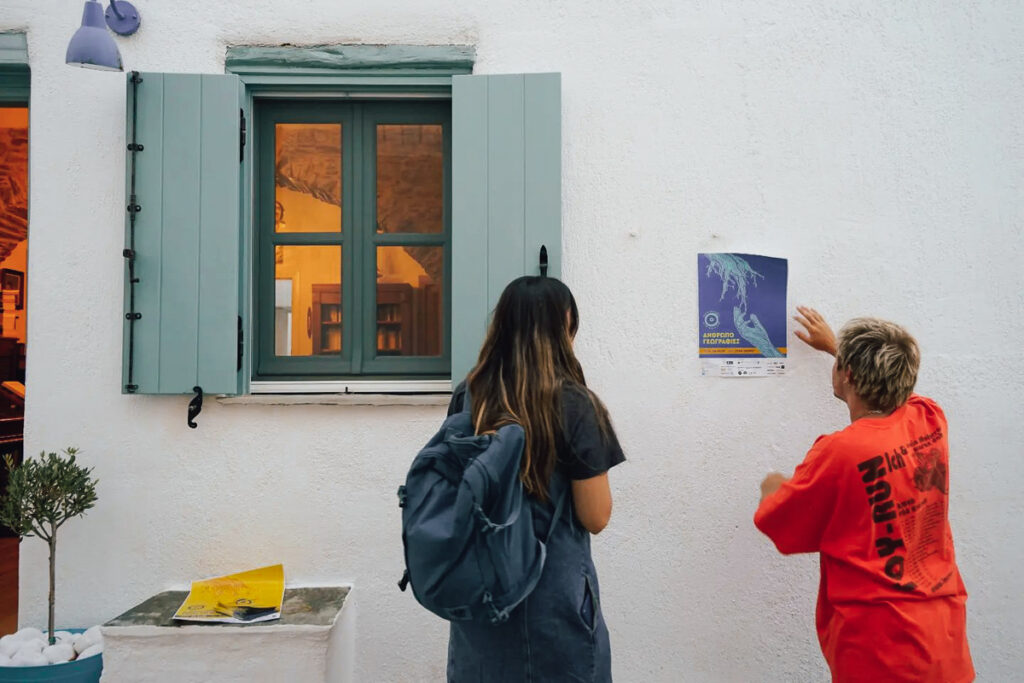
At the end of the summer the picturesque island of Sikinos comes alive with the annual cultural event Little Islands Festival. It is a huge celebration of contemporary art, cinema, and music and features art exhibitions, film screenings, and live music performances in unique, locations and small alleys across the island. The festival also includes workshops and interactive activities, promoting cultural exchange and artistic engagement among participants. By blending innovative artistic expressions with the traditional charm of Sikinos, the festival offers a unique and experience for everyone.
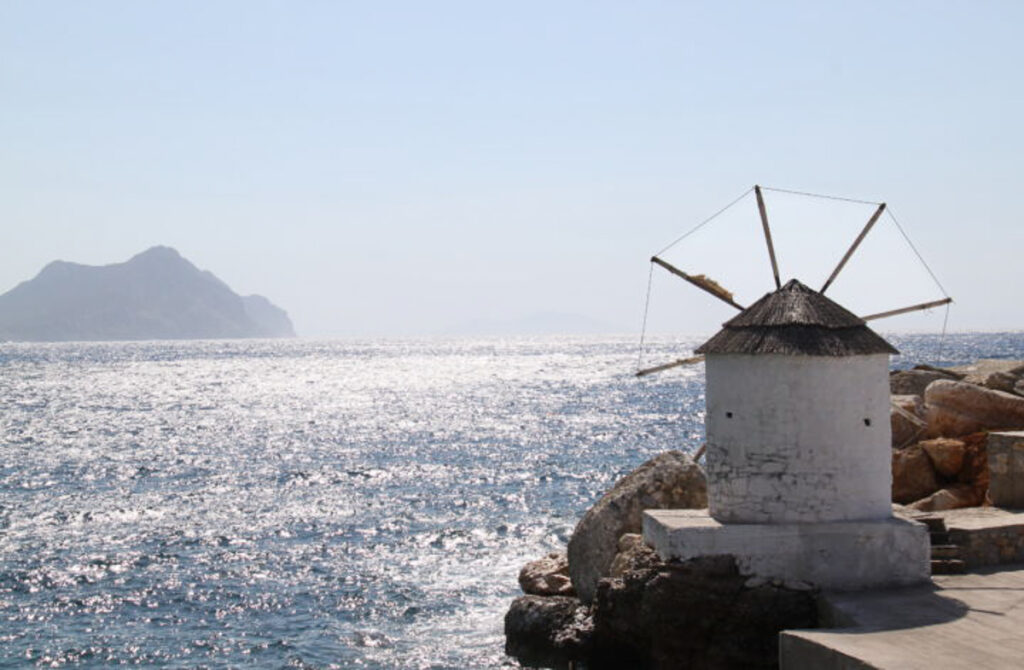
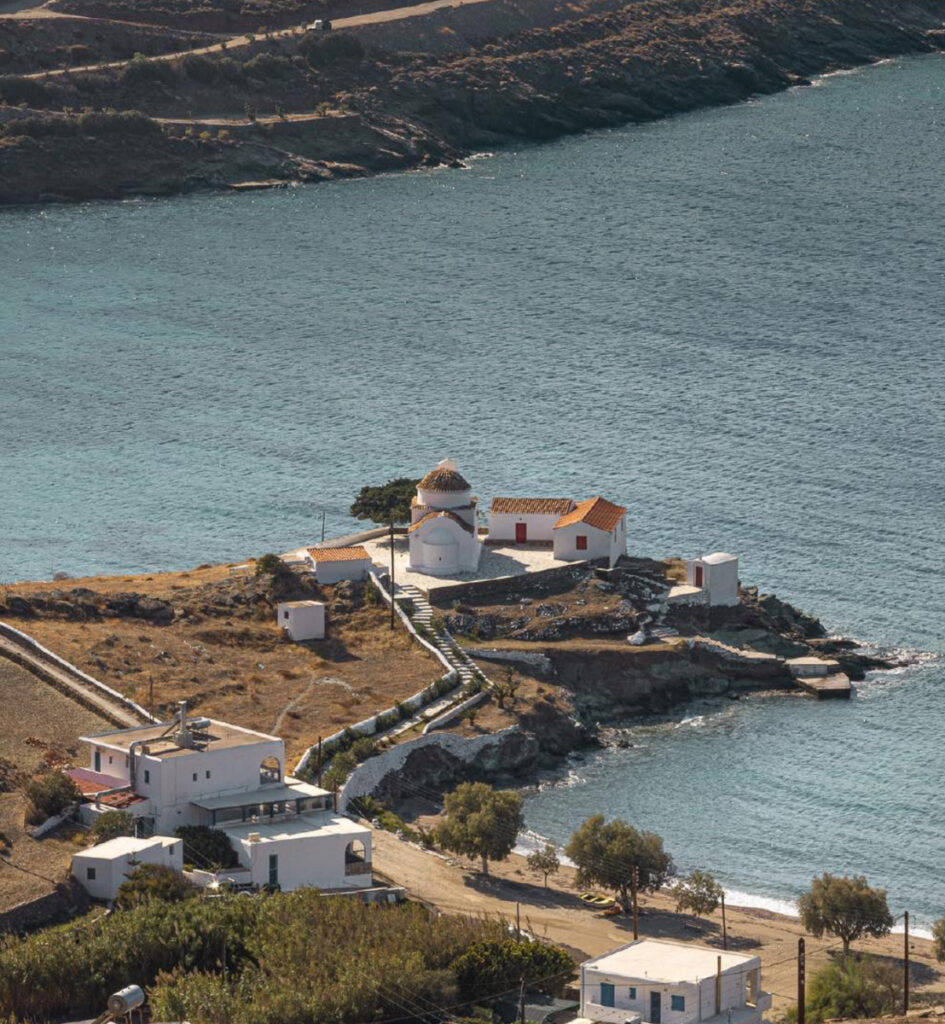
This special event is celebrated every year on July 26 in the charming port of Katapola in Amorgos, and is one of the island’s most popular festivals, as they bring to light simeni raki, which is the traditional local drink. Guests can taste the raki and other local delicacies, while also enjoying music and dancing till the early hours of the morning.
When: July 26, 2024
Where: Port of Katapola, Amorgos
Entry: Free
Aegina: Fistiki Festival
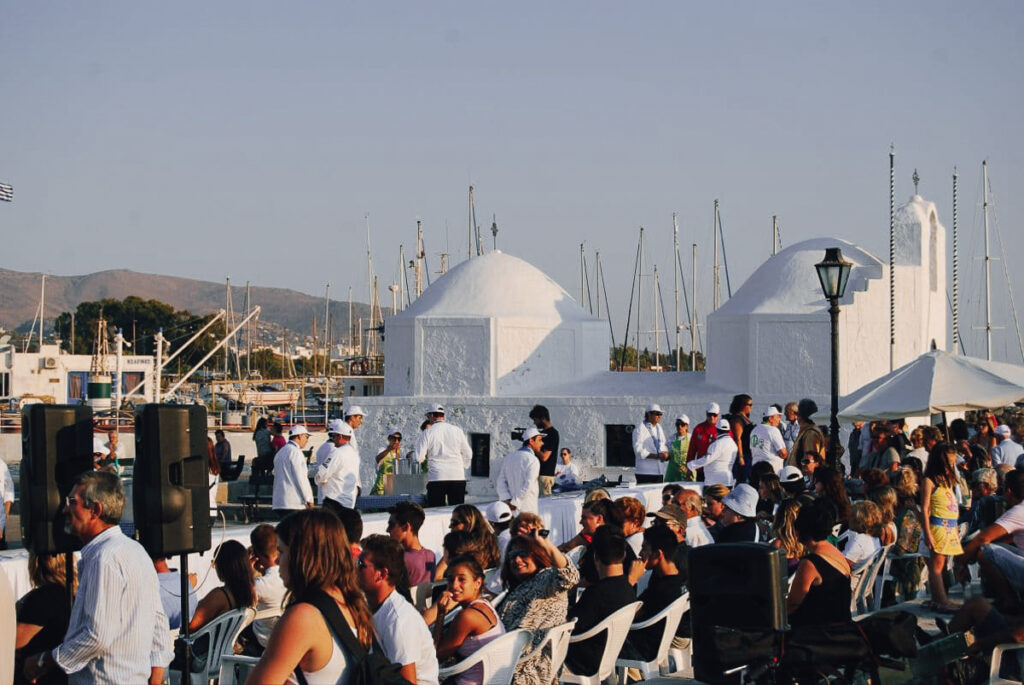
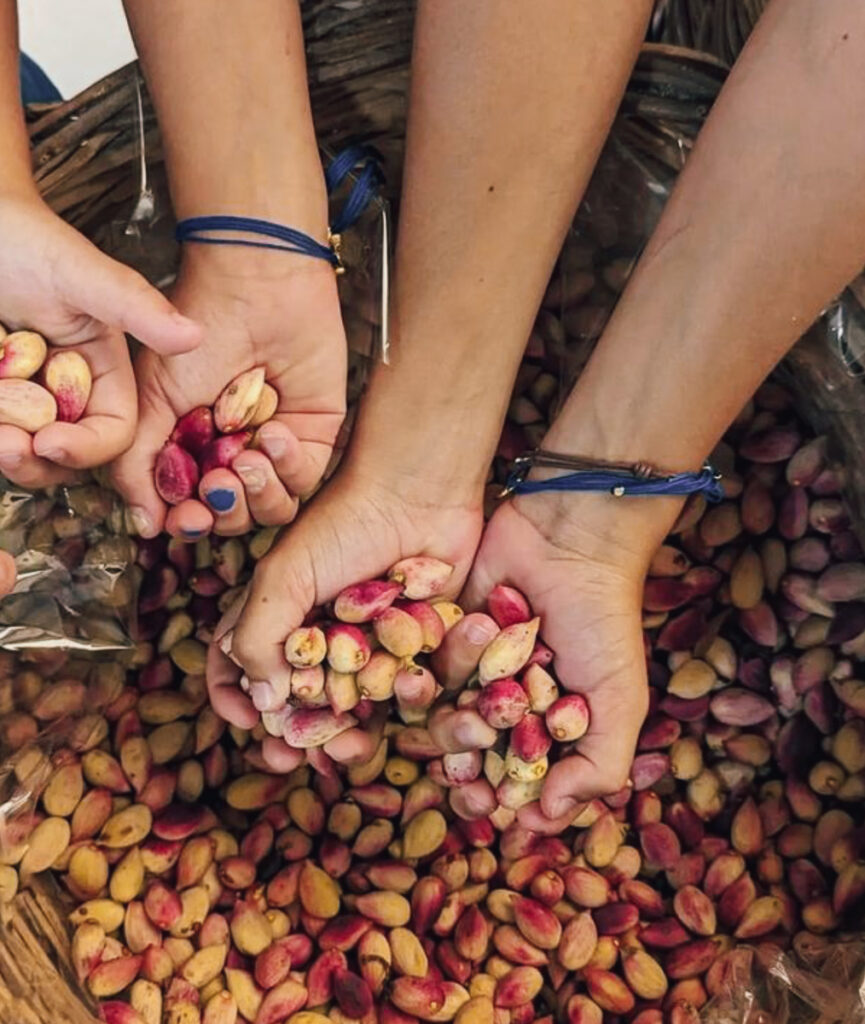
This annual celebration that attracts thousands of visitors honours the island’s trademark product, which is the renowned pistachio. The festival allows guests to taste pistachio praline, gelato, spoon sweets, and pastelimade from the famous Aegina pistachio. There are also concerts, musicals and theatrical performances taking place every day.
Christos Gkolfis made Syros his home fifteen years ago, where he founded the now legendary Kouchiko bar and introduced third-wave coffee to the island.
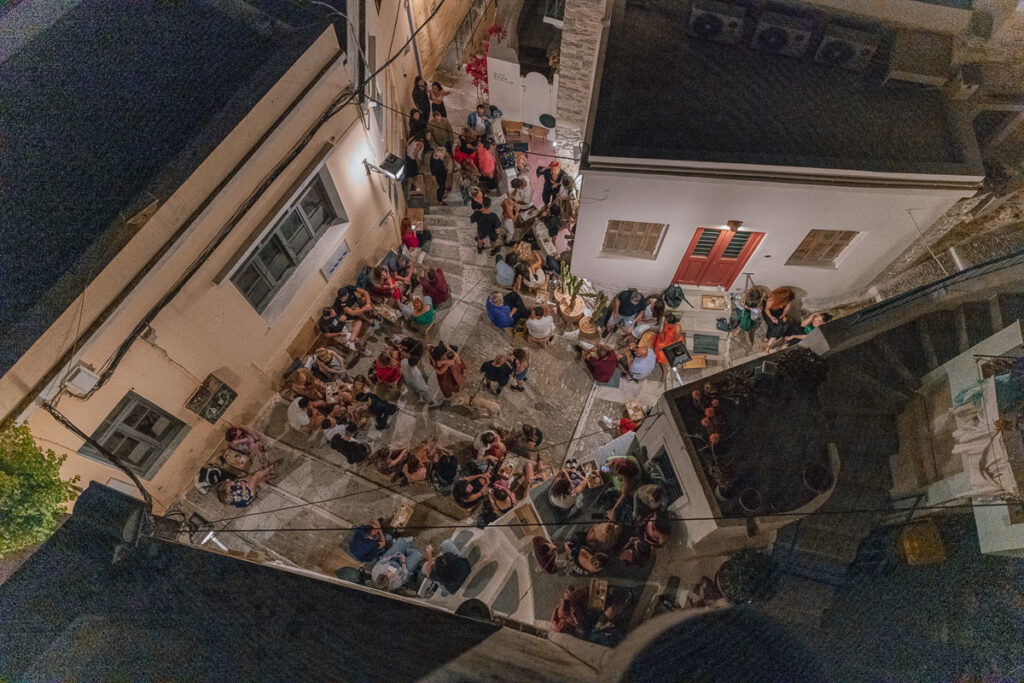
Now owner of the dreamy cocktail bar Theosis, Christos reveals his favourite ways to enjoy the capital of the Cyclades.
Interview by Gina Lionatos
Christos, what do you believe sets Syros apart from its Cycladic neighbours?
Syros is unique because it combines a small city’s charm with an island’s natural beauty. Its urbanization provides a lively atmosphere, while its stunning architecture and vibrant cultural calendar ensure that Syros is full of life year-round.
In the summer of 2023, I paid a much-anticipated visit to your bar Theosis, and I was immediately taken by its energy, warmth and attention to fine quality. What is your vision behind Theosis?
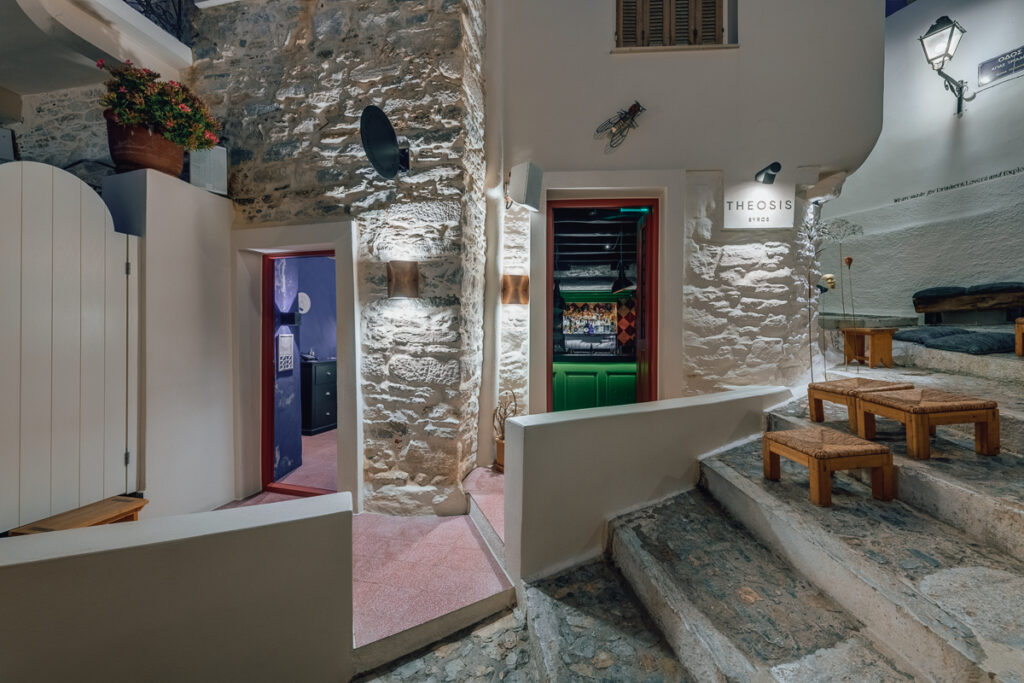
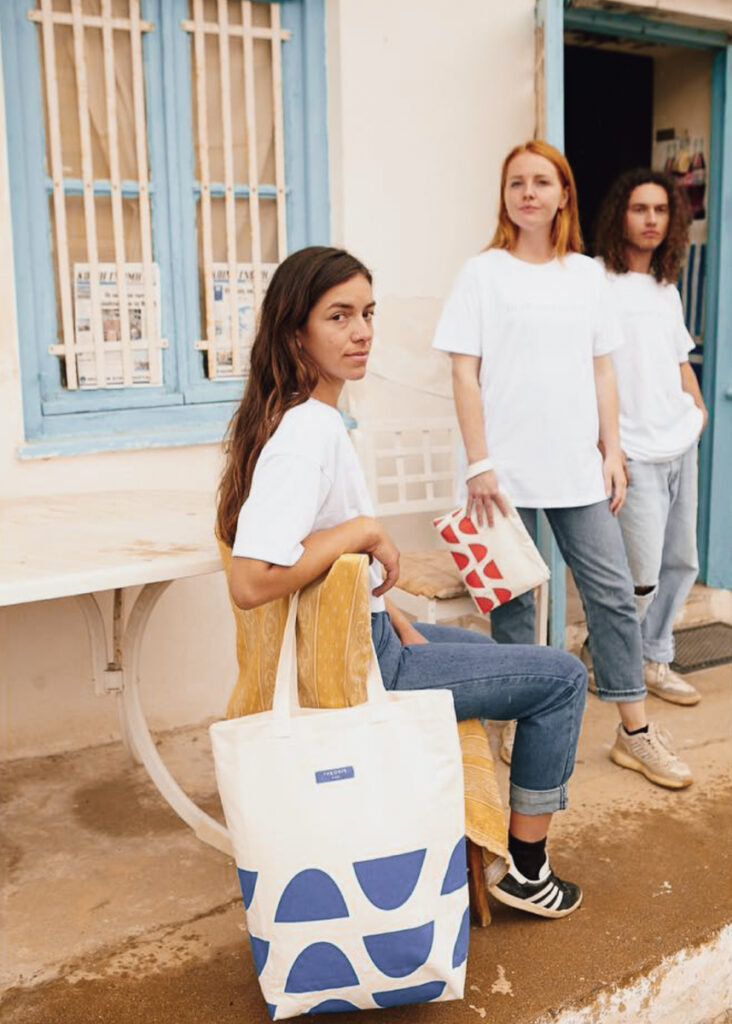
Our vision was to create a complete concept, encompassing everything from the bar’s name to its design, cocktail creation, graphics, and gifts. Along with my co-founders, Natasha Polyzou and Nikos Sotiropoulos, we aimed to craft a space where the scents, flavours, and energy evoke a sense of uniqueness—a place for creating new memories. You’ll see this carried through from the communal outdoor space, to the handmade ceramics and even menu design.
Theosis, located in Ano Syros, was restored using traditional methods and materials. We focused on handmade details, ceramics, and light fittings that reflect the essence of a traditional home in Ano Syros.
Ano Syros has a special vibe of its own. Aside from Theosis, where else should people visit when in this part of Syros?
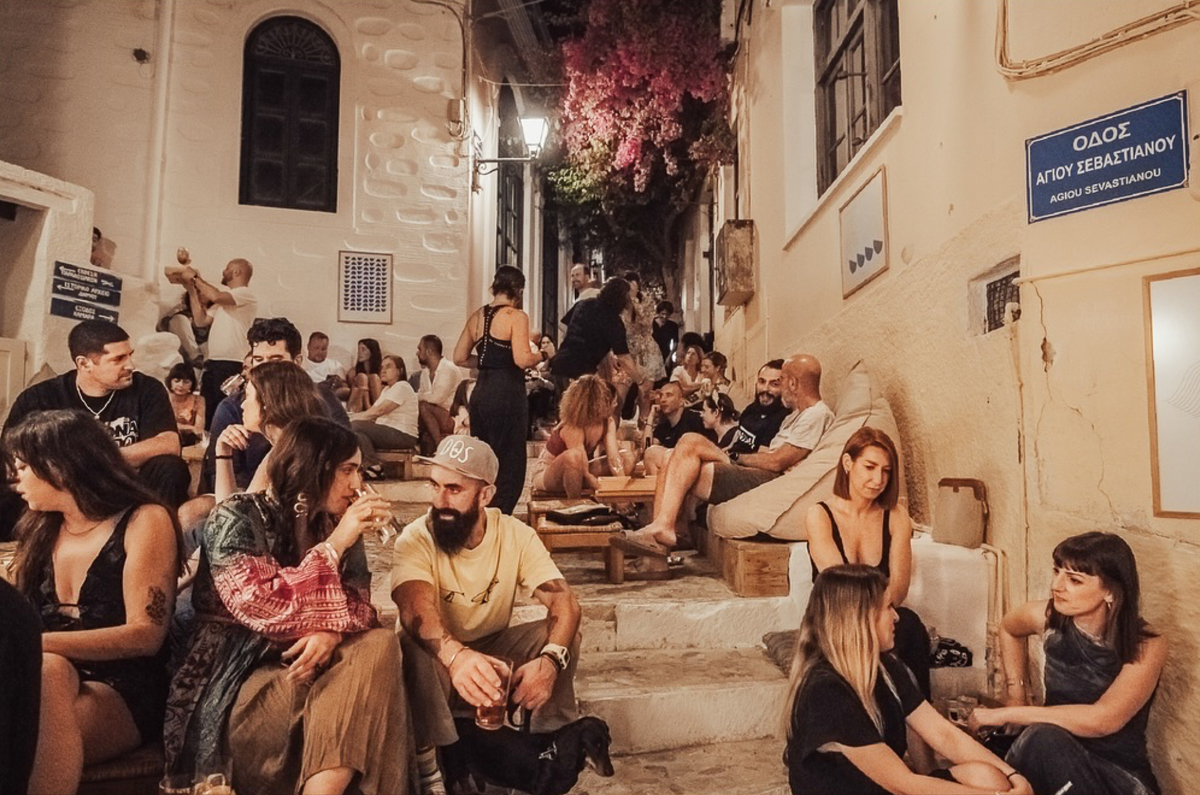
Ano Syros, the home of Theosis, possesses a unique energy that perfectly aligns with the spirit of our bar. The fortress town’s mix of Cycladic architecture, tiny alleys and old-world Venetian charm make it a special place to be. One of my favourite spots for a memorable meal is Maison de Meze, renowned for its exceptional small plates. For fine dining and stunning views from above, Hygge is the place to go. And for a classic souvlaki, you can’t miss Hima kai Tsouvalata. Ano Syros is also a hub for exceptional artistic and creative talents, such as Fay Papanikou and Zanis Roussas, whose boutiques are definitely worth exploring. Let’s not forget to mention the breathtaking views of the South Aegean Sea!
In this writer’s opinion, anyone who visits Ano Syros must stop in at Theosis. When they do, what cocktails should they be sure to try?
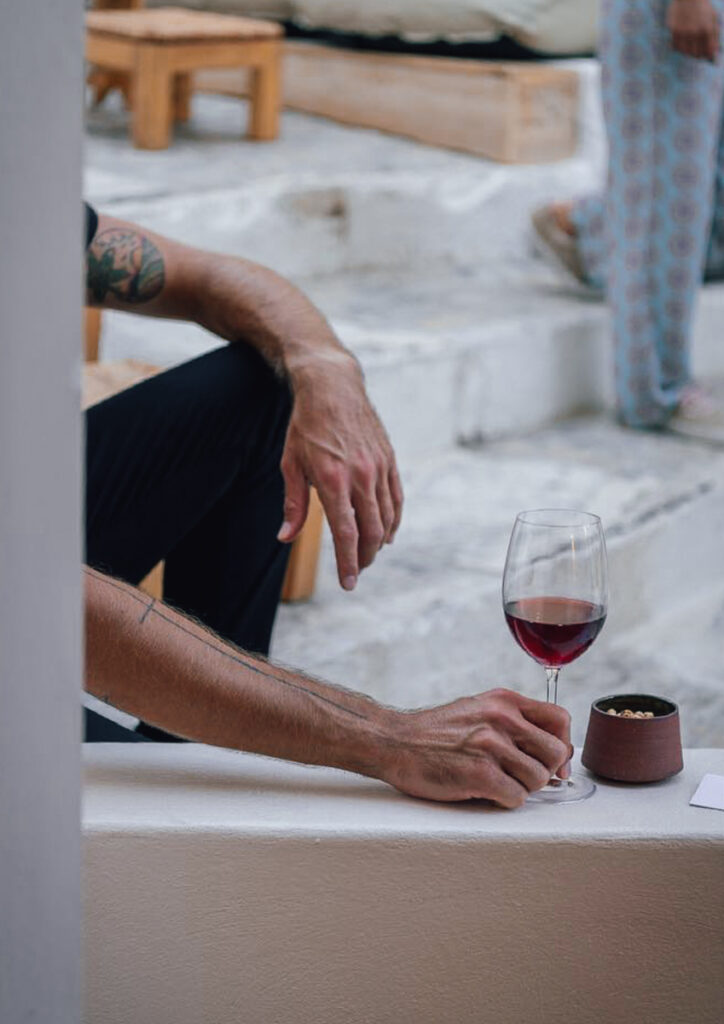
At our core, we are a cocktail bar, and I take great joy in seeing people enjoy each other’s company while savouring our creations.
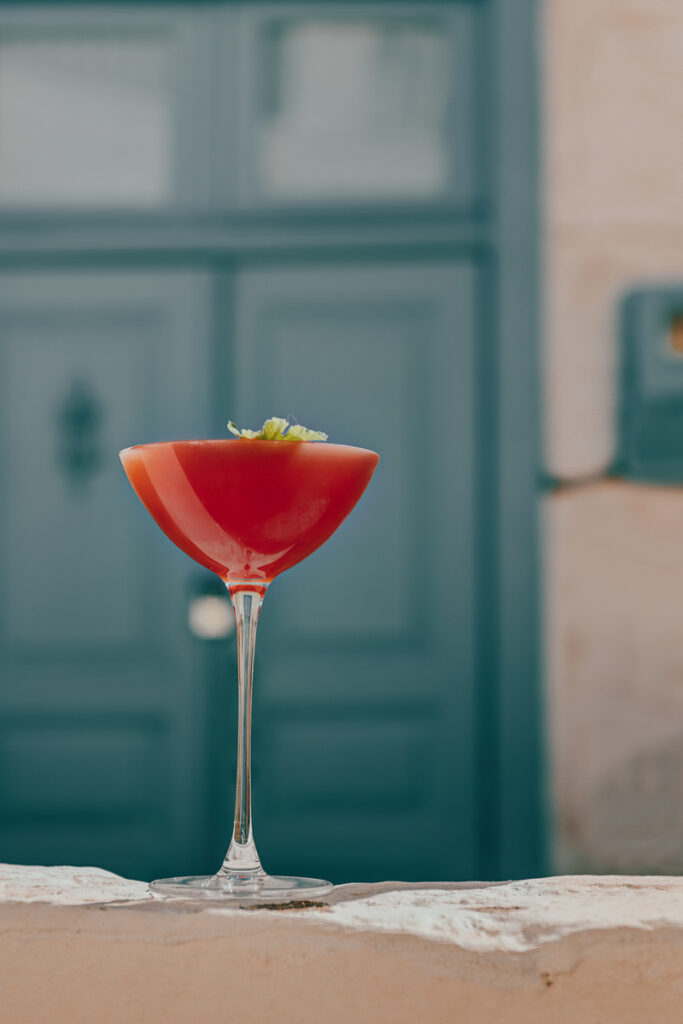
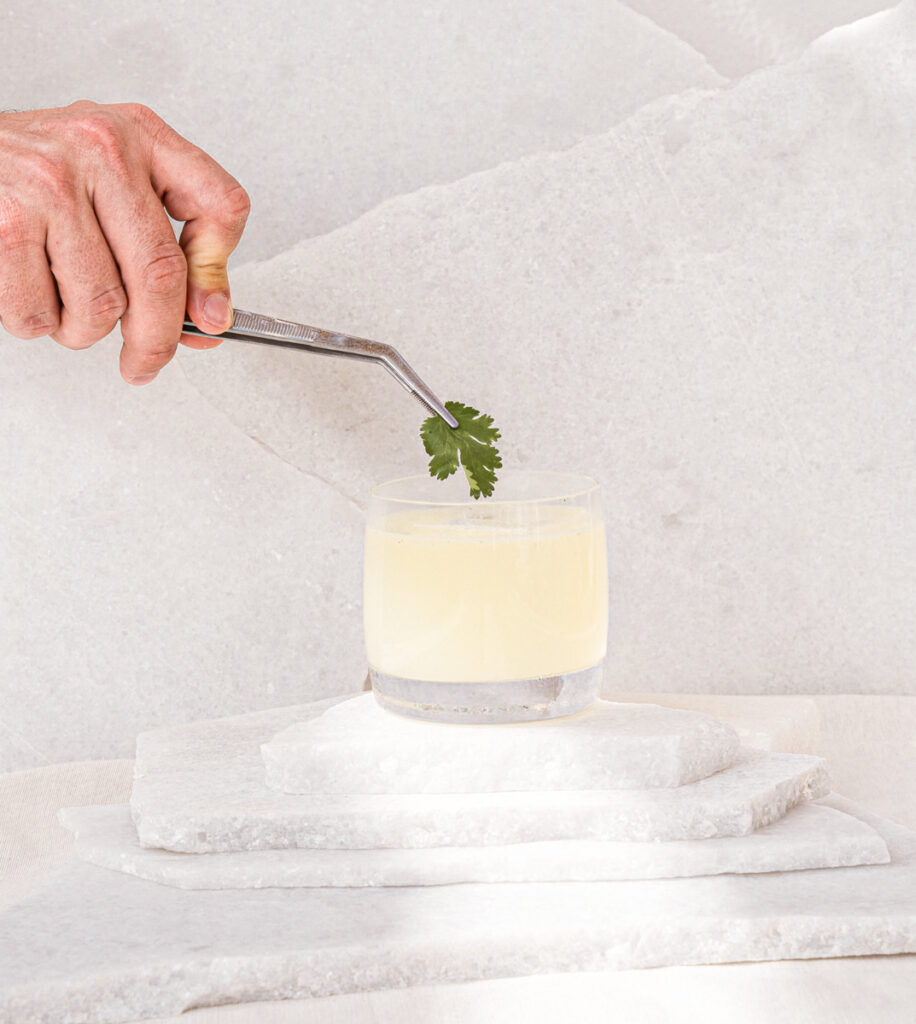
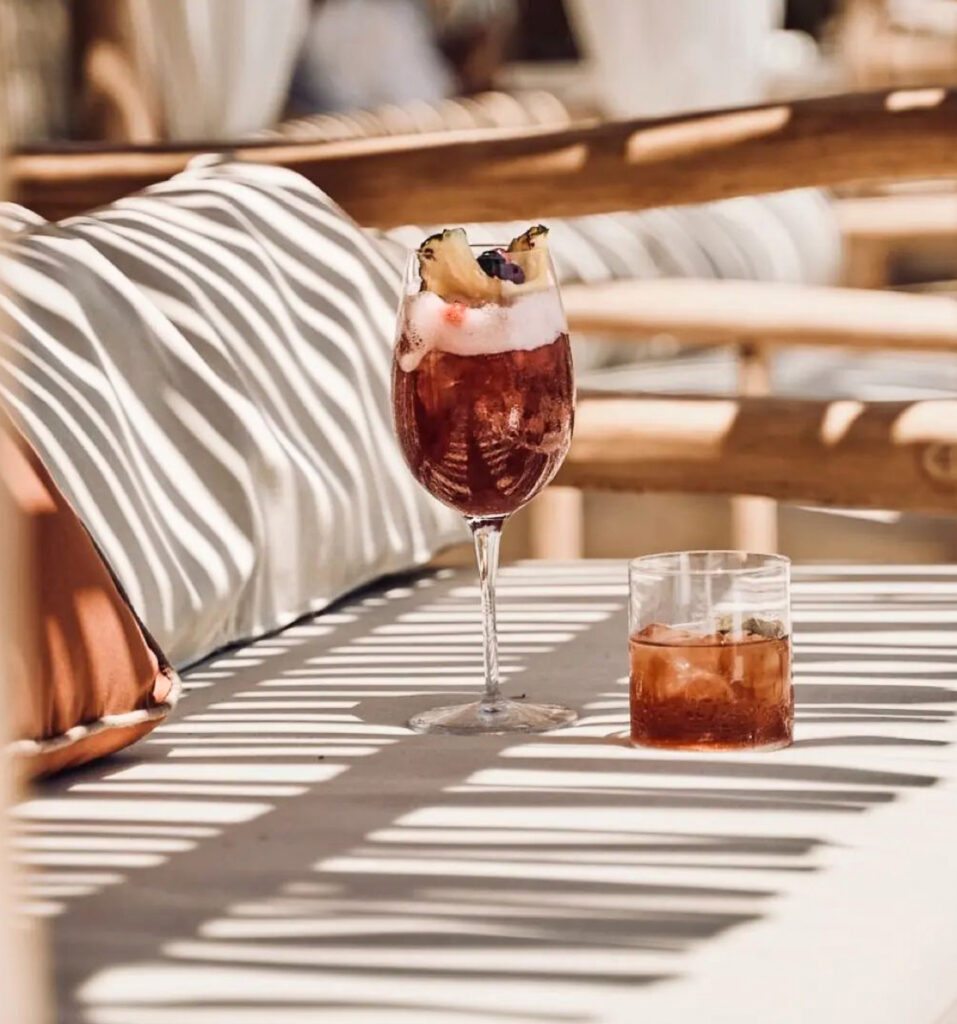
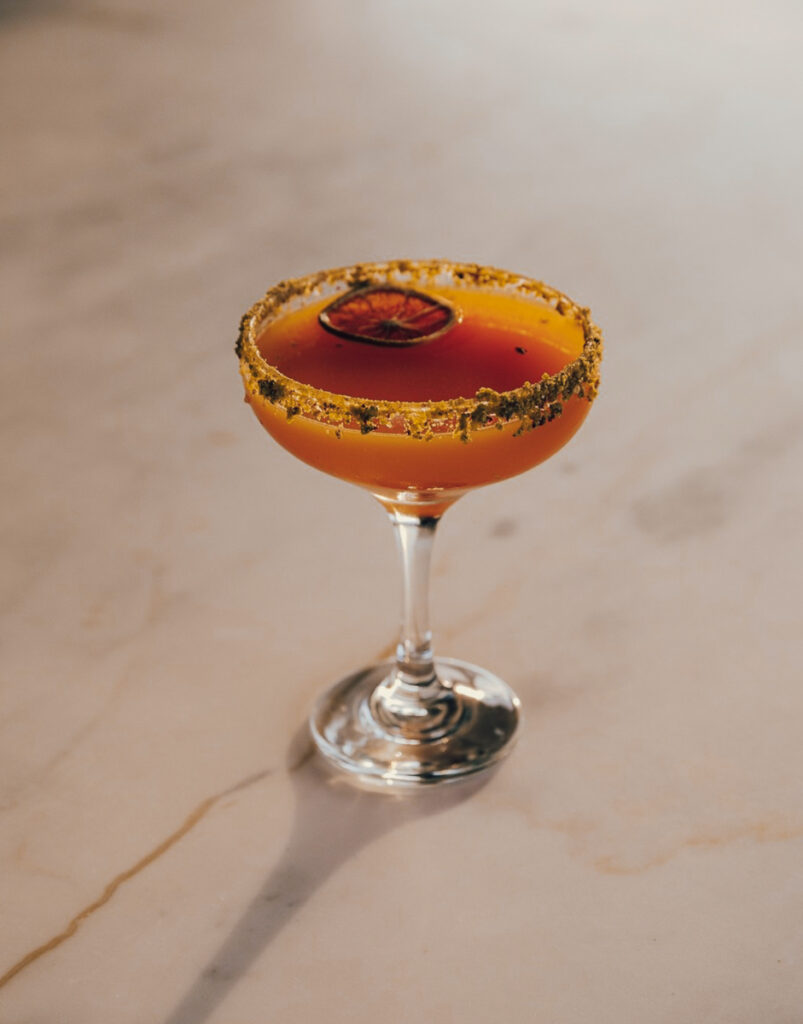
Eros, true to the Ancient Greek word for love, is a cocktail that balances sweetness and bitterness, featuring Campari, cherry liqueur, and homemade floral tea.
Thlipsis, our twist on a Pina Colada, is creamy and sweet, made with gin, cucumber cordial, coconut, bitter almond, and a hint of Ardbeg whiskey.
Eternity is a cocktail you’ll want to drink forever, blending rum with honey ginger syrups.
Ermoupolis, the capital of Syros, is a visually impressive city. I’m sure you have some much-loved spots!
Ermoupolis is a wonderful mix of history and culture and the newly established Hermoupolis Heritage and the Historical Museum O Hermoupolis are spaces dedicated to preserving and restoring the island’s tangible and intangible cultural heritage. The team creates immersive experiences that emphasize architecture, culture, industry, and the environment, all aimed at showcasing the rich history of the island.
Ermoupolis also happens to be a haven for creatives. The city boasts a flourishing scene of designers, including Chiara Aliotta and Until Sunday agency, as well as numerous boutiques and ceramic studios. Notable names include Konstantinos Katagas, and the talented ceramists such as Sofia Trigoni and Fani Skoulikidi Boukouvala, and curators of handmade designs at Chimera Boutique, to name just a few.
Coffee, Wine, and Beyond: Epta Syros is by far my preferred third-wave coffee shop on the island. For an early, relaxed spritz, try MouSouTou. If you’re interested in local spirits, Makrionitis Distillery provides every type of tsipouro you can imagine. Lastly, I must mention my first venture in Syros, Kouchico, which has a bustling energy until the early morning hours. All the best nights in Syros usually end at the old-school bar, Boheme Del Mar.
Syros boasts many villages and towns with something special to offer. Tell us some of your favourites.
The villages of Episkopio and Xroussa are ideal for exploring on foot. Kini offers the undisputed best sunset on the island.
Poseidonia and Finika are favoured seaside towns. San Michali, on the northern part of the island, is home to Xatzakis Winery which boasts local grape varieties.
Finally, we at IN+SIGHTS GREECE are all about the food! Where can we find you dining out?
Syros offers a wealth of exceptional dining options. Some of my favorites are Lygeros and Steadi Kafeneio on the north side of the island for traditional Greek cuisine and dishes. Revans, located in the old market of Ermoupolis, serves tastefully simple plates alongside coffee, ouzo, and tsipouro. Mikraki is a beautifully traditional mezedopoleio, and just a few meters away in the same stenaki (small alley), you’ll find the new-age kafeneio, Laoutari.
Theosis is located at Piatsa, Ano Syros, and operates from 6.30 pm – 2.30 am during the summer season.
Discover our complete travel guide to Paros, an island that offers a perfect blend of relaxation, good food, and stunning beaches – making it a must-visit spot this summer.
Eyes are on Paros again this year, as it’s fast become one of the most popular Cycladic islands thanks to its quaint fishing villages, beautiful architecture, and gorgeous bougainvillea-filled alleyways that allow for endless hours of exploring. And, as one of the coolest destinations in Greece, it’s brimming with chic and understated spots to visit on your trip.
Eat + Drink
Brunch + Coffee
Raggoussis Bakery: In the heart of Naousa, you’ll find a great breakfast spot where you can enjoy handmade pies and great coffee.
Cannelait: This is a place for delectable desserts, pastries, and specialty coffee.
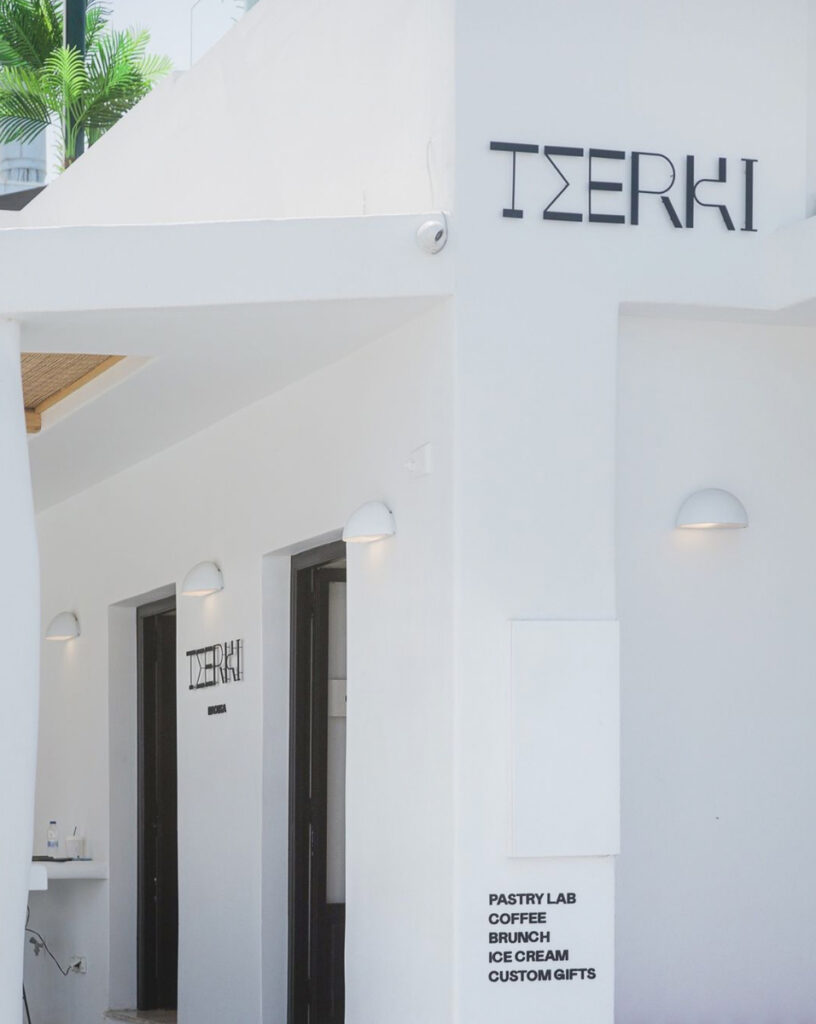
Tserki: Experience exquisite flavours – both sweet and savoury – in two spots in town, either Naousa or Parikia.
Lunch
Siparos: For a fine-dining seafood experience with great views, Siparos serves classic dishes such as Kakavia, a traditional Greek island fish soup.
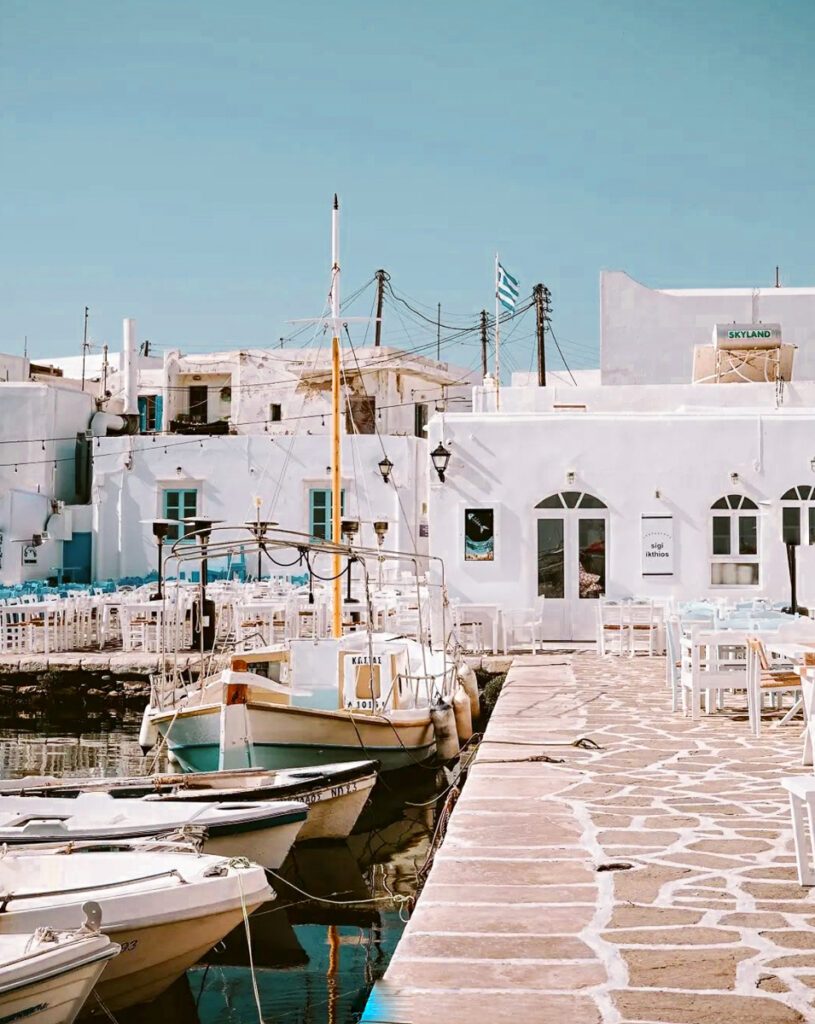
Sigi Ikthios: Around the port, you’ll come across this great eatery where you can order both classic and modern dishes.
Rada: A boho chic outdoor restaurant, here there’s a strong emphasis on pure produce and seasonal ingredients.
To Balconi tou Aki: This award-winning restaurant that’s been open since 1964 serves simple ultra-fresh seafood in a stunning seaside location.
Blue Oyster: Come here in the early afternoon and slowly order fresh seafood dishes that can be enjoyed through to sunset.
Tip: If it’s just a quick bite that you need to get you through the day, head to O Kargas or Pita Frank for a tasty souvlaki pita or a traditional Greek gyros.
Dinner
Mr E, Parilio: A light and airy restaurant that serves locally inspired Mediterranean dishes.
Parostia: Set right on the beach, here you can enjoy sashimi, and sharing plates that include Tomahawk and grilled lobster.
Barbarossa: One of the most popular restaurants on the island (and for a good reason) here you’ll enjoy fresh local seafood.
Stivli: Savor fresh Mediterranean flavours in a lovely open courtyard.
Mario: Located in Livadia, this modern eatery offers a culinary Mediterranean experience overlooking the Cycladic Sea.
Santa Pacou: Located in the picturesque village of Kostos, here you can taste traditional dishes with a modern twist.
Drinks
Sante: Serving signature cocktails, this tiny bar is the perfect spot for an evening drink.
Agosta: This waterfront bar is the place to be for sunset hour.
Salty Bar: Ideal spot for an aperitivo or late-night Negroni.
Tip: If you love your wine, head to Domaine Myrsini or Moraitis Winery and explore the wonderful vineyards while tasting a few local drops.
See + Do
In the island’s capital Parikia, make sure you visit the Byzantine church Panagia Ekatontapiliani (featuring 100 doors, it’s dedicated to the Virgin Mary). It’s also worth making time to check out the Archaeological Museum (with its stunning mosaic floor), and the Sanctuary of Apollo.
Spending time at the pretty fishing harbour of Naoussa is a given! Here you can explore the charming alleyways, harbour, and a 13th Century Venetian Castle. There’s also the nearby Petra farm, where you can enjoy farm-to-table dishes.
Experience traditional village life at Lefkes, boasting charming cobblestone alleys, and Cycladic whitewashed houses, it’s also home to the Holy Church of Agia Triada and the Folklore Museum.
Tip: Art lovers head to Athanassiadou Gallery, curated by art historian Marina Athanasiadou, here you’ll discover a range of stunning contemporary Greek art.
Best beaches
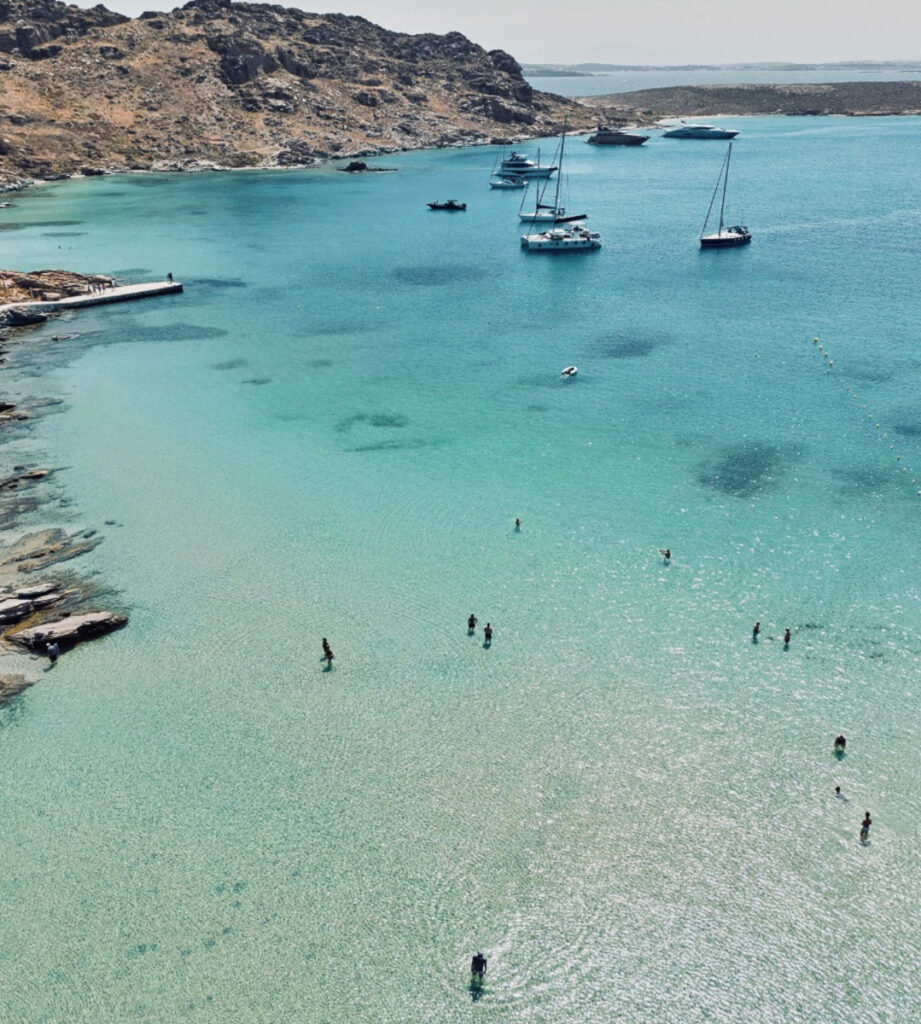
Adventurous types will love Golden Beach and Parasporos where you can enjoy a great range of water sports. Monastiri is where you’ll find one of the most sought-after beach bars on the island, while Santa Maria is perfect for those looking to party. Cabana is one of the chicest spots to spend an entire day at the beach, whereas Kolymbithres is one of Paros’ most famous spots thanks to its rocky landscape and stunning blue cove. We also recommend adding Faragas to the list, as here you can dip into crystal clear waters and then have a light lunch without needing to go far.
Best view…
Head over to Kefalos Hill, where you can discover the holy Agios Antonios Monastery while taking in the incredible views from the island’s most stunning spot.
Ultimate day trip….
Take a short boat trip to Antiparos, known for its relaxed vibe and beautiful caves, it’s the perfect place to enjoy a swim and a long, lazy lunch before heading back.
Shop
Anthologist boutique offers a curated collection of jewellery, handbags and belts, brass objets d’art, and ceramics, all made by local artisans in Greece. For some of the most unique and stunning jewellery pieces head into the store of Yannis Sergakis. And if you are searching for some locally made pieces head into MX Ceramics and Yria Studio for beautiful pottery.
Stay
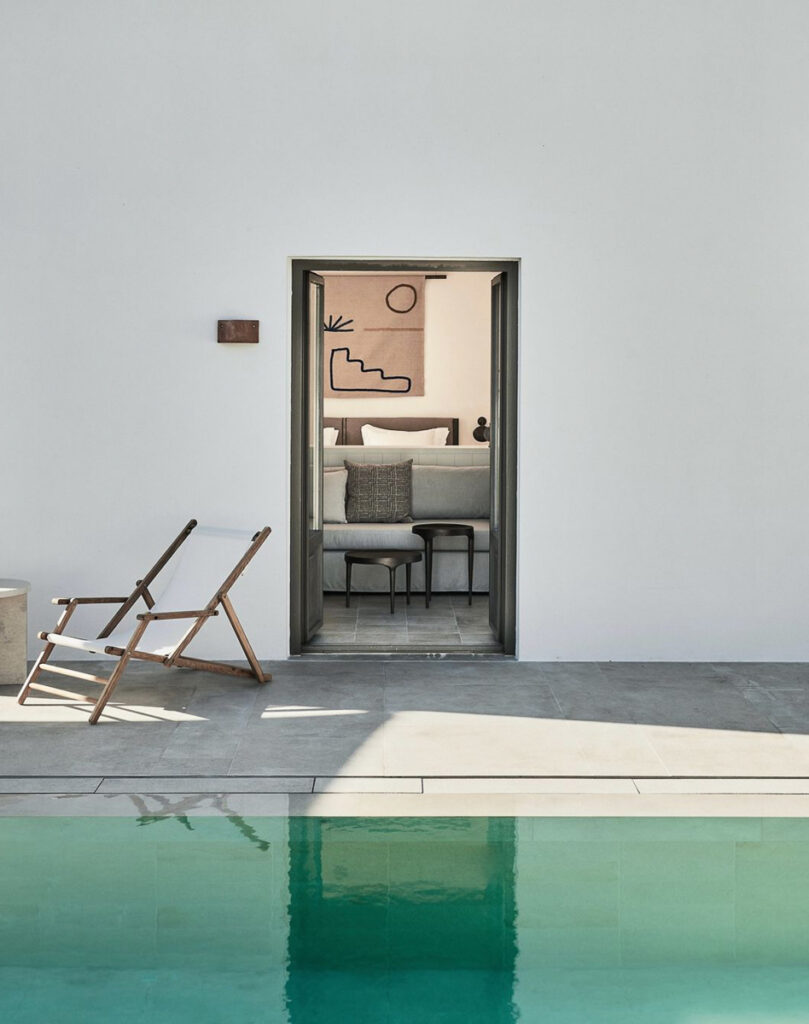
Parocks: Here you’ll find luxurious and elegant rooms and suites featuring stylish Cycladic decor and earthy tones.
Parilio: A beautifully designed boutique hotel, offering a stunning range of rooms and suites.
Cosme: A gorgeous new resort-style hotel that’s ideal for both couples and families.
Cove: A seaside resort that offers five elegant suites with private pools.
How to get there…
By Ferry: Regular ferries from the Athens port of Piraeus to Paros range from 3-5 hours depending on whether it’s a high-speed catamaran.
By Plane: Direct flights from Athens to Paros National Airport take around 45 minutes.
Explore our complete travel guide to Skiathos, featuring where to head for brunch, lunch, dinner, and swimming on this charming island.
Skiathos, known for its lush landscapes, gorgeous beaches, and vibrant night scene, is an idyllic destination for every type of traveller.
See + Do
Visit the Papadiamantis House Museum– Immerse yourself in the life and works of Alexandros Papadiamantis, one of Greece’s best-known authors, whose former home in the heart of Skiathos is now a museum.
Explore the Bourtzi Fortress– This small peninsula in Skiathos Town offers breathtaking views, a charming café, and historical significance.
Discover well-hidden beaches– Skiathos is famous worldwide for its stunning beaches, each offering unique beauty and atmosphere.
Stroll Through Skiathos Town– Wander through narrow streets lined with whitewashed houses, quaint shops, and cozy cafés, soaking in the island’s charm.
Discover Skiathos Cuisine- Try local fresh seafood, meze, and traditional Greek dishes on the island’s many tavernas.
Monastery of Evangelistris- This historic monastery provides insights into Skiathos’ religious heritage and offers stunning views of the island.
Eat & Drink
Coffee + Brunch
Naval Cafe- This small café stands out for its great brunch menu featuring shakshuka, avocado toast, and cream-filled croissants served with specialty coffee.
Ιl Posto- Enjoy a cozy and elegant atmosphere where you can savour fresh bagels, fluffy pancakes, and freshly squeezed juices.
Pecan- Τhis ultimate all-day bar is located by the port and it’s a perfect spot for a casual morning bite.
Lunch
Taverna Akrogiali– Enjoy fresh seafood right next to the sea.
Bourtzi Skiathos- Perfect place for a long, lazy lunch that includes seafood giouvetsi and veal ragu.
Bakaliko Restaurant- Located in Skiathos Town, this taverna offers authentic Greek dishes in a charming setting.
Under the Pine Tree- Situated in Koukounaries, this hidden restaurant serves traditional Greek cuisine under shaded trees.
Dinner
La Cusina di Maria- This Italian restaurant located in a picturesque alley offers a unique dining experience with a focus on fresh, local ingredients and a curated wine list.
Marmita- Serves traditional dishes with a modern twist.
Panorama Restaurant & Pizza- Offers a delightful culinary experience, blending traditional flavors with contemporary techniques.
Sweets
Alaska- For the best ice cream on the island, as well as freshly baked waffles.
Gelateria- Serves a variety of handmade gelato and pastries.
Dafni’s Sweets- Τhis cosy café is an excellent choice to enjoy traditional sweets like loukoumades during your evening walk.
Drinks
Barbouni Bar- The ideal destination for tasty cocktails and a vibrant atmosphere.
Anderssons Bar- A great spot to enjoy some evening cocktails.
Kirki- For signature cocktails and great music.
Rock ‘n’ Roll Bar- One of the island’s most famous bars on the old port, you’ll enjoy the vibrant music and perfect panoramic views here.
Ginfish- One of the newer bars at Skiathos Port, here you’ll find the cool crowd sipping on their gin.
Local Flavours
Make sure to try local flavours and traditional dishes such as the walnut liqueur, quince paste, organic honey, and Malagouzia wine.
Discover
Best Beaches
Koukounaries Beach- One of the islands’ most famous beaches, perfect for sunbathing, swimming, and enjoying beachside tavernas.
Lalaria Beach- Known for its stunning white pebbles and crystal-clear waters, it’s accessible by boat.
Banana Beach- A chic and vibrant beach with sunbeds, umbrellas, and excellent beachside service.
Mandraki Beach- A hidden gem with serene waters and beautiful scenery, ideal for relaxation.
Vromolimnos Beach: Peaceful beach that also offers water sports.
Agia Eleni Beach- A secluded bay surrounded by cliffs, it’s a peaceful spot that boasts turquoise waters.
Ultimate Daytrip
Kastro- Explore the historic ruins of Kastro, the old, fortified capital of Skiathos, on a cliff offering breathtaking sea views.
Tsougria Island- Make a short boat trip to this uninhabited island and dive into stunning beaches, crystal-clear waters, and a serene escape from the bustling main island.
Make Sure You Take Home…
Olive Oil- A staple of Greek cuisine.
Locally Produced Honey- Often infused with thyme or pine.
Handcrafted Pottery and Ceramics- Reflecting the rich artistic heritage of Skiathos
Where to Stay
We recommend staying in Skiathos Town to enjoy the picturesque streets, bustling markets, and vibrant nightlife. This central location allows easy access to the island’s top attractions and beaches.
Where to Sleep
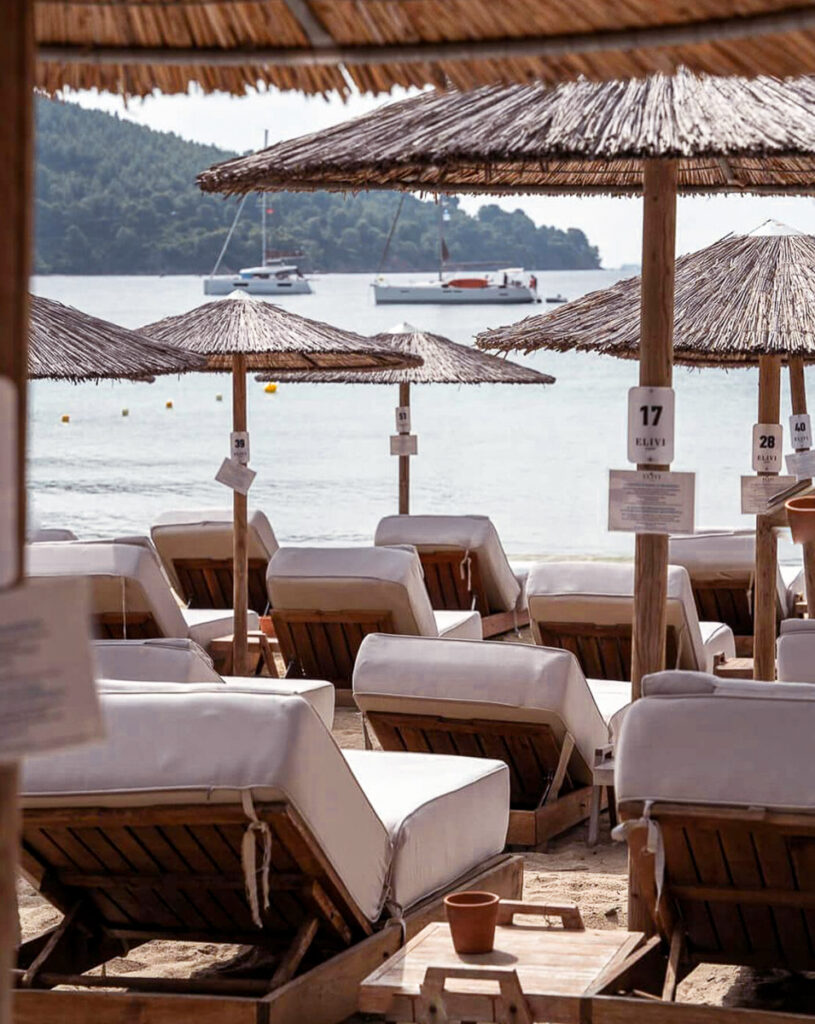
Elivi Skiathis- Surrounded by a pine-tree forest overlooking Koukounaries Beach, this 5-star hotel features contemporary artwork, neutral hues and a showpiece sea-view lobby.
Kassandra Bay Resort- This luxurious seaside resort boasts beautiful views, exquisite dining, and top-notch amenities.
Aegean Suites Hotel- This adults-only hotel offers a tranquil escape with spacious suites, a beautiful pool area, and personalized services.
Essentials
Best Time to Go: Early June to late September, when the weather is great and it’s not overly crowded.
Ideal Time to Stay: 3-4 days is the ideal time to experience Skiathos.
Getting Around: On foot for the town area and renting a car or scooter for exploring the rest of the island.
Getting There
By Plane: Skiathos Island National Airport (JSI) offers both domestic and international flights. Check with airlines for direct flights or connecting flights via Athens or other major European hubs.
By Ferry: Ferries connect the mainland of Greece with Skiathos. You can take a ferry from the ports of Volos, Agios Konstantinos, or Thessaloniki. The ferry ride takes around 2-3 hours.
Discover our complete travel guide to Kalamata including where to eat, drink, stay and swim around this beautiful city in the Peloponnese.
Filled with a unique identity, historical depth, and urban beauty, Kalamata, built at the foot of Mount Kalathi, is a city that captivates you from the moment you wander its streets. Behind her, Taygetos rises imposingly, while in front of her, the Messinian Gulf stretches out, in stunning shades of deep blue.
Only 2.5 hours from Athens, it’s a wonderful destination you can visit all year round – with plenty to discover!
Must See + Do
Bike riding is a trend…
Renting a bicycle in Kalamata offers visitors the opportunity to explore the picturesque seafront promenade. Navigate through charming streets, visit historical sites like the Kalamata Castle, and immerse yourself in nature at the Municipal Railway Park, making it a must-do experience for adventurers and culture enthusiasts alike.
Go up to the castle…
Explore the historic Kalamata Castle, and admire the panoramic views of the city and surrounding area.
Relax on a beach….
Kalamata’s urban centre is close to one of the most beautiful beaches, known for its crystal-clear waters and variety of water sports- here you can try your hand at kayaking or windsurfing.
Wander through Kalamata’s Old Town…
Discovering traditional Greek architecture, local shops with handmade creations and cozy cafes.
Hike the scenic trails of the Taygetos Mountains…
Enjoying breathtaking views along the way.
Discover the local gastronomy….
Sample the world famous Kalamata olives and extra virgin olive oil- a local delicacy renowned for its flavour. Also make sure to experience the local wine scene with tours and tastings at nearby wineries, showcasing indigenous grape varieties.
Cultural Hotspots
Kalamata Castle- Perched on a hill overlooking the city, Kalamata Castle offers panoramic views of the surrounding area. The castle has a long history dating back to the Byzantine era and has been renovated several times over the centuries.
Benakeion Archaeological Museum- This museum houses a collection of artifacts from the region, including pottery, sculptures, and jewellery dating back to ancient times. It provides insights into the area’s history and civilization.
Church of the Holy Apostles- This Byzantine church is one of the oldest in Kalamata, dating back to the 12th century. It features beautiful frescoes and architectural details.
Old Town- Wander through the narrow streets of Kalamata’s Old Town to discover charming cafes, traditional tavernas, and historical buildings. The area is known for its Venetian architecture and vibrant atmosphere.
Eat & Drink
Coffee + Brunch
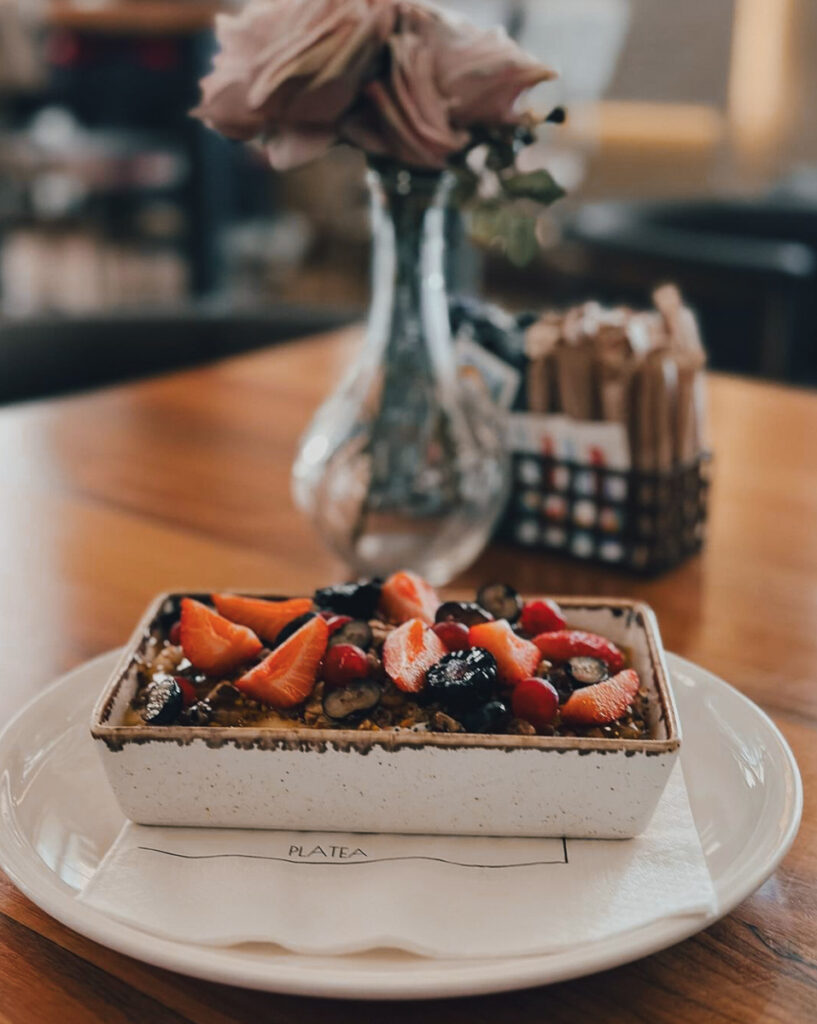
Platea- In the heart of Kalamata’s central square is a neoclassical gem, housing a cafe that tantalizes both the senses and the palate. The menu combines traditional Greek flavours with contemporary culinary techniques.
Flirt- Also in the city centre, Flirt stands out for its top-notch coffee, refreshing cold-pressed juices, and creamy milkshakes. Here you can enjoy brunch classics such as poached eggs, bagels, and Flirt’s daily homemade pies.
Blossom– Escape to a cozy brunch haven, where you can savor fluffy pancakes, savory avocado toast, and steaming cups of freshly brewed coffee.
Lunch
To Limeni- Enjoy expertly prepared seafood delicacies amidst a charming seaside setting.
Mple Kanarini- Chef and owner Konstantinos Vassiliadis collaborates with local fishermen and farmers to create unique and fresh dishes depending on the season.
Foino- For a long, lazy lunch check out this new bistro that has already received many accolades thanks to its delightful, fresh and creative dishes (made using locally sourced produce) that pair perfectly with their carefully curated wine list.
Kentrikon– With its rustic charm and warm hospitality, this taverna offers classic Greek dishes infused with contemporary flavours.
Vagias Taverna –An old-school taverna where you can taste local, authentic Peloponessian dishes.
Dinner
Οinopantopoleion- About a decade ago Panagiotis Chrysomallis decided to turn his father’s old wine and grocery store into a modern restaurant, which has now become one of the city’s most popular food spots thanks to its traditional Greek flavours made with locally produced ingredients.
Kardamo- Indulge in dishes like fava beans paired with onion jam and pork paste, tacos featuring kokoretsi and horiatiki, rooster served with noodles and mizithra cheese, alongside a tempting pork burger. While the menu primarily celebrates meat, vegetarians can also find satisfying options to enjoy.
Τzimis- If you are looking for the best souvlaki in town, head to this iconic spot where you’ll find soft pita filled with savory meat and accompanied by a generous portion of crispy patates tiganites.
Κreopoleion 29- This is a paradise for meat lovers as you’ll find a variety of meat choices, alongside fine, fresh ingredients that come from the family’s farms in Taygetos or small producers in various parts of Greece. Beef is the star, but there is no shortage of other kinds of free-range meats.
Bakeries + Patisseries
Athanassiou- If you would like to try traditional Greek sweets, including diples (layers of crisp phyllo pastry and sweet honeyed nuts) head to this family-run pastry store that also serves local figs with chocolate and walnuts!
Mamas Sweethouse – Perfect for an afternoon sugar hit, especially if you love waffles, pancakes and other homemade cakes.
Fraggeas- A traditional bakery with daily handmade pies including tiropita and spanakopita.
Αll – day bars
Αnasha- The carefully crafted cocktail menu perfectly compliments the summery vibe of the seaside location, seamlessly blending into its natural surroundings.
Ego Bar- This all-day bar is where you’ll find all the locals heading for a swim and afternoon aperitivo.
Secada- Chic all day-bar that serves craft cocktails and fresh seafood dishes.
Drinks
Bottiglia- If you are in the mood for some signature cocktails and laid-back tunes.
Luna Lounge- This cool bistro-lounge serves daily special cocktails and homemade burgers.
Le Jardin- Begin your evening with cocktails such as the fresh melon featuring gin, mint, melon, and lemon or a classic mojito.
Bistroteca -Also in the centre of the city, this is a great place to grab a drink after a spot of shopping nearby.
Make sure you take home…
Olive oil- Kalamata is known for its high-quality olive oil. Tip: look for extra virgin olive oil produced locally for a taste of the region’s finest.
Local wines- The Peloponnese region produces some of the best wines in Greece and here you’ll find some great local drops.
Kalamata figs- These locally produced figs are naturally dried and can be found at most food stores in town.
Handcrafted items- Kalamata is known for its talented artisans who create beautiful pottery, ceramics, and textiles. Many stores with handmade creations are located in the historical centre.
Best Beaches
Paralia Kalamata- Covered in fine, pebbly sand, sloping into shallow and warm waters, this beach is renowned for its breathtaking views of the mountain and the Messinian Bay.
Santova– Only 14 kilometers from Kalamata and located in the northern part of Kitrion Bay, it features fine sand with small pebbles at the water’s edge, as well as plenty of beach bars, making it perfect for swimming or lounging.
Verga– Just a short drive from Kalamata’s main beach, it’s the ideal spot for an afternoon dip and a seaside cocktail.
Stoupa– With fine sand, turquoise waters, and countless sun loungers, this popular spot in Western Mani is located in front of Stoupa’s main street.
Mikri Mantinia- a pebbled beach located just 10 km from Kalamata, it’s a lovely Blue Flag awarded beach where the Taygetos mountain range meets the sea.
Best view…
Is from Kastraki, an all-day bar-restaurant that offers the best panoramic view of the Messinian Gulf. A replica of medieval and Byzantine castles, it features stone seats and cushions, where you can sit back and enjoy the city views from every corner. Undoubtedly, the best time of the day to visit Kastraki is during sunset.
Local gem…
The Kalamata Municipal Railway Park is a local favourite that houses a collection of historic trains, engines, and railway artifacts that provide an intriguing look into the region’s railway history. The park is both a museum and a recreational area where visitors can walk among the historic trains, see the exhibitions, and learn about the role of railways in Kalamata’s history.
Ultimate day trip
Ancient Messene– Just a short drive from Kalamata lies the ancient city of Messene, one of the best-preserved archaeological sites in Greece. Explore the ruins of this ancient city and marvel at its impressive architecture.
Koroni– Discover the ancient ruins of Koroni Castle, indulge in a seafood lunch at a local taverna, or head to a pristine beach in this charming coastal town for a refreshing swim.
Where to sleep
Grand Hotel- Nestled in the heart of this vibrant coastal city, the hotel exudes a timeless charm, blending modern sophistication with traditional Greek hospitality.
Messinian Icon- Perched gracefully along the sun-drenched Kalamata Beach, Messinian Icon Hotel effortlessly blends contemporary luxury with the allure of the Mediterranean.
Grecotel Filoxenia- With its traditional Greek-inspired architecture and great service, every detail is curated to immerse guests in a world of sophistication and relaxation.
Costa Navarino- This luxurious destination is renowned for its natural beauty and cultural heritage. With world-class resorts like The Romanos and The Westin, it offers relaxation and exploration opportunities. The resort is approximately 50 kilometers (31 miles) from Kalamata and is close to the airport.
Getting there…
By plane: Kalamata International Airport (KLX) offers domestic and international flights. You can check with airlines for direct flights or connecting flights through Athens or other major European hubs.
Βy car: If you’re already in Greece or nearby, driving to Kalamata can be a scenic option. From Athens, it’s about a 2.5-hour drive (approximately 240 kilometers) via the National Road Athens-Corinthos-Tripolis-Kalamata.
Βy bus: Intercity buses connect Kalamata with other major cities in Greece. KTEL is the main bus operator, offering routes to and from Athens, Thessaloniki, Patras, and other cities. The bus journey from Athens to Kalamata takes around 4-5 hours.
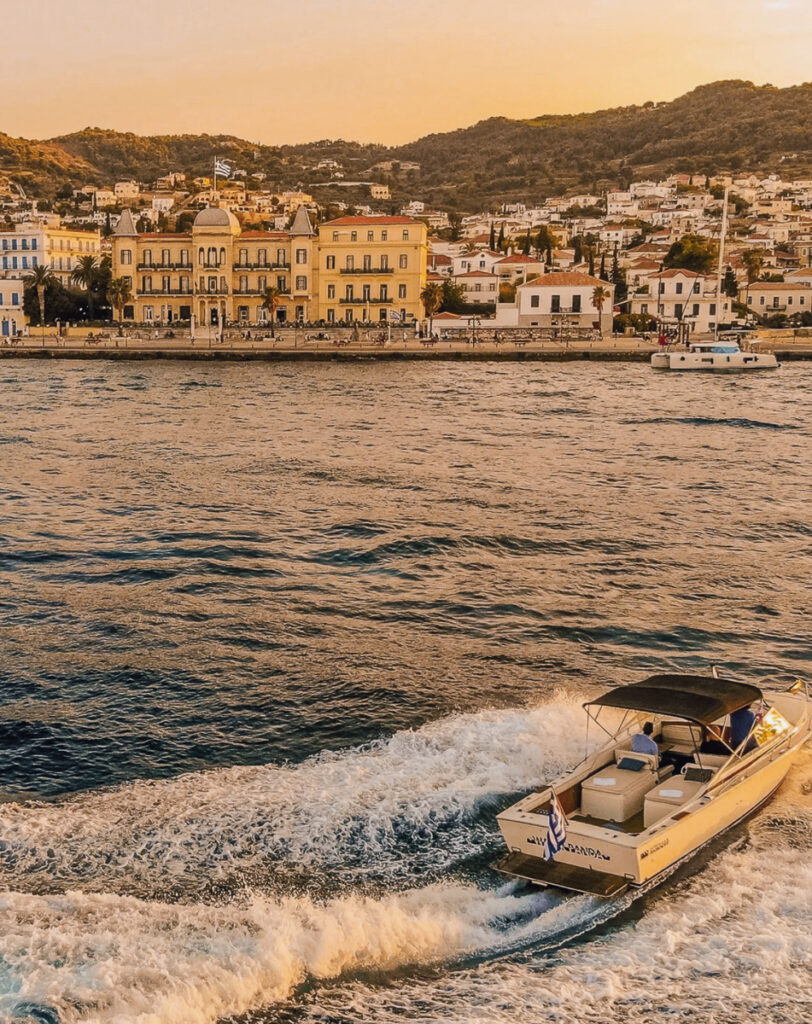
Discover our complete travel guide to Spetses – a two-hour catamaran ride from Athens, this pine-scented island is home to white-sand beaches, authentic dining, and waterfront bars where you can elegantly drink the night away.
Known for its old-world charm, sophistication, tranquillity, stunning beaches, and sprawling pine and citrus trees – Spetses is unique as it is one of very few Greek islands where cars are prohibited – creating a serene and nostalgic ambiance.
Offering a perfect blend of history, natural beauty, and relaxation, this all-year-round destination invites visitors to explore its old-school dining spots, cobblestone alleyways, majestic mansions, and secluded swimming coves.
Eat + Drink
Lunch + Dinner
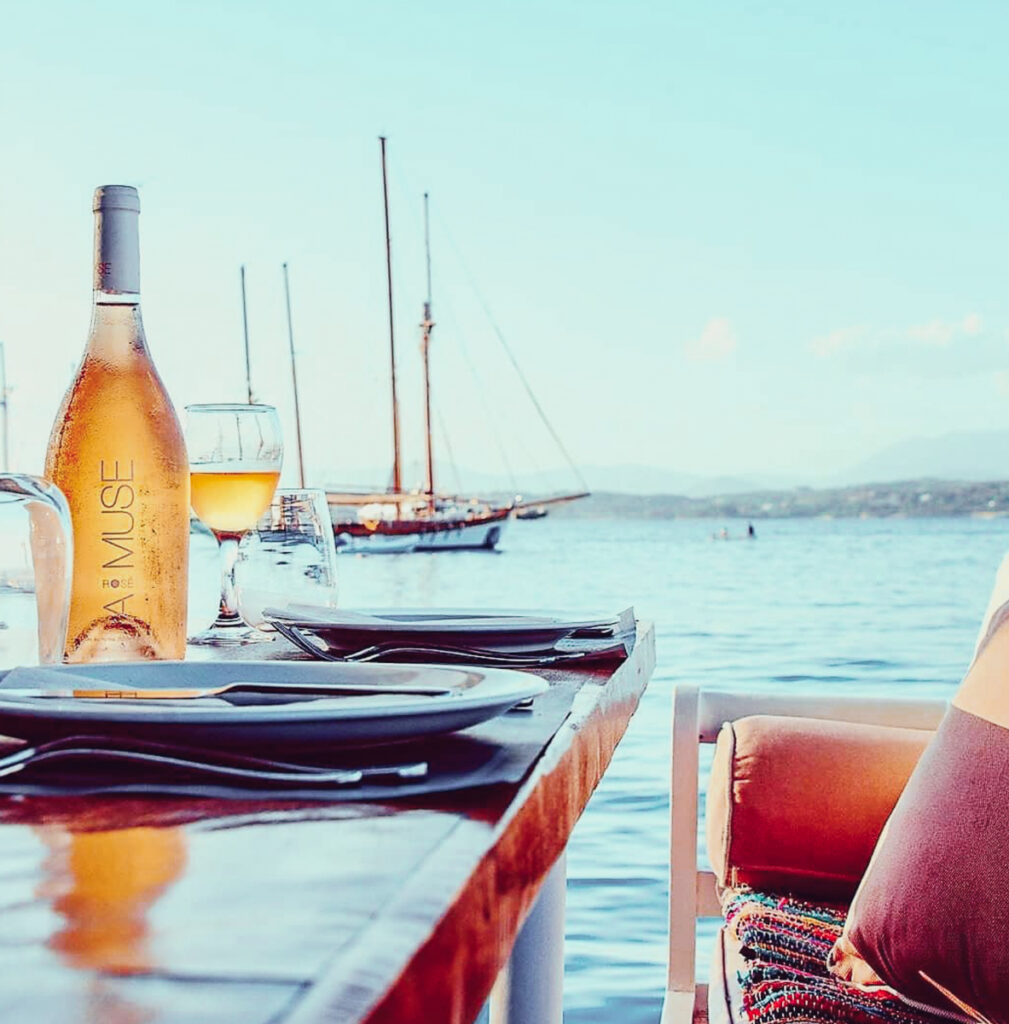
Mourayo- Housedin a 19th-century farmhouse, this awarded restaurant’s outdoor terrace offers front-row sunset seats and classic Mediterranean dishes that pair perfectly with a glass of rosé.
Bostani- This farm-to-table open-air restaurant serves fresh dishes using ingredients handpicked straight from the earth.
On the Veranda- For a fine dining experience, head to this seaside restaurant at the Poseidonion Hotel and choose from a delightful menu featuring dishes made with fresh and seasonal ingredients.
Tarsanas- For freshly caught seafood turned into classics such as octopus marinated in olive oil and vinegar, lobster pasta, and an unmissable kakavia (fisherman’s soup.)
Patralis- For more great seafood, this seaside tavern that’s been here since 1935, is the perfect spot to taste sea urchin salad followed by their signature squid pasta.
Agios- Serving modern cuisine, this spot is ideal for a long lazy lunch.
Coffee + Sweets
Vanilia- Located in the centre of town, just behind the church of Agios Antonios, make sure to try the island’s famous amigdalota (almond sweet).
Klimis- This long-running family shop is famous for its sokolatina (chocolate pie), galaktoboureko (custard pie), ekmek (cream and kataifi pie) and voutiki (serano dipped in chocolate.)
Tiramisu- For a delicious mille-feuille, decadent tiramisu and fantastic sweet vegan options, this is the place!
Drinks
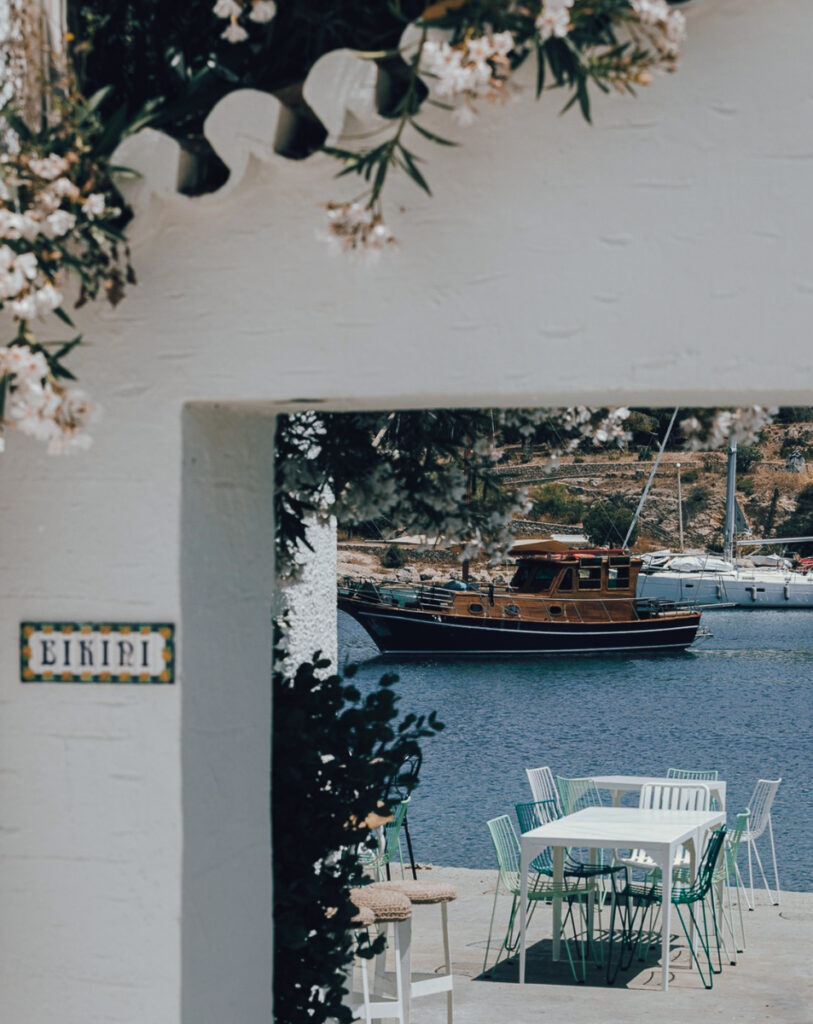
Bikini Bar- A hot spot thanks to a lush cocktail menu, cool lounge music, and all-round great vibes.
Mayo Café Bar- Fabulous all-day drinking spot set on a stunning terrace.
Spetsa Bar- This classic bar is where you’ll find locals having a pre or post-dinner drink.
Insider tip: This year will see the opening of two amazing new drinking spots in Spetses, where visitors can enjoy an aperitivo all day long! Taratsa and Spetses All Day Wine and Deli are set to open their doors in the upcoming weeks, and we can’t wait to have our first glass (or two) at both!
See + Do
– Spetses is the home of War of Greek Independence heroine Laskarina Bouboulina, whose statue stands outside Poseidonion Hotel, and also to the Bouboulina Museum where you can discover over three centuries of history and cultural heritage.
-We also recommend visiting the Museum of Spetses. Housed in the mansion of Chatzigiannis-Mexis, you will find exhibits that cover 4000 years of the island’s cultural history.
-Get your hands on a bicycle and peddle around the cobblestone streets and then explore the Palio Limani by horse and carriage.
-Visit Panagia Armata, a historic church situated on a picturesque hill overlooking Palio Limani.
– If you are in Spetses during Spring or Autumn, we recommend hiking the lovely green hills or cycling the coastal road that takes you around the entire island.
– Stroll around the cobblestone alleyways featuring mosaic designs and discover magnificent mansions and classy yachts along the way.
-Take a boat tour or rent a sailing boat and dive into the clear waters. Tip: make sure to sail over to Bekiris Cave for an unforgettable swim.
-Catch a film at one of the island’s open-air cinemas.
-Swim at one of the many beautiful beaches including Palaia Garifalos, Paralia Agioi Anargyroi, Agia Marina, or Agia Paraskevi.We also suggest a dip in the bay of Zogeria and then head straight to the seaside tavern next door for some lunch.
Shop
Spetses has some beautiful boutique stores that stock international brands and local designers. For some stunning pieces of jewellery, summer sandals and resort wear head to White Boutique, Soho Soho, Sea + Sun, and Mageia Boutique.
Stay
Poseidonion Grand Hotel- For a glamorous and stylish stay at Spetses’ iconic hotel, that’s been open since 1914.
Orloff Resort– This boutique hotel with a rustic chic vibe is great for families.
Yayaki- If you are looking for the perfect blend between a luxury boutique and a family guest house – this one is for you.
Essentials
Getting there: From the port of Piraeus in Athens, the trip to Spetses is about two hours with the flying dolphin and 2.5 hours with the flying cat.
Best time to go: Any time of the year- but if you are keen on a getaway that allows you to take part in a triathlon, check out the Spetses Mini Marathon, for those who love cycling head over during “A Weekend in Tweed” and for yachting enthusiasts, there is the annual Classic Regatta.
Ideal time to stay: Perfect place for a weekend getaway – but you can easily spend 3 – 4 days exploring the island.
Getting around: As mentioned, no cars are allowed however you can rent a bike or see parts of the island on a horse carriage.
What to pack: Swimmers, a linen scarf for the night breeze, and comfortable (needless to say stylish) footwear to walk and cycle.
Discover our travel guide to Pieria, a culturally rich region of Central Macedonia – known for its natural beauty, historical sites, and great food and wine.
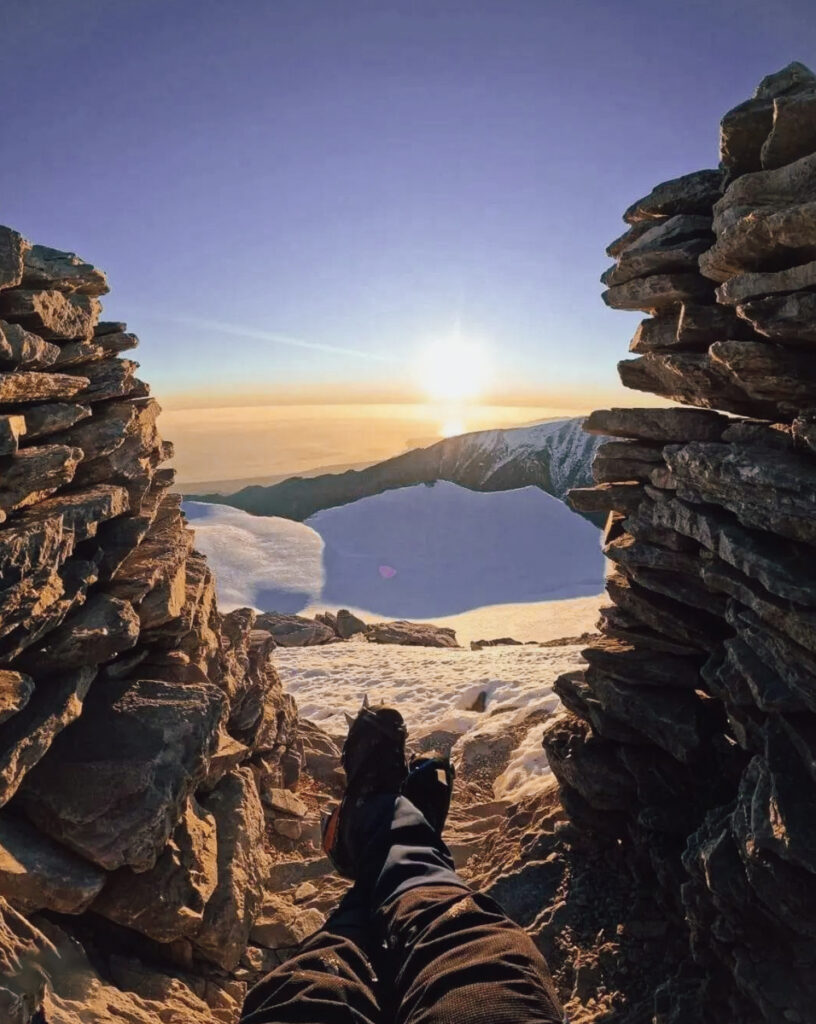
From hiking trails and lush forests to archaeological sites and beautiful beaches – Pieria is also home to Mount Olympus, the tallest mountain and highest peak in Greece, making it a great reason in itself to visit!
Although it’s an all-year-round destination, spring is the perfect season to visit and enjoy all the wonderful villages and towns that this diverse region has to offer.
Dion: for a walk through history
This small village is located at the foot of Mount Olympus and here you’ll find an amazing Archaeological Park and the Museum of Dion. An 8€ ticket will give you access to both these archaeological sites, allowing you to get up close to ruins of Ancient Macedonia, Egyptian sanctuaries, a Roman theatre, a cemetery, baths, temples, mosaics, statues and much more that came to light in 1928. For those who love the arts, keep in mind that over the summer months, Dion hosts a great range of plays, concerts and the Olympus Festival at the ancient Hellenistic Theatre.
Elatochori: for the perfect winter getaway
In the most mountainous municipality of the prefecture of Pieria, you will find Elatochori. This beautiful little village is built at an altitude of 800 meters and attracts thousands of visitors year-round, thanks to its outdoor activities that include hiking, mountain biking, and skiing at one of Greece’s most popular ski centres. Elatochori also boasts traditional stone-built houses, cobblestone streets, and charming tavernas. We also recommend exploring the village’s narrow alleyways, visiting the church of Agios Nikolaos, or just sitting back and enjoying the tranquil mountain atmosphere.
Platamonas: for the classic summer escape
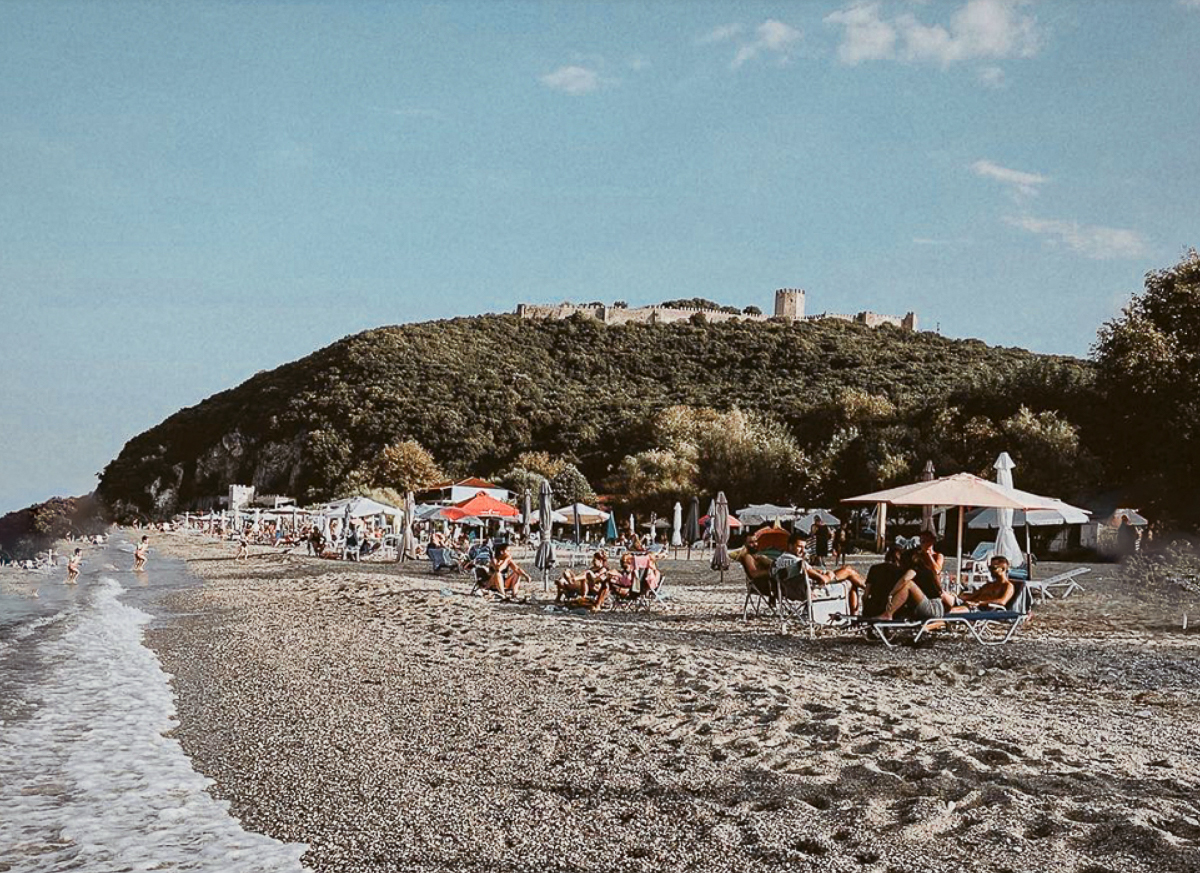
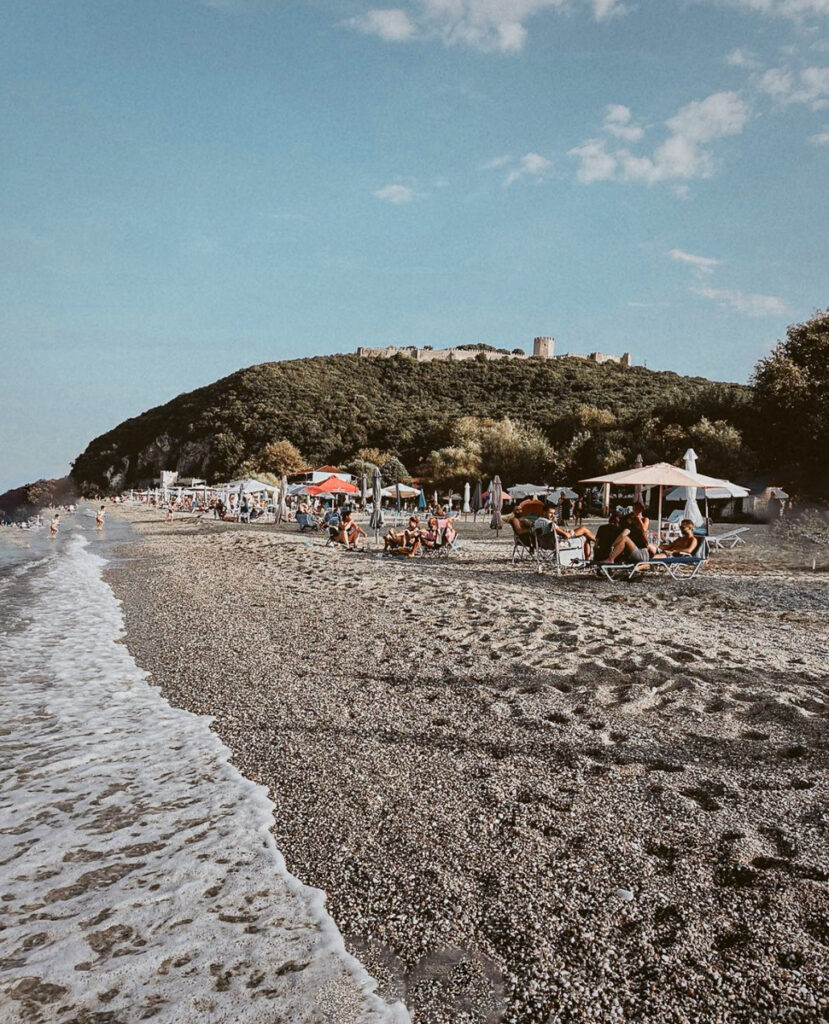
This gorgeous coastal town of Pieria should be added to your summer wish list! Known for its beautiful plane trees, sandy beaches, clear blue waters, and stunning views of the surrounding landscape – here you can have a swim and then take cover under the lush natural shade as you admire uninterrupted views of Platamon Castle. This medieval fortress dates to the 12th century and entrance inside is 3€, however, you can wander around the castle and courtyard for free, taking in the magnificent view of Thermaikos Gulf and Mount Olympus. Make sure to also head into town, where you’ll find a waterfront promenade lined with traditional taverns – perfect spot to sample some fresh local seafood and wine.
Litochoro: for romantic strolls (and hikes)
A pretty town built on the slope of the highest peak of Olympus, Litochoro has become the most common starting point for hiking expeditions for those who want to “conquer” the mountain of the gods. Litochoro stands out for its traditional architecture, lush forests, rushing rivers, and breathtaking mountain views. Attracting outdoor enthusiasts from around the world who come to explore the trails and peaks of Mount Olympus, those less adventurous can enjoy the picturesque streets, traditional tavernas, and cozy guesthouses. Tip: east of Litochoro, you will find Plaka Litochorou, which is essentially the coastal part of the city and is filled with a range of restaurants, cafes and campsites.
Gorge of Enipeas: for chasing waterfalls
A short distance from Litochoro begins the enchanting Gorge of Enipeas. It is a beautiful route that begins from the Mylon area at an altitude of 320m and ends at Prionia at an altitude of 1100m. Formed by the Enipeas River, which flows down from the slopes of Mount Olympus, carving its way through the rocky terrain – the gorge features towering cliffs, lush vegetation, and crystal-clear pools of water, creating a picturesque landscape that is perfect to explore. One of the highlights of the Enipeas Gorge is the series of waterfalls that cascade down the cliffs, providing a refreshing break for hikers!
Katerini: for a city break
Of course, the capital of this prefecture, Katerini, could not be missing from our list. A lovely city that has become a local favourite year round- here you will discover neoclassical buildings and bustling squares lined with cafes, shops, and restaurants. Stroll along the waterfront promenade for great food and drinks, or relax at one of the many parks including the Municipal Park and Levithra Park. We also suggest making time for Demokritia Square, the old Aquarium and the Church of Agia Paraskevi.
Vergina: for ancient royal tombs
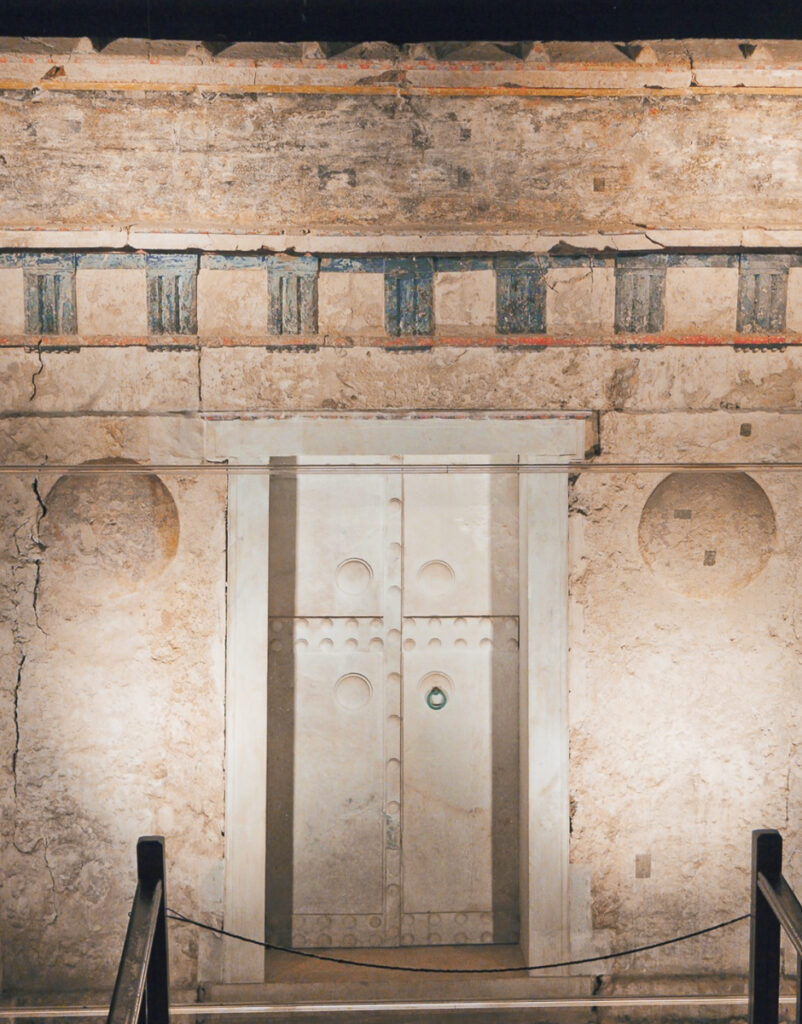
Nestled in the shadow of the Pierian Mountains, the ancient city of Vergina is where the story of Philip II of Macedon, the father of the famous conqueror, Alexander the Great, truly came to light. It’s now become a UNESCO World Heritage Site and home to the Royal Tombs of Aigai, one of the most amazing ancient sites in all of Greece. Explore the underground tombs where the remains of Macedonian kings, including Philip were discovered; it truly is an astonishing site that’s worth visiting – especially if you are a history enthusiast.
Getting there: From the city of Thessaloniki it’s a one-hour drive to the region of Pieria, and if you are making your way over by car from Athens, it will take around 4-5 hours, depending on traffic.
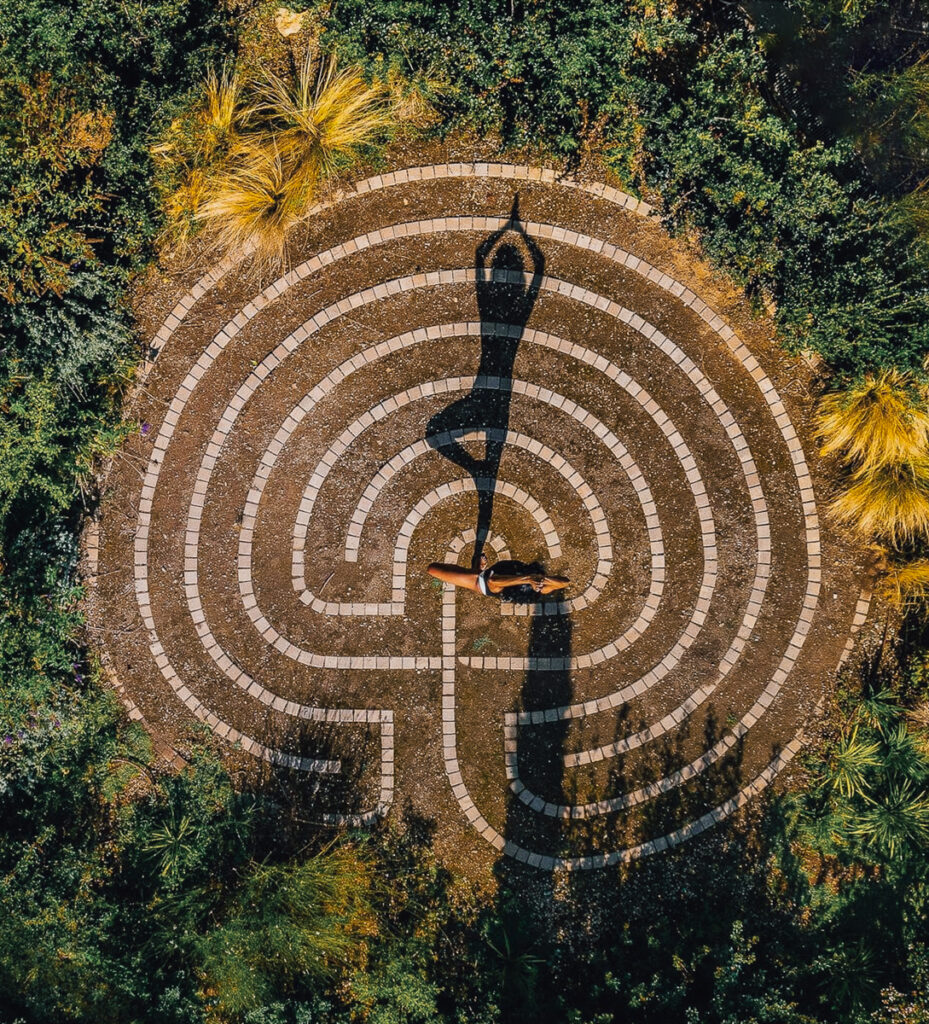
If you would like to start your summer drenched in sunshine, solace, and serenity, you may want to learn more about The Graceful Movement Retreat, where you can immerse yourself in five days of yoga and pilates classes taught by former classic New York ballet dancer Jennifer Dimitriou.
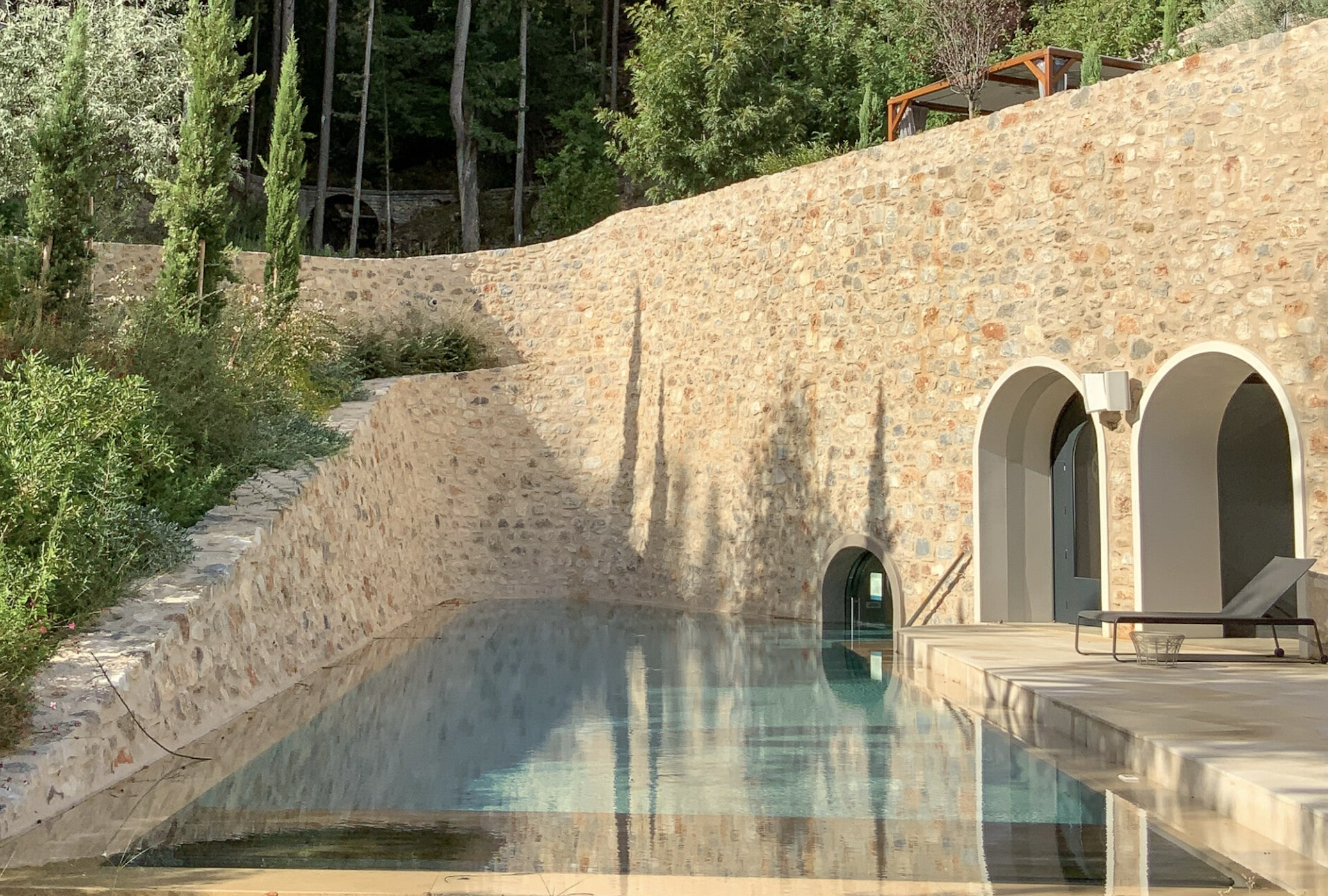
Realign Retreats has teamed up with The Graceful Movement to create the ultimate holistic getaway at Euphoria Retreats – a leading wellbeing resort tucked away in a lush hillside in the Peloponnese.
In early June, guests are invited to experience a unique movement practice along with award-winning spa facilities, and authentic cuisine – making this retreat a complete haven for anyone in search of relaxation and self-discovery.
We recently spoke with Jennifer Dimitriou and Elena Falida about their upcoming retreat that’s designed to cultivate a deep connection between the body, mind and spirit.
Can you tell us a bit about your unique teaching style?
Jennifer: It’s a fluid and elegant mix of yoga, pilates and ballet-inspired movement that’s especially focused on developing good posture, whole-body strength and mobility through graceful movements. My passion is to get as many people as I can to move well on and off the mat. I teach to my audience not to my agenda and I am a stickler for teaching good form because without that, the work is not effective; people get injured, and they won’t want to come back. Also, I never script anything, all of my classes are different and sometimes there’s more of a focus on one of the movement methods including yoga, pilates, or ballet barre. For me, the most important aspect of teaching is watching people transform. I believe in exchanging and creating good energy. Lastly, I’m a performer, so I love to move people – getting them out of their heads and into their bodies, which means a lot of laughing and fun. I want them to walk out feeling inspired and ready to take on their day spreading good energy.
What will be the main focus for your upcoming retreat?
Jennifer: We all need different things, but retreats are a time to give back to yourself, to release stress, to move, to breathe, to eat well, to enjoy, to learn something new, to take away what you need, and to leave the rest. It will be a retreat with a community of like-minded people coming together yet finding their individual selves.
Jennifer Dimitriou, creator of The Graceful Movement
Do you recommend a certain level of yoga experience or is it suitable for all?
All levels are welcome.
Why did you choose Euphoria as the location for your retreat?
Elena: Euphoria was a natural choice as it represents the highest example of a holistic wellness experience in Greece. The unparalleled wellbeing centre of Euphoria, with its impeccable facilities, creates one of the world’s ultimate healthy gateways. On top of that, a sense of tranquillity permeates Euphoria’s Byzantine architecture and monastic interiors, which is ideal for our guest’s experience whereas the surrounding private forest offers a restorative role of nature at your fingertips.
What can guests expect from the overall experience?
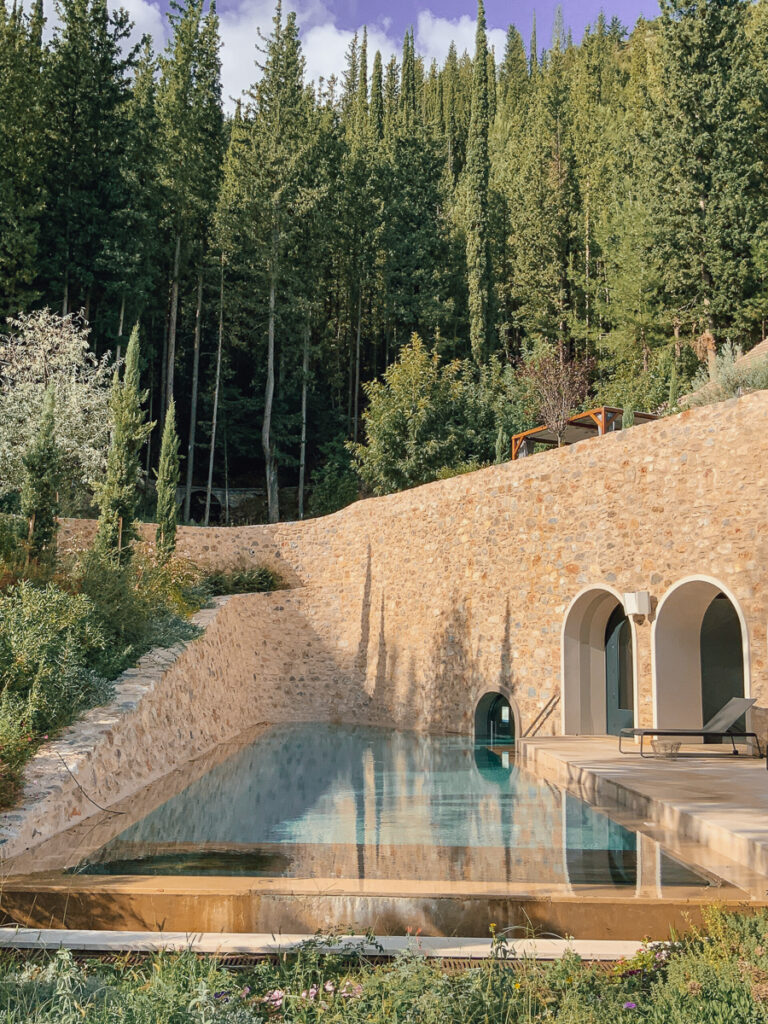
Elena: Fundamental to any stay at Euphoria is an exploration of their spa facilities, which is not just an architectural wonder but also the discovery of the most astonishing array of facilities – from swimming pools to exquisitely designed steams, saunas and much more awaits to introduce guests to the world of deep relaxation and self-exploration.
Then there’s Euphoria’s contemporary GAIA restaurant, which serves pure, authentic food that comes alive through the energy of the mineral-packed soil of the Peloponnese. Offering a blend of regionally inspired contemporary Greek and Mediterranean dishes, the emphasis is on simplicity, healthy living and full flavour.
In addition, guests will be immersed in The Graceful Movement method daily, where they will be guided (step by step) by Jennifer into the connection of the mind with the body.
Overall guests should expect to find themselves unfurling into a natural new rhythm, in tune with everything around them. After just a few days at our retreat, they will notice how a healthy routine of moving your body, eating clean nourishing food, and sleeping deeply after basking in sunshine with a like-minded community begins to make a tangible difference.
Will there be time to explore nearby areas?
Classes will be offered once or twice a day, so there is plenty of time to explore the beautiful resort and its top-notch spa, go hiking, or just sit by the pool and read.
What are you looking forward to most about hosting this retreat?
Jennifer: I absolutely love teaching smaller intimate groups such as retreats and workshops. It’s usually a great group that wants to be there and to practice. Also, I travel to Greece every summer, as my husband is Greek Australian, so it’s one of my favourite places to be in the world. I’m also really looking forward to staying at Euphoria – even though I’m working, it’s also a very inspiring time for me to take time for myself.
A trip to Ancient Epidaurus in the Peloponnese is the ideal two-day excursion for lovers of theatre, history, nature and tranquility.
Epidaurus offers visitors a unique opportunity to immerse themselves in the ancient world while gaining a deeper understanding of Greek history and culture. Discover the best places to eat, drink and explore when heading this way!
Perfect place for: couples, history buffs, and a wellbeing retreat.
Where to stay: There are plenty of family-run hotels and apartment-style accommodation available around the main town. And if you prefer boutique or luxury hotels, we recommend you stay in nearby Nafplio, which is only a 30-minute drive.
Must See + Do
Enjoy your day at the beach, try traditional dishes at quaint taverns, walk around the archaeological sites and explore the enchanting streets of the village, where ancient ruins and traditional homes intertwine. And never leave Ancient Epidaurus until you’ve seen a theatrical play (preferably at both theatres).
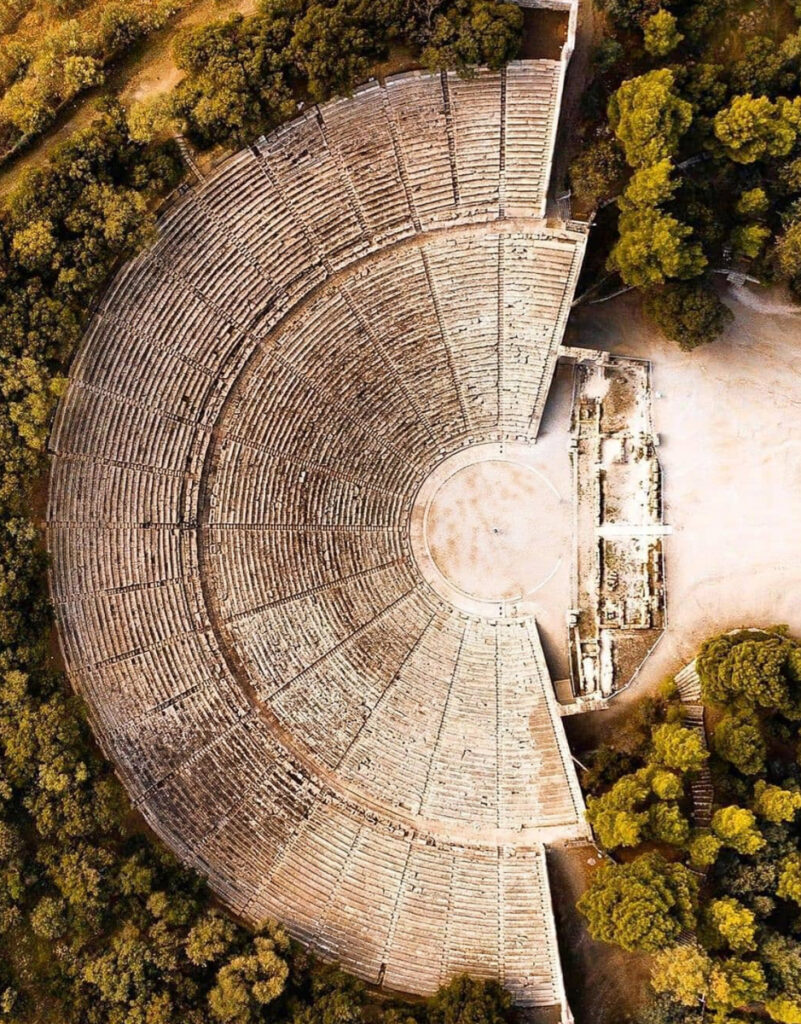
The Ancient Theatre of Epidaurus is not only a theater built in the 4th century BC, but a large archaeological site that’s known as the best preserved in all of Greece. Worth visiting in its entirety, Epidaurus is a UNESCO World Heritage Site and a popular spot, offering visitors the chance to explore its rich history, architecture, and natural beauty. The theatre is still used for performances, including ancient Greek dramas and modern plays, with plenty to watch during the annual Athens and Epidaurus Festival.
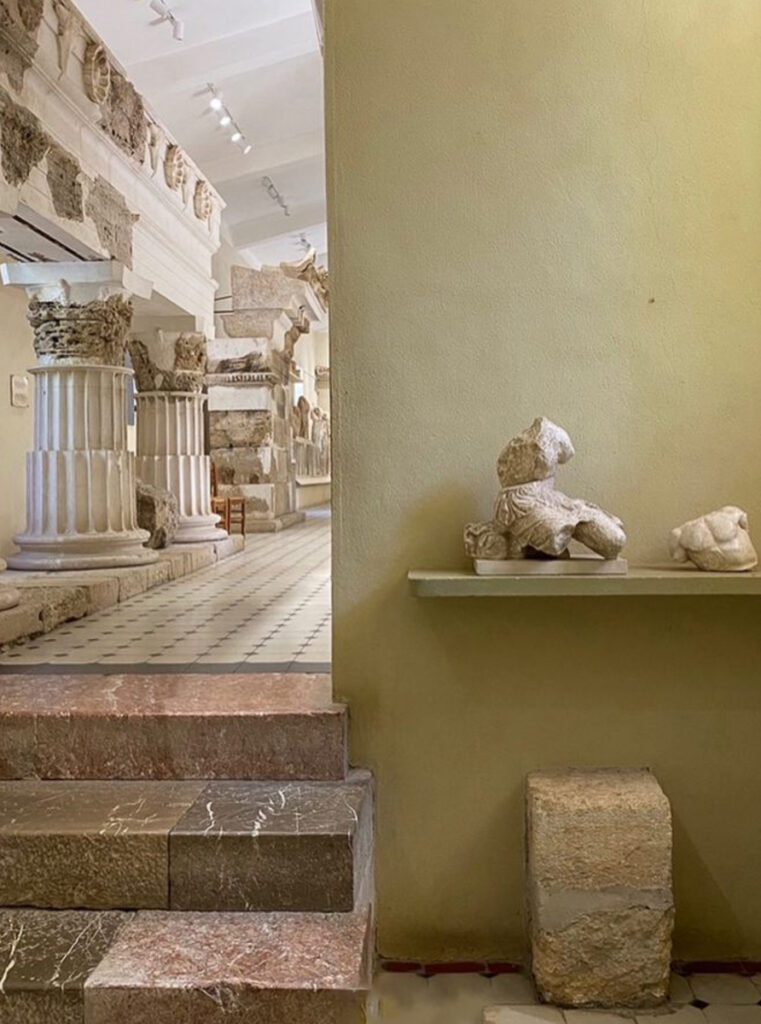
We recommend a tour of the entire archaeological site. Within it, you will also find the Archaeological Museum of Epidaurus, which hosts important finds from the excavations of the Asklepiion and the Theatre.
The Little Theatre of Ancient Epidaurus is also a must. Located in the heart of the town, you can walk here and admire the most peaceful and dynamic scenery, which includes the ancient theatre, ancient olive oil trees, and stunning sea views.
Βeaches
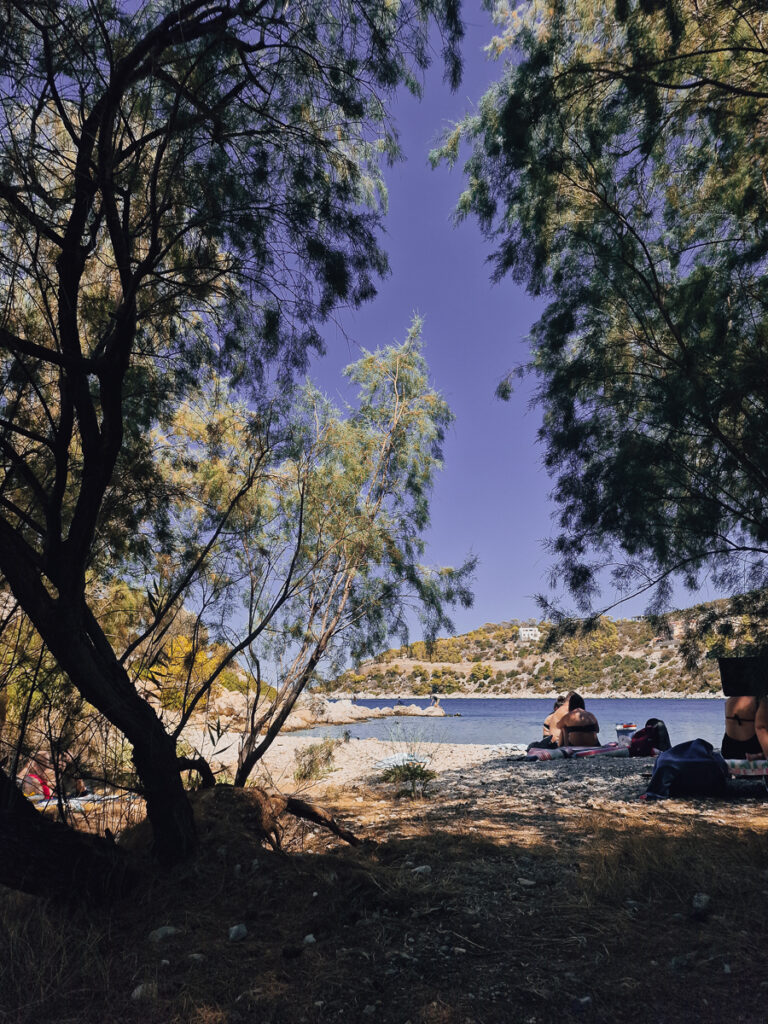
Kalamaki is probably the most beautiful beach in Epidaurus. You will find it in Palaia Epidaurus by walking for 5 minutes on a paved path that starts from Vagionia beach. The pine trees reach the coast and diving in its waters is pure magic. Gyalasi beach is the most popular in the area, as you can spend all day here under an umbrella and sunbed while enjoying a light lunch and refreshments from the beach bar.
Εat + Drink
Breakfast + Coffee
Start your day with an espresso or fresh juice from Koilon Café or Stork Café, which has a delightful brunch menu and incomparable views of the Saronic Gulf. And for those searching for something sweet, we suggest Agnanti tou Saronikou.
Lunch + Dinner
Epidaurus is famous for its traditional taverns where all dishes are cooked using locally produced oil and fresh ingredients from the area. We highly recommend ToPerivoli Tis Gogos, where you can dine under orange and mulberry trees, and also try Mouria for fresh seafood, and Ta Klimata, which serves authentic dishes in a lush green courtyard.
Dishes + Delicacies
Try the extra virgin olive oil from local producers, as well as anything made with orange, as the Argolida region is the biggest producer of oranges in Greece. As for traditional dishes, Epidaurus is known for its pork or lamb cooked with mountain herbs and of course, don’t leave without tasting local wine and spoon sweets.
Discover
Best view
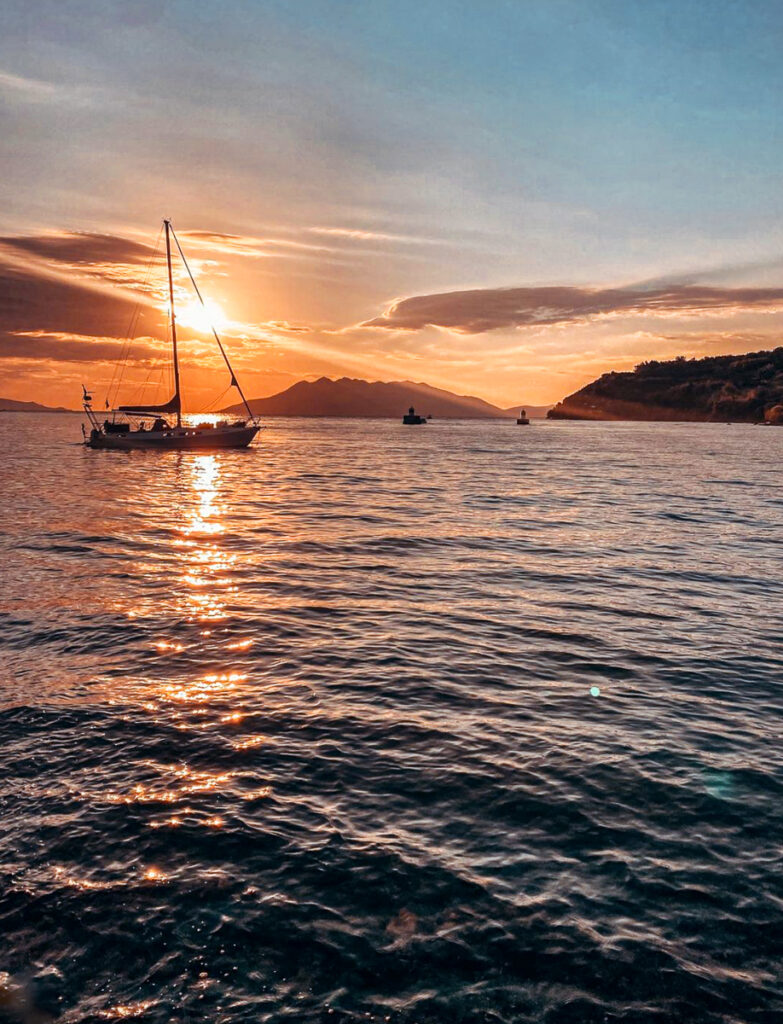
Try catch the sunset from the Little Theatre of Ancient Epidaurus– as the sun sinks into the sea, the light reflects off the olive leaves and bathes the ancient marbles of the theatre!
Local gem
A well-hidden treasure that few know about is the Sunken City of Ancient Epidaurus. At the edge of the town’s beach, in the quietest spot far from sunbeds you will find these submerged ruins, revealing the existence of the ancient city. Just two metres deep, you can snorkel and swim among vessels, allowing you to dive deep into history. Tip: just watch out for spiky sea urchins!
Ultimate day trip
Visit the beautiful town ofNafplio, which is only 30 minutes away by car. As you drive along you will marvel at the gorgeous scenery, including the stunning countryside. We also suggest you stop off at nearby local vineyards to sample some of the best Greek wines on offer.
Essentials
Getting there: by car or bus from Athens it takes around 2.5 – 3 hours, depending on the traffic.
Make sure you take home: souvenirs from the Epidaurus theatre box office and cute postcards from local souvenir shops in town.
Best time to gο: from June to August, when the Athens Epidaurus Festival is held.
Ideal time to stay: 2 days (weekend is preferable).
Getting around: You can easily walk around the town, however, if you want to see nearby attractions we recommend hiring a car.
We’ve rounded up our top five Greek Island day trips from Athens for 2024!
The allure of Athens is undeniable. Filled with history, culture, and culinary delights on every corner, you could easily spend weeks in the capital and still have lots more to explore. But for those searching for a quick Greek island escape, there are several options easily accessible by ferry.
So whether you’re looking for a memorable day trip or the next destination to continue your SS24 Greece holiday, these spots are all within two hours of Athens.
Hydra
If you want to spend some time in a cosmopolitan and chic setting, Hydra is the perfect choice. Known for its vibrant arts scene, the island attracts artists, designers, writers, and musicians from all around the world. Think striking stone-built houses, quaint narrow cobblestone streets, secluded coves, and a rugged coastline perfect for a quick dip! Visitors can also spend the day exploring the town’s beautiful waterfront promenade while enjoying some fresh seafood and local wine at one of the many restaurants or all-day bars.
Ferry tips: Ferries to Hydra from Athens depart from the port of Piraeus and take around 1.5 hours with high-speed services.
Andros
If you’d like to explore a more authentic side of the Cycladic islands, Andros is the ideal place! Featuring stunning beaches, secluded waterfalls, and picturesque villages, it’s an ideal location for swimming, hiking, and eating! Keep in mind it’s a huge island (the second largest of the Cyclades), so if you are only planning on spending a day, we recommend you head straight to the Chora where you can explore the neoclassical mansions, museums, cafes, restaurants and bakeries. Neiborio Beach is located on the left side of town just a few metres from the main street – so you can easily fit in a swim before departing!
Ferry tips: Ferries from Athens to Andros depart from Rafina Port and take around 1 hour with the high-speed services.
Kea
If you love rugged landscapes and a relaxed atmosphere, Kea should be at the top of your list! Retaining its authentic charm, Kea is the closest Cycladic island to Athens and one of the most popular among locals looking for a quick island escape. Spend the day enjoying local cuisine and the island’s lovely delicacies, then make your way over to Sikamia beach for a refreshing swim before catching the sunset at the main town of Ioulida, which overlooks the Aegean.
Ferry tips: Ferries to Kea from Athens depart from the port of Lavio and take around 1 hour.
Aegina
With up to 30 ferries crossing per day from Athens to Aegina, this is by far one of the most popular day trips from the capital! Aegina is ideal for those looking for a jam-packed day filled with good food, great swimming, and impressive ancient monuments along the way. Known for its wonderful landscapes and traditional villages, Aegina is also home to the sanctuary of Aphaia, one of the best-preserved ancient temples in Greece, which offers breathtaking views of the entire island. And don’t leave before you get your hands on some of the locally grown pistachios – known as some of the best in the world!
Ferry tips: The ferry from Athens to Aegina leaves from the port of Piraeus and takes around 40 minutes on the high-speed ferry.
Kythnos
Slowly becoming more and more well-known thanks to its beautiful beaches, impressive hiking trails, and relaxing atmosphere, Kythnos is a great island to explore traditional Cycladic architecture, Byzantine churches, and cobblestoned alleyways that are perfect for an afternoon stroll. Make sure you swim at Kolona or Agios Sostis Beach before heading over to the Castle of Oria where you can take in the stunning views of the Aegean Sea! And also try some of the local seafood – it’s as fresh as it gets!
Ferry tips: Travel from Athens to Kythnos by ferry from the port of Piraeus or Lavrio – the high-speed ferries will get you there in around 1.5 hours.
Lesvos is a captivating Greek island known for its rich history, stunning mansions, and warm hospitality. And we’ve put together our top 8 experiences to help you explore this beautiful destination.
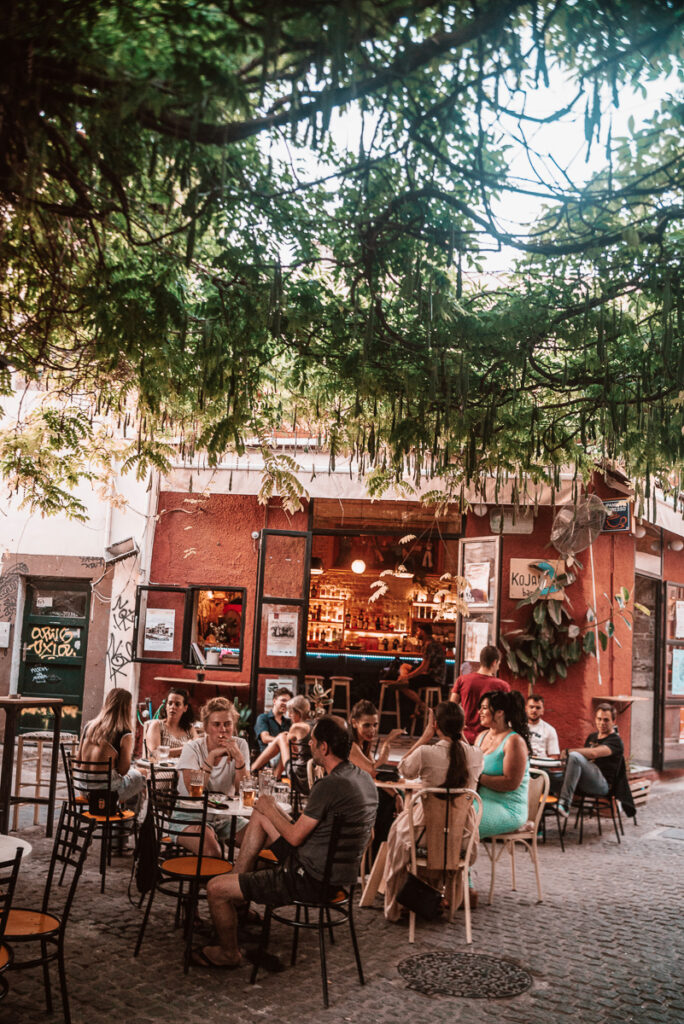
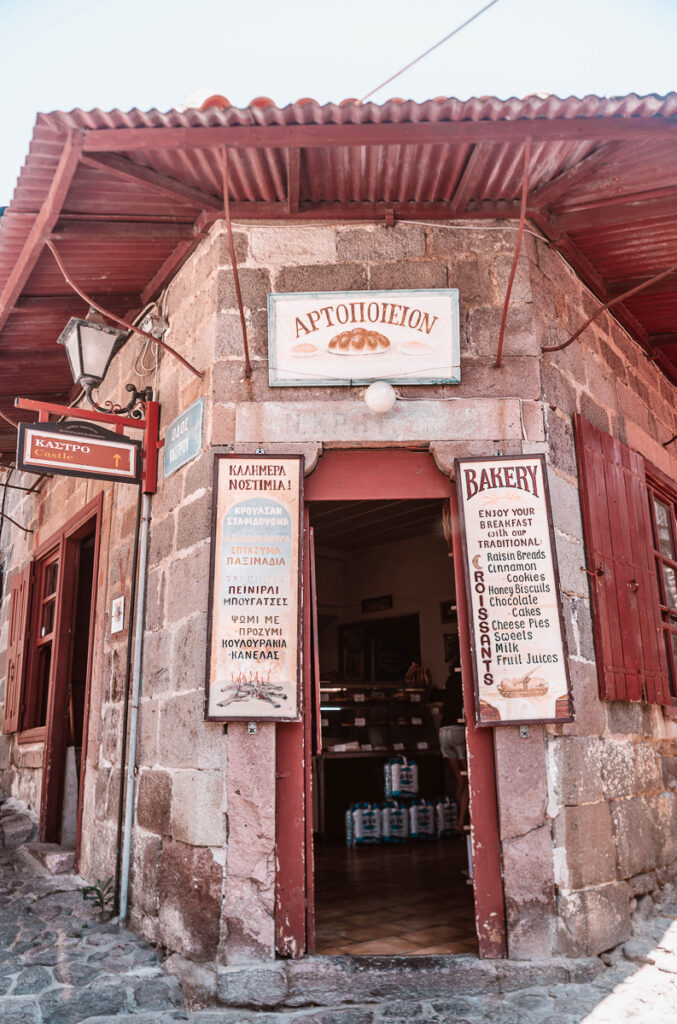
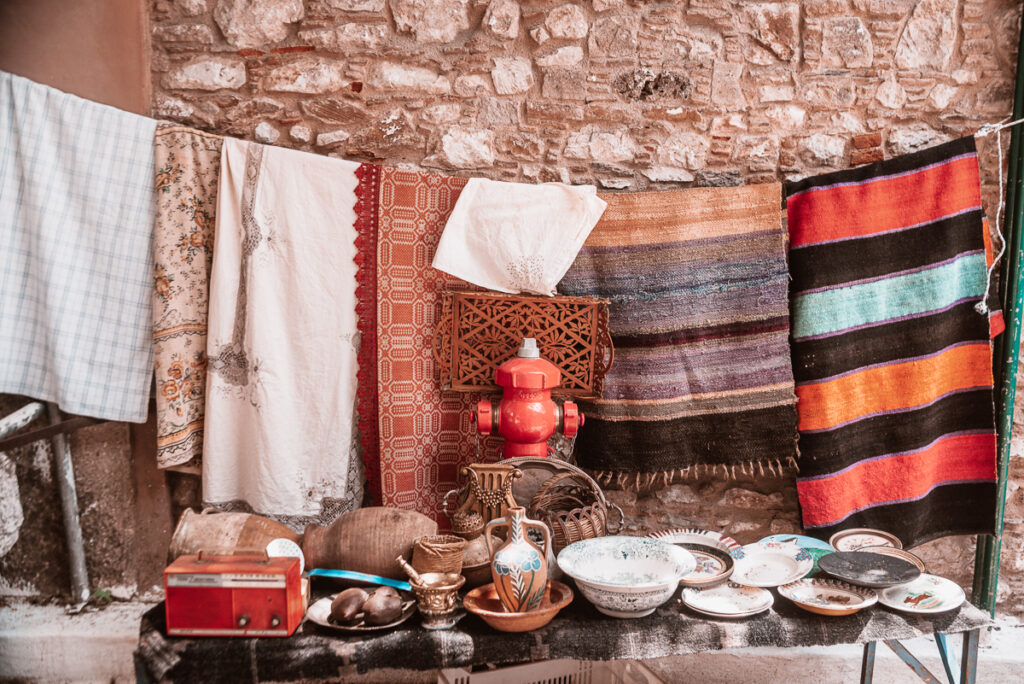
Α trip to the third largest island of Greece offers experiences that one cannot imagine exist on a single island. Lesvos, the homeland of Elytis, Myrivilis, Venezis, Theophilos, and Sappho, reveals so many different faces and carries on its soil a strong heritage that locals are proud of- discover more here.
Explore Mytilini, the glorious capital
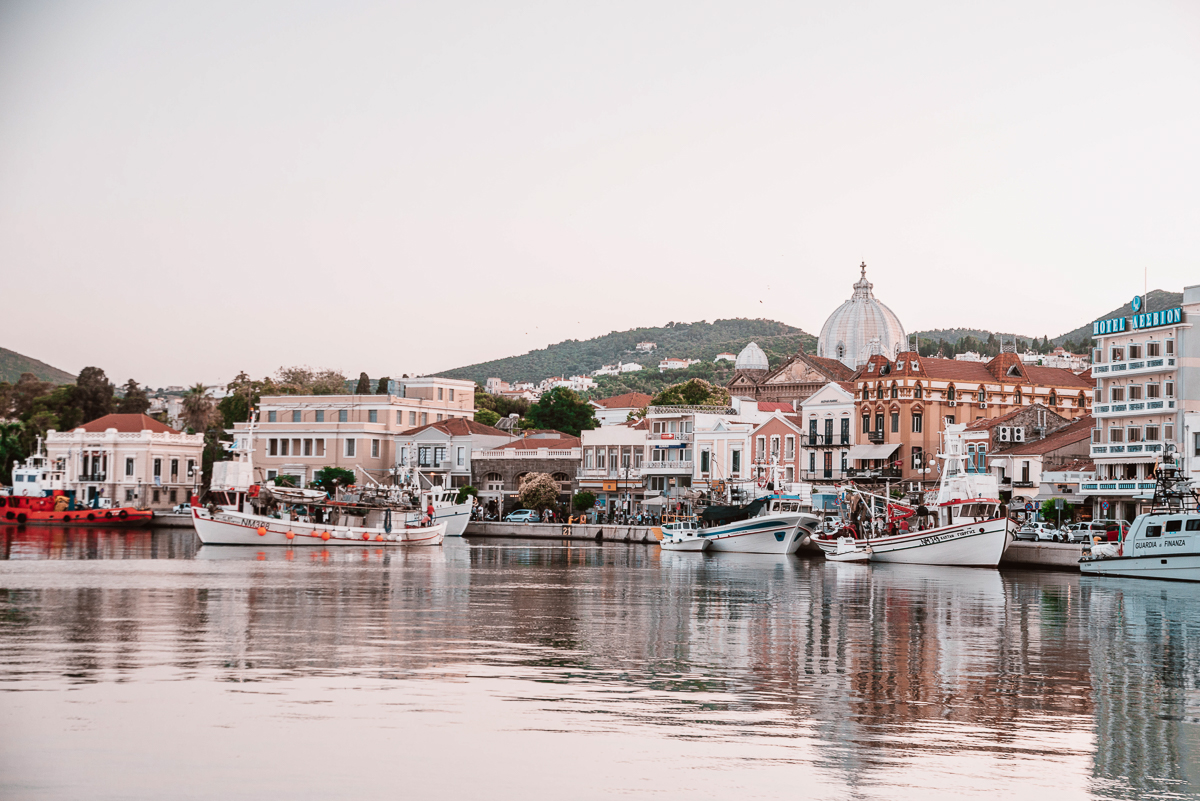
The history of the capital of Lesvos dates back to the 10th century BC. You will feel the thrill once you start driving along the coastal road, next to a series of old mansions – each with its distinct architectural style, clearly competing in glamor and excellence. Just wait until the sunset. A picture-postcard image waits for you, as the sun spreads its warm light on the neoclassical buildings of the waterfront with the triangular roofs, the bell tower of the Metropolis, and the castle of Mytilini, one of the largest in the Mediterranean. In the narrow back alleys, you will find Ladadika, a historic district of Mytilini that is buzzing with cool bars and taverns serving local recipes. Stop by the Ermis cafe and restaurant with two hundred years of history and decor that prove it. Drink a Greek coffee on the embers and try recipes from Asia Minor. Stop by important Ottoman monuments, such as the Yeni Mosque and the Charsi Hammam, and walk along Ermou Street with its modern and antique shops, while in the Varia area, visit the famous museum of the popular painter Theophilos and the Tériade Museum of Modern Art with works by Matisse, Miró, Picasso, and Tsarouchis.
Relax in thermal waters at Therma Spa
Just outside of Mytilini, indulge in the beneficial properties of Therma Spa Lesvos (tel. 2251041503). The thermal water comes to the surface from a depth of 2,500 meters, penetrating various rocks along the way that enrich it with valuable ingredients for health and wellbeing, as it gushes out like an artesian at a temperature of 39.5 ℃.
Wander in the fossil forest
20 million years ago, volcanic ash covered a large part of the North Aegean and “froze” in time tree trunks, branches, leaves, roots, and even some animals that once lived here. Today the fossilized forest of Lesvos is a valuable natural museum. It is often referred to as the “Pompeii of the plant world” and is a member of the UNESCO global network of geo-parks.
Visit Plomari, the homeland of ouzo
The picturesque cobbled streets of Plomari are eagerly waiting for you to cross them to experience the special atmosphere of a place that knew great development in the 19th century since it had many olive mills, soap factories, a nuclear factory, and ouzo factories (today in the island’s cafes you can try all 20 different ouzo labels from local producers). After the Asia Minor Catastrophe, Plomari lost part of its old glory, as the possibility of trading with the Turkish coast stopped. At the same time, the recent earthquake of 2017 has also left its mark. On the waterfront of the port, you will take a photo of the Athanasiadeion, also known as the “Great Cafe”, one of the most magnificent cafes on the island. A hallmark of the settlement is the century-old plane tree in the central square, which is said to have been planted in 1813.
Discover the joy of bird-watching
The location of Lesvos in the Eastern Mediterranean and its wide variety of wetlands form the ideal passage for the endemic and migratory birds from Asia, Africa, and Europe. At least 134 different species pass by the island (from black storks, white storks, brown geese, avocados, wine birds, sea urchins to pink flamingos). Wooden houses in Agia Paraskevi, Dipio – Larsos, and Kalloni, are observatories for rare and protected birds.
Visit Molyvos, a village with the world’s most beautiful alley
Mithymna, or Molyvos as it was called during the Middle Ages, is situated on a small mountain topped by the dramatic Castle of Mithymna, one of the best preserved in the Eastern Mediterranean. Walk along the main cobbled street of the settlement, and wander around the main market with charming shops and little cafes. During spring, the wisteria creates a purple pergola above the cobblestones that certainly resembles paradise. In the park of Molyvos, the old oil factory has been transformed into one of the most interesting hotels on the island. It is worth seeing the picturesque fishing port of Molyvos, with boats and trawls.
Agiasos, a village “time machine”
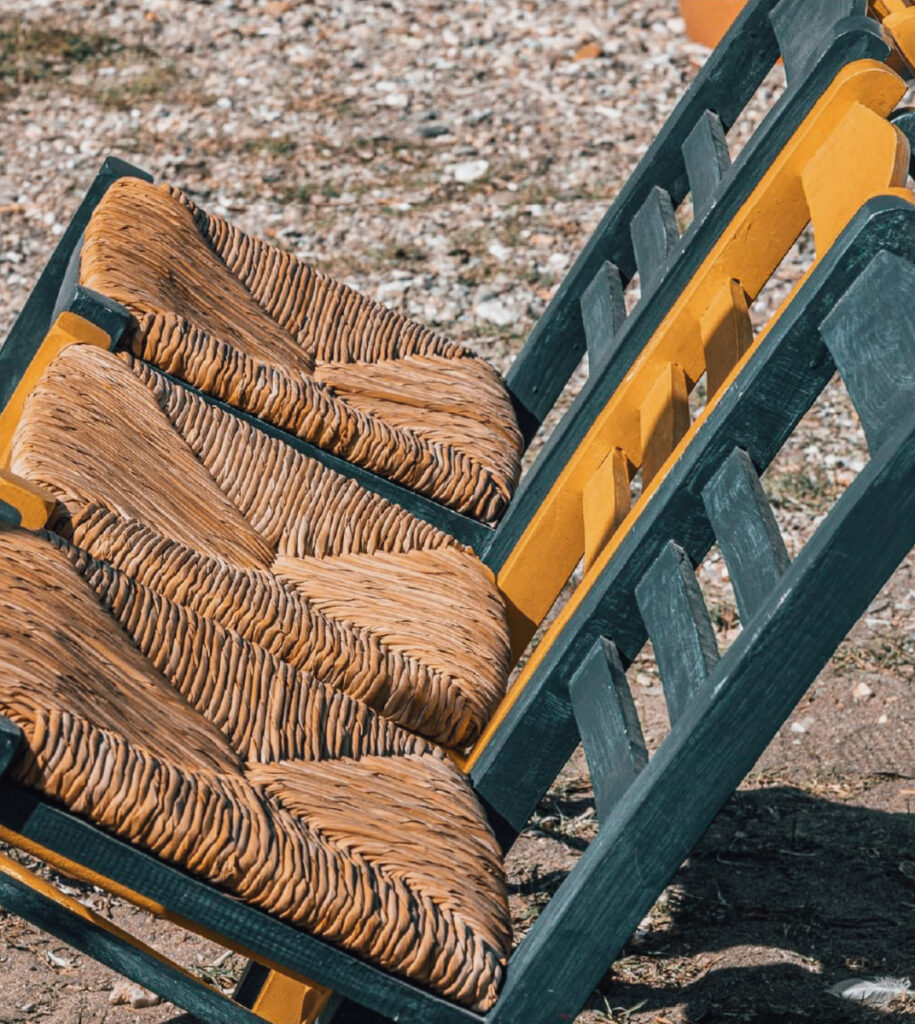
Built on the slopes of Mount Olympus, Agiasos will inspire you with its vivid appearance, right from its square with the colourful chairs. It is impossible not to meet Mrs. Efstratia Tourvalis and her corner shop (with the climbing plant intertwined with her creations) standing in the same spot for 64 years. She will welcome you with the local dialect of the inhabitants of Agiasos, blowing a whistle that produces bird sounds. Opposite this shop, you will find the Reading Room of Agiasos (which was founded in 1894 during the Turkish occupation and continues its multifaceted activity to this day without interruption), to meet the teacher of santouri (instrument of the hammered dulcimer) Mr. Zafiriou who plays the unique traditional music of Asia Minor. A few steps further up are enough to see the “coffee houses”. Enjoy a coffee in the embers and “kainari”, a drink with many spices that are made only in Agiasos. Savor the traditional sweet “placeta” that resembles baklava under the shade of the vine, in this picturesque alley next to the impressive church of Panagia of Agiasos.
Visit Agios Taxiarchis Monastery
Taxiarchis is the patron saint of Lesvos. It is said that he wore iron shoes and ran everywhere to protect the Christians. The dark face of the icon is full of power as it projects through the shimmering silver frame. Even today, pilgrims have mixed feelings about this unique image. Sometimes they see the Saint’s face as very wild and sometimes very calm and familiar, believing that in this way the Saint is trying to convey various messages to them. According to tradition, all of the monks at this monastery were massacred during a Saracen raid. The only survivor was a young novice, Gabriel, who was hiding on the roof and saw the roof tiles miraculously turned into a stormy sea and Archangel Michael wielding his sword against the attackers and fighting them off. While the vision was still fresh in his memory, the novice made an icon of the saint using the soil and the blood of the fallen monks.
We have rounded up the best Christmas destinations in Greece for those who are searching for authentic experiences, excellent local cuisine, countless activities, and direct access to historical attractions that create unforgettable memories during the festive season.
Xanthi
Rich historical background, unique beauty, tradition, cosmopolitan atmosphere and plenty of attractions make Xanthi an overwhelmingly enchanting city. Whether you are a history fan, a nature lover, a foodie wanting to indulge in local dishes and Eastern-type sweets, or even an entertainment addict seeking to experience the city’s vibrant nightlife, the region of Xanthi will satisfy even the most demanding of visitors. During this period, the Old Town of Xanthi’s most charming district and the most important landmark of the city, with a Belle Epoque style, is filled with Christmas trees and pretty ornaments, fun ice rinks, concerts, and creative performances.
Drama
Positioned as a hidden gem in northern Greece, Drama provides an alternative to more touristy locations. Its authenticity, combined with the promise of a relaxing and unique stay, may make it particularly attractive to travellers seeking a more intimate and off-the-beaten-path experience. The area of Drama is filled with forests, rivers, and lakes, and during the snowy season, the Falakro Ski Centre awaits you to sleigh your way down the magnificent, wooded slopes. From late November the ultimate Christmas feel is present in the center square of the city where “Oneiroupoli” opens its doors. This is the Christmas village straight out of a child’s sweetest dreams where Santa Claus and his elves welcome daily visitors with crafts, sweets, Christmas hand-painting workshops and other festive activities.
Ιοannina
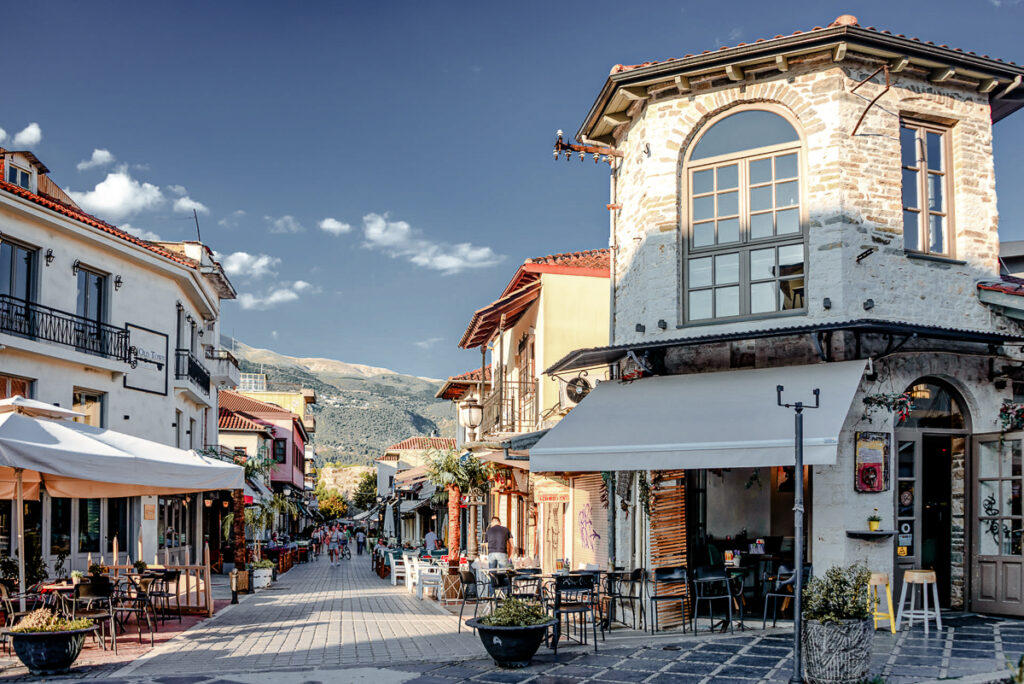
This is one of Greece’s most popular winter destinations in terms of beauty and history. The Christmas decor includes lots of gold and lights while the lanterns flood the center of the city, illuminating the town and creating a unique festive atmosphere. The most popular spots to visit are Pamvotida Lake and its small island, the castle, and the lakeside Amusement Park of Ioannina. For ski lovers, we recommend a visit to the Vasilitsa ski center. For those seeking some moments of relaxation during the Christmas holidays, we suggest you grab a hot drink in one of the coziest cafes around the lake while gazing at the snowy landscape.
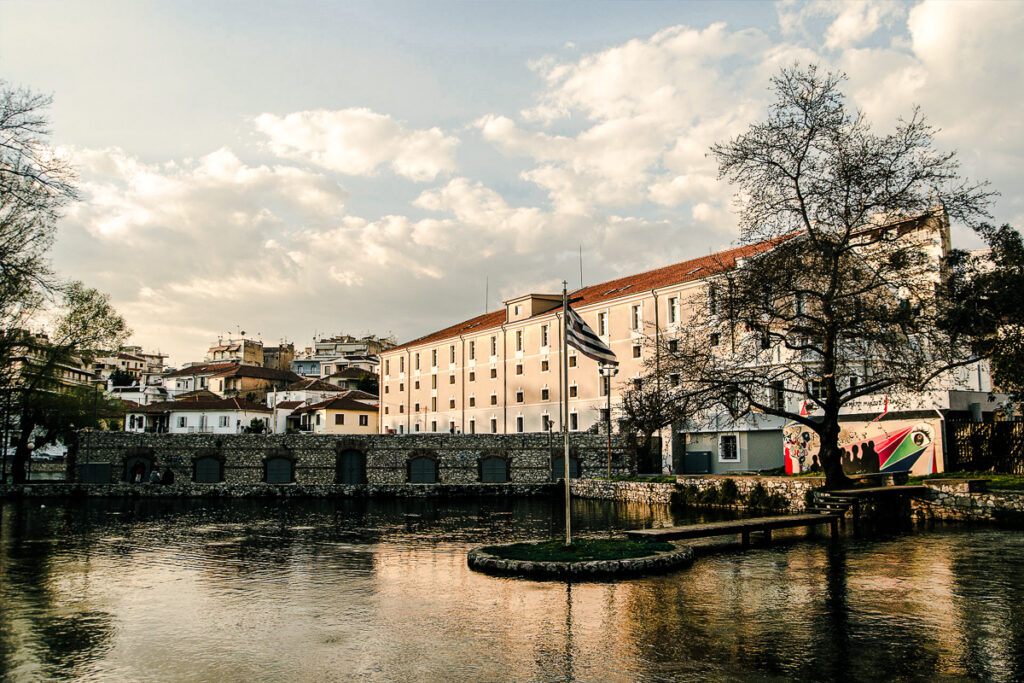
Syros
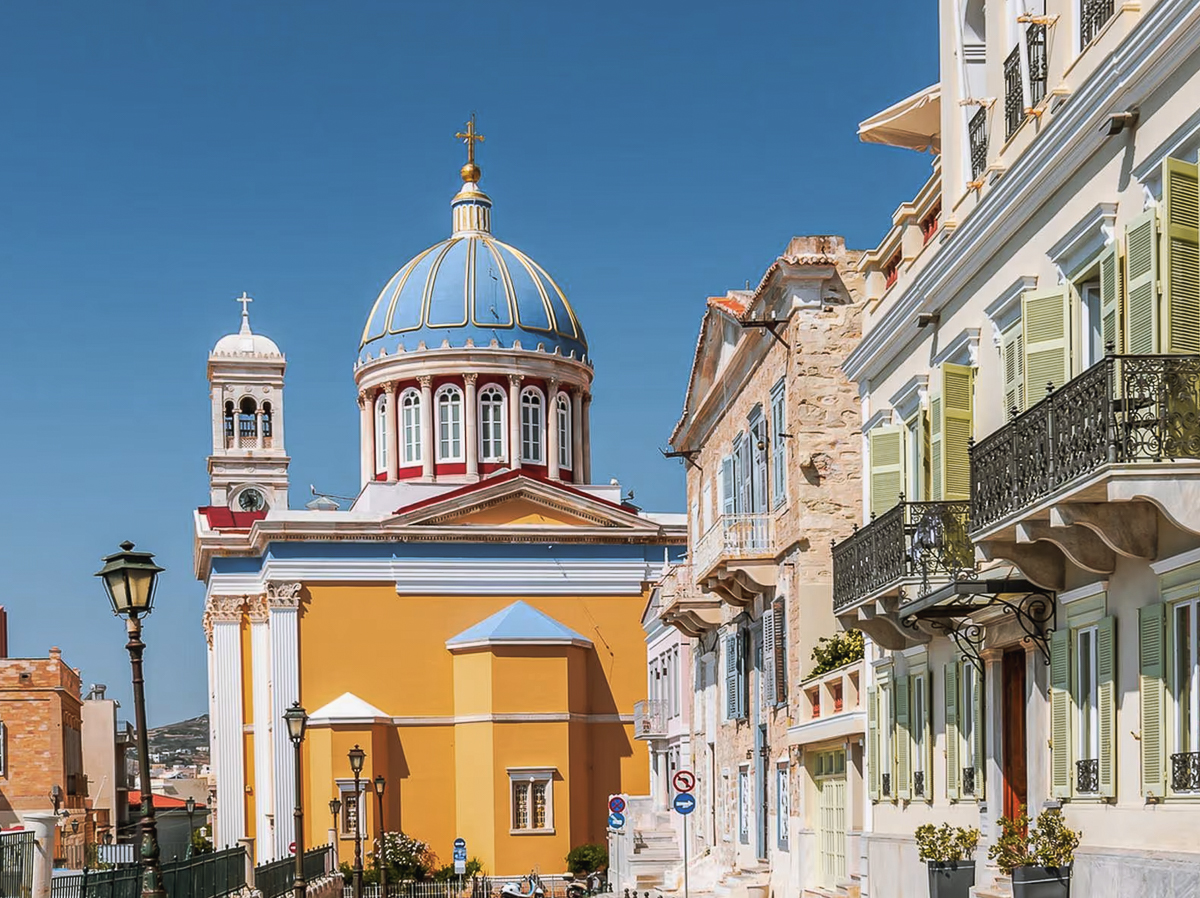
Yes, you read that right – one of our favorite islands for Christmas is Syros! From Christmas Eve to New Year’s Eve, the Cycladic festivities take on a new dimension, creating a magical setting with scenery that looks like a fairy tale in the capital of the Cyclades. The Apollo Theater, a true cultural treasure for Syros is always buzzing during the Christmas period with performances and concerts. Additionally, the decorations, countless lanterns, and children singing traditional carols turn Ermoupoli, the capital of Syros, into a colourful Christmas celebration!
Rhodes
Christmas on the “Island of the Knights” has a special touch. Rhodes, with its medieval atmosphere and hidden treasures, is delightful during the festive season. It is worth walking around the illuminated Old Town of Rhodes, admiring the golden lights at the medieval castle a UNESCO world heritage monument, and visiting the Acropolis of Lindos, as well as the ancient cities of Kameros and Ialyssos – in absolute peace. At the same time, there’s also a vibrant nightlife with plenty of music events and festival activities that are loved by both locals and visitors.