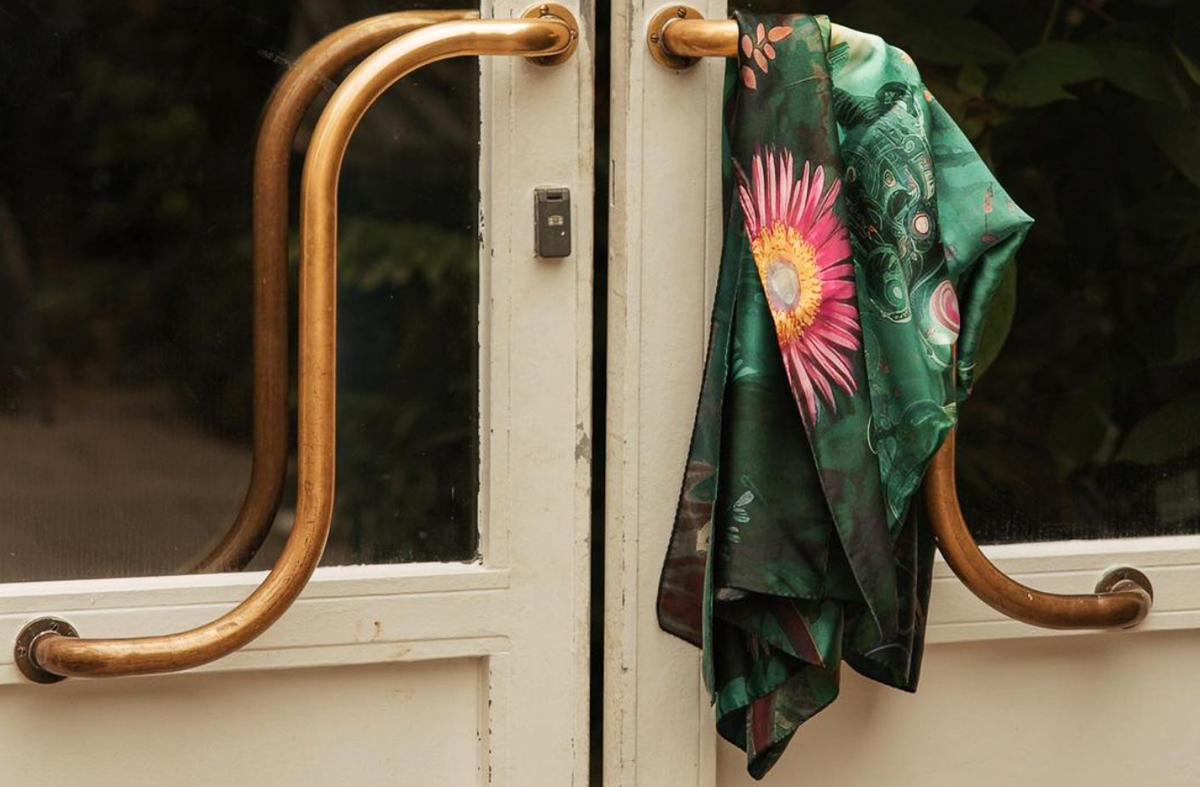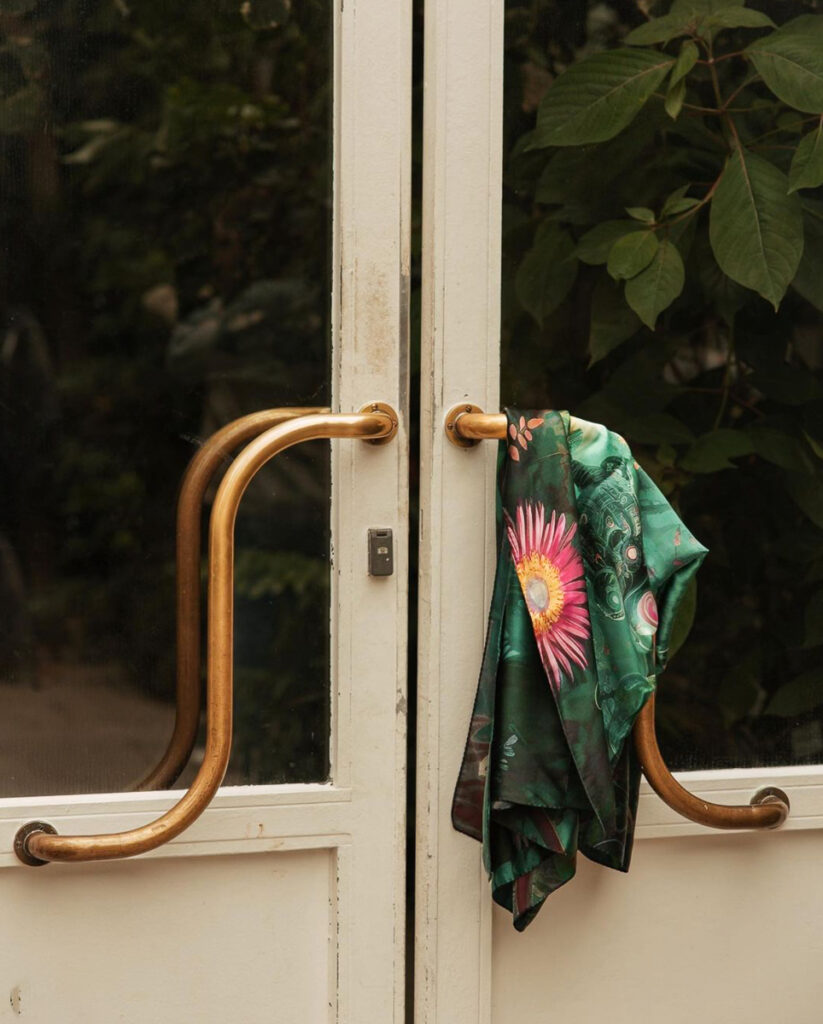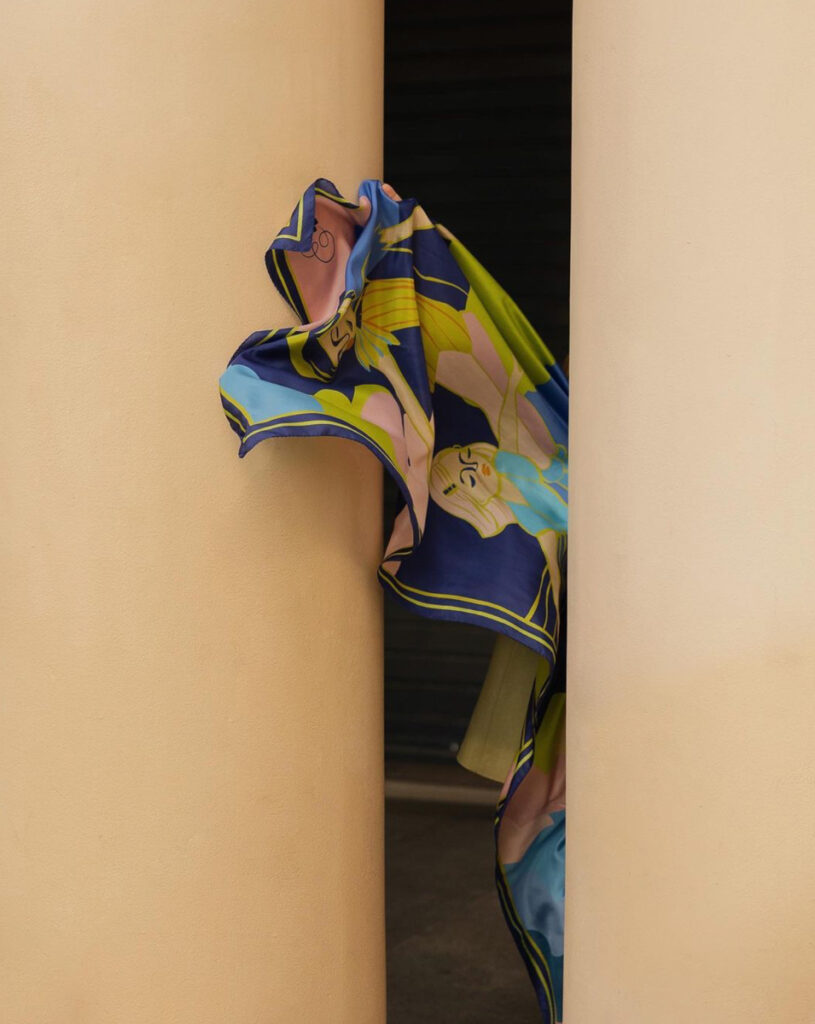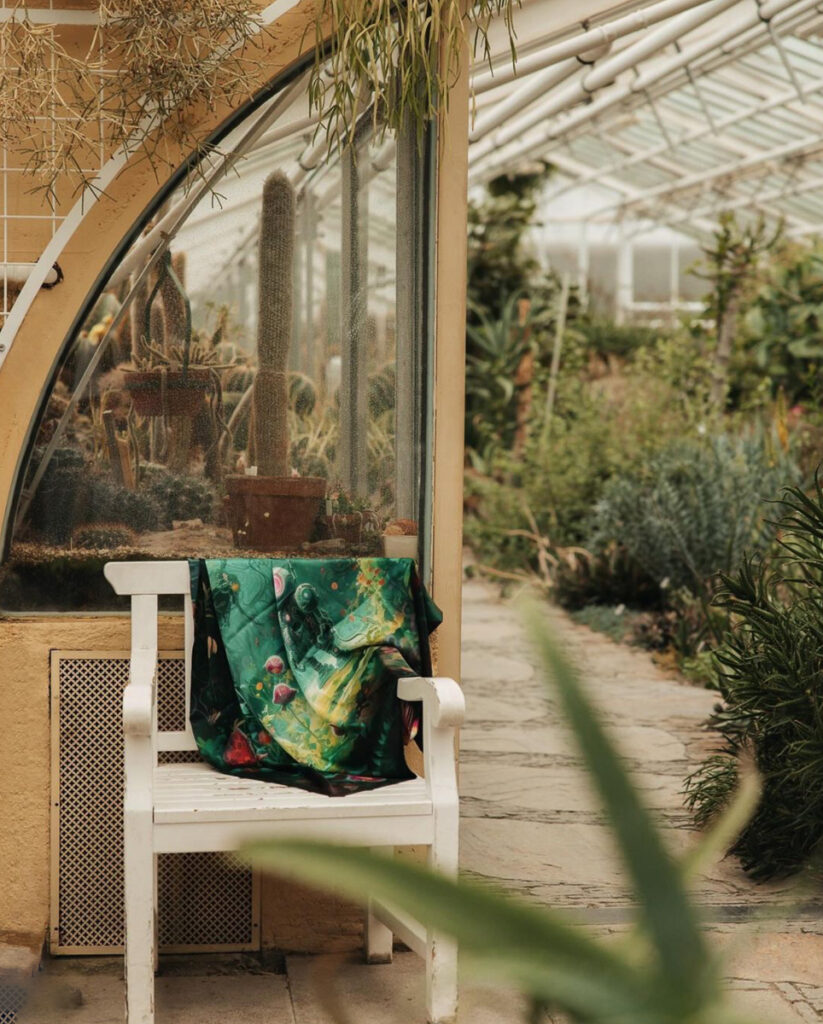
Inside Naked Summers: A Chat with Christina Mandilari

Christina Mandilari Naked Summers

Step inside the world of Naked Summers as Athens-based artist Christina Mandilari discusses mythology, nostalgia, Mediterranean life, archaeology and her creative process. 

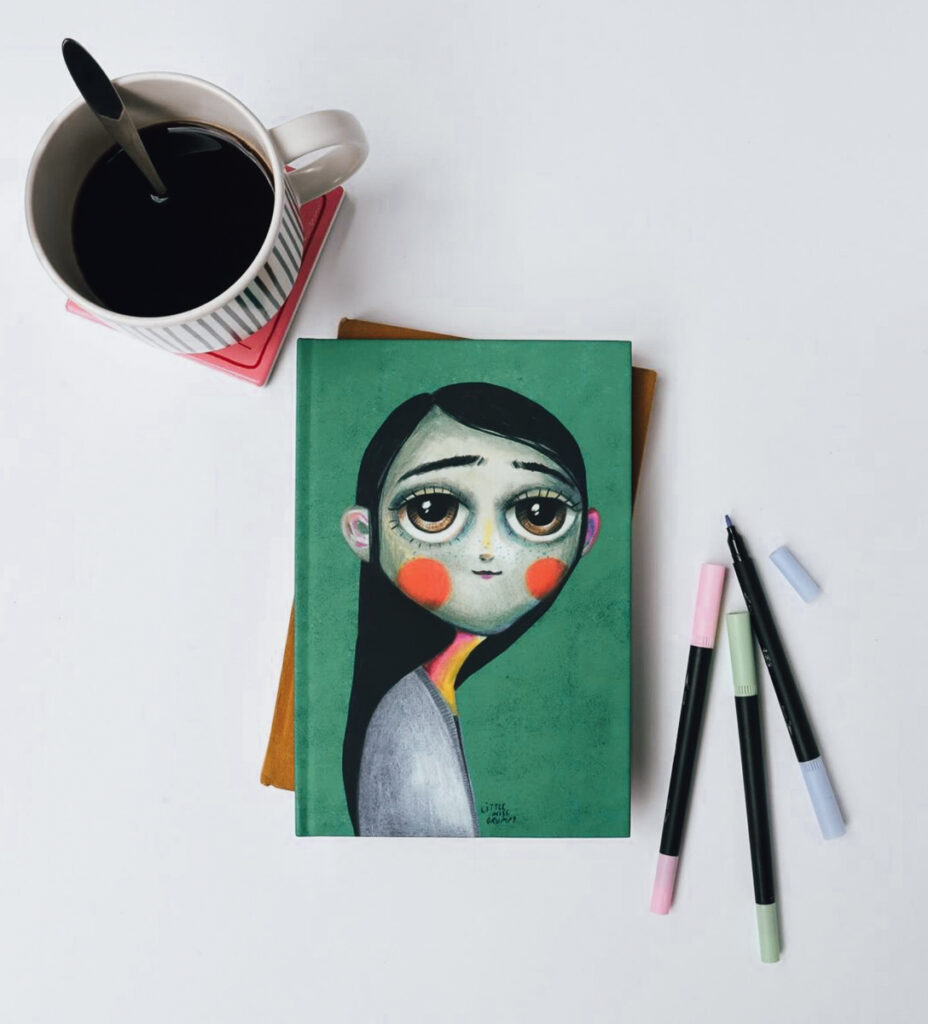
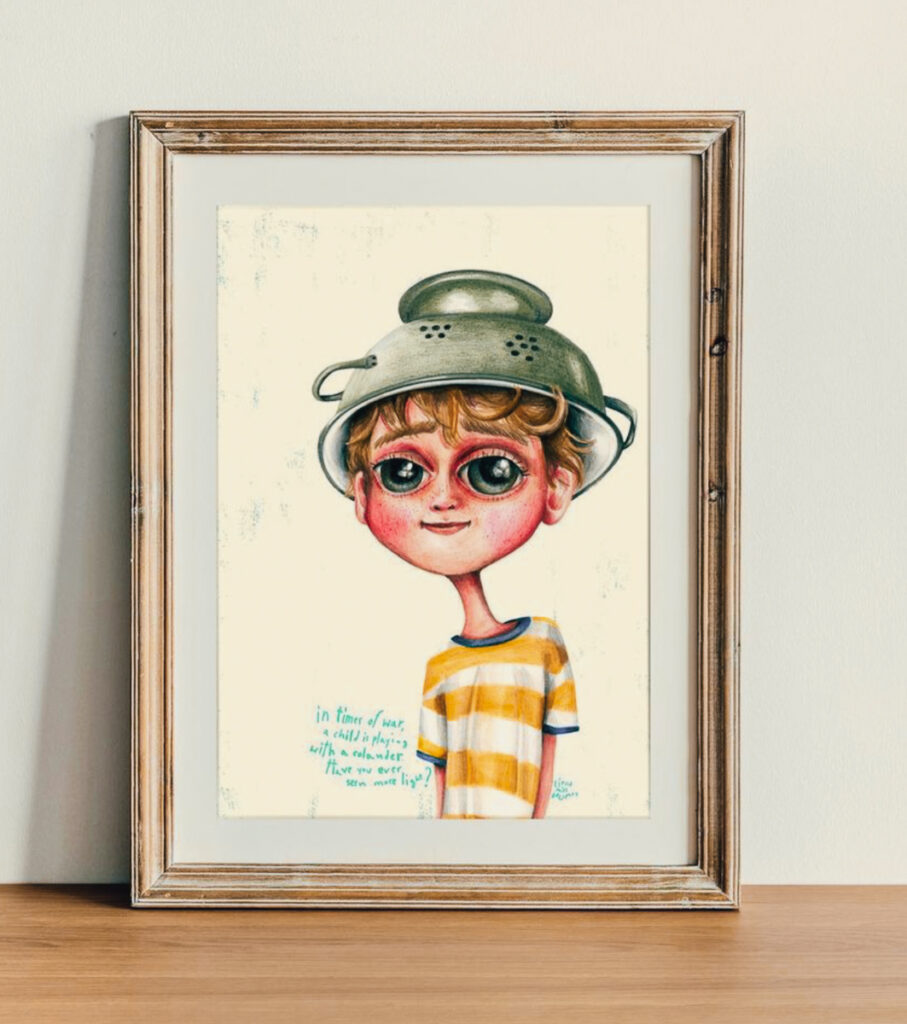
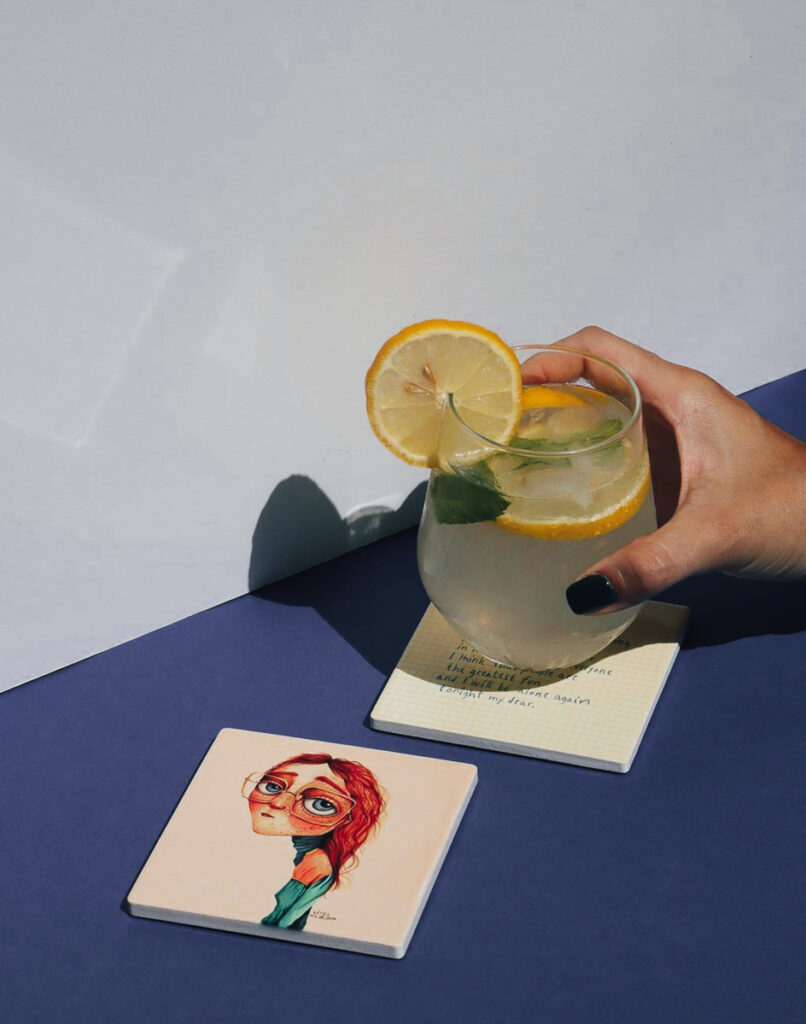
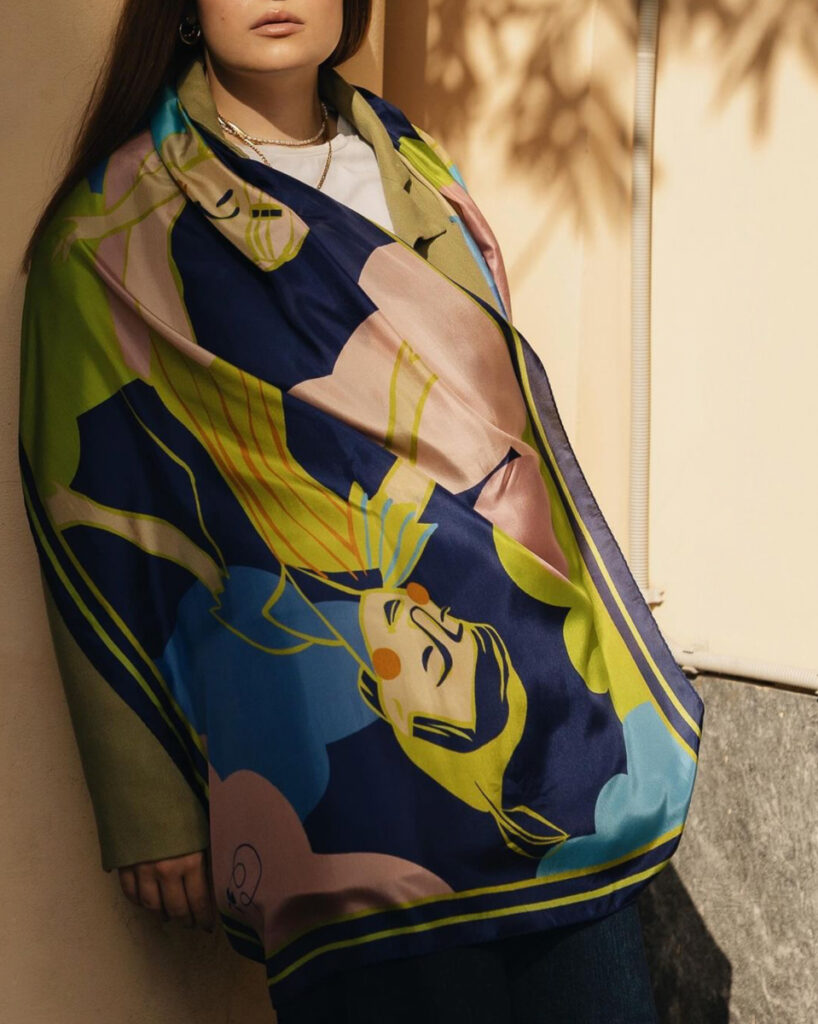
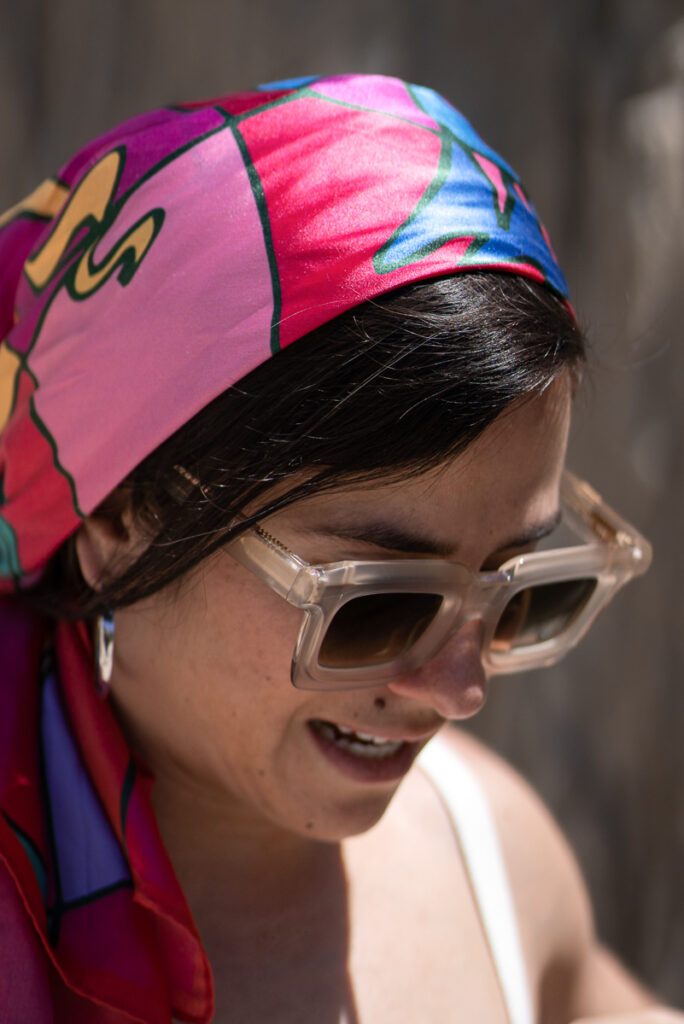
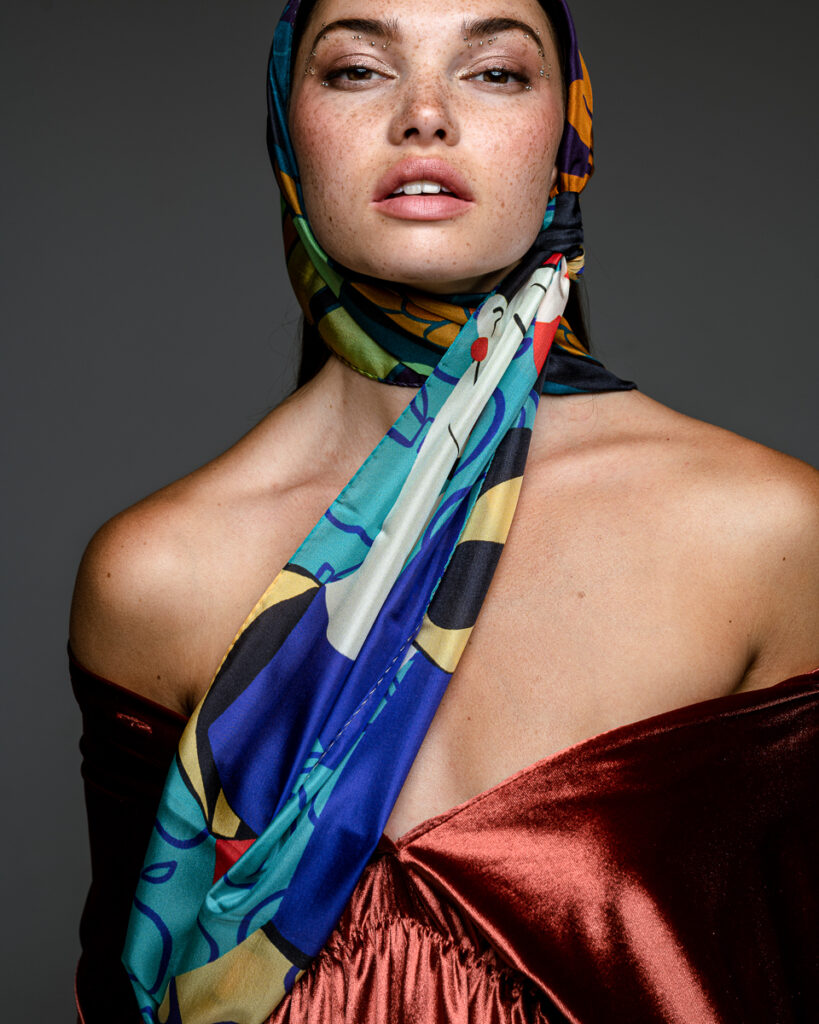
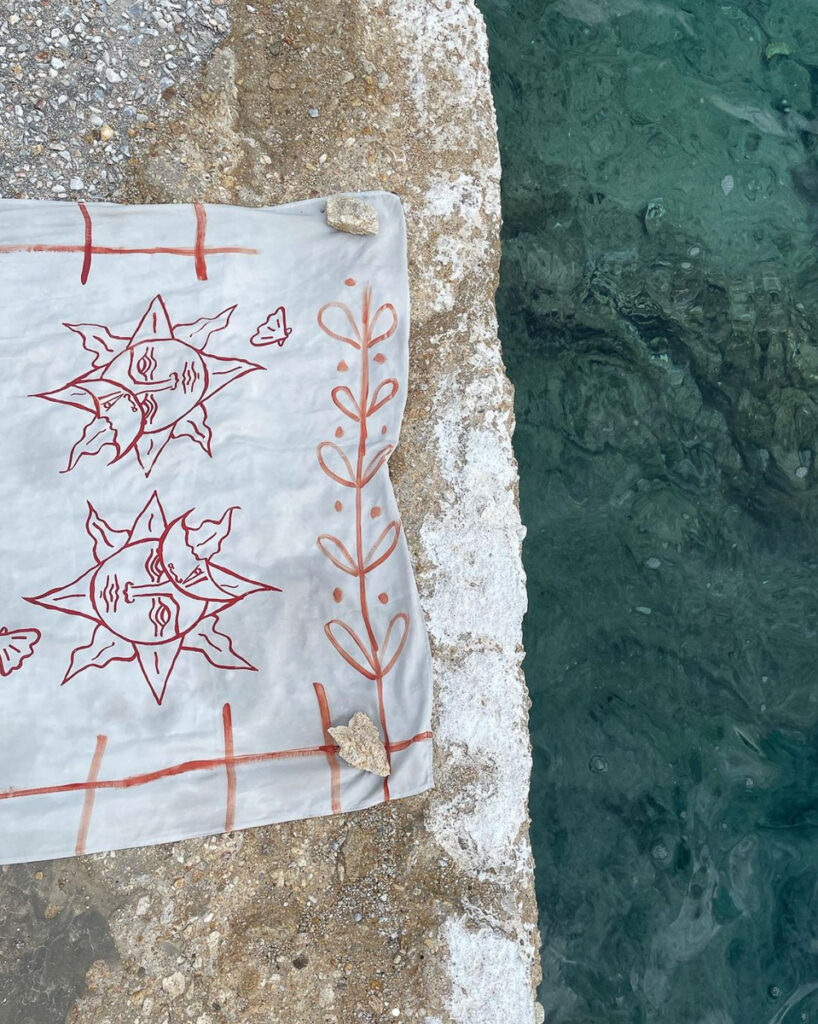
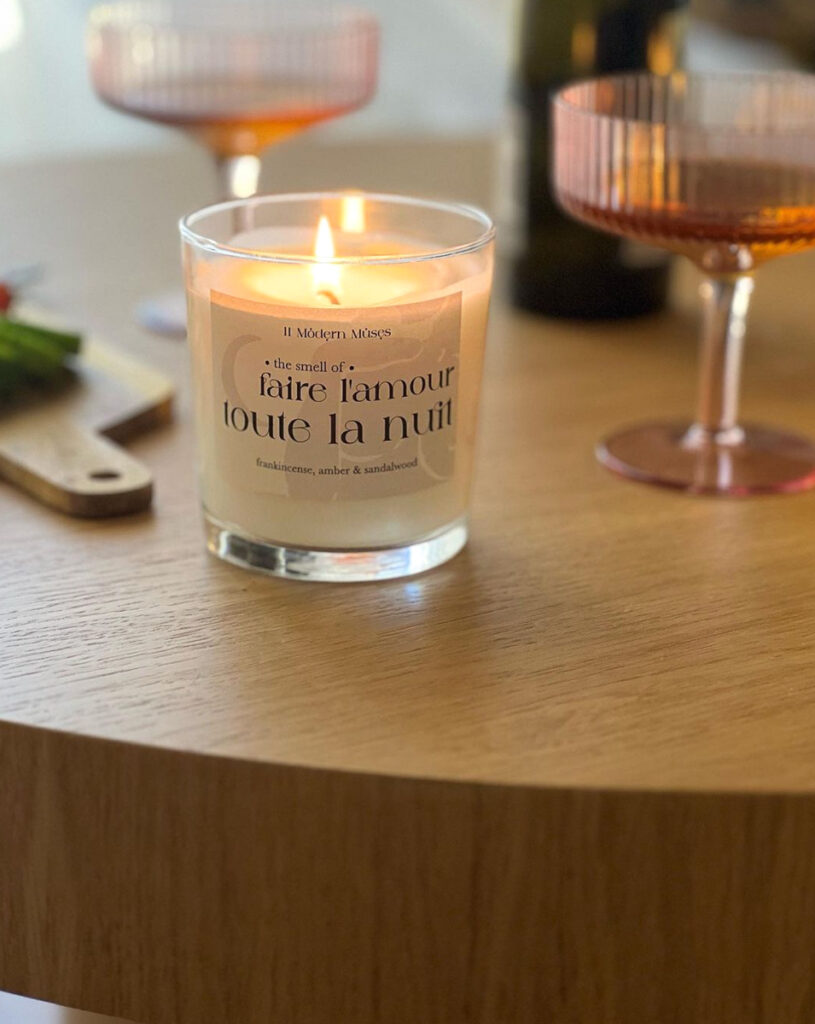
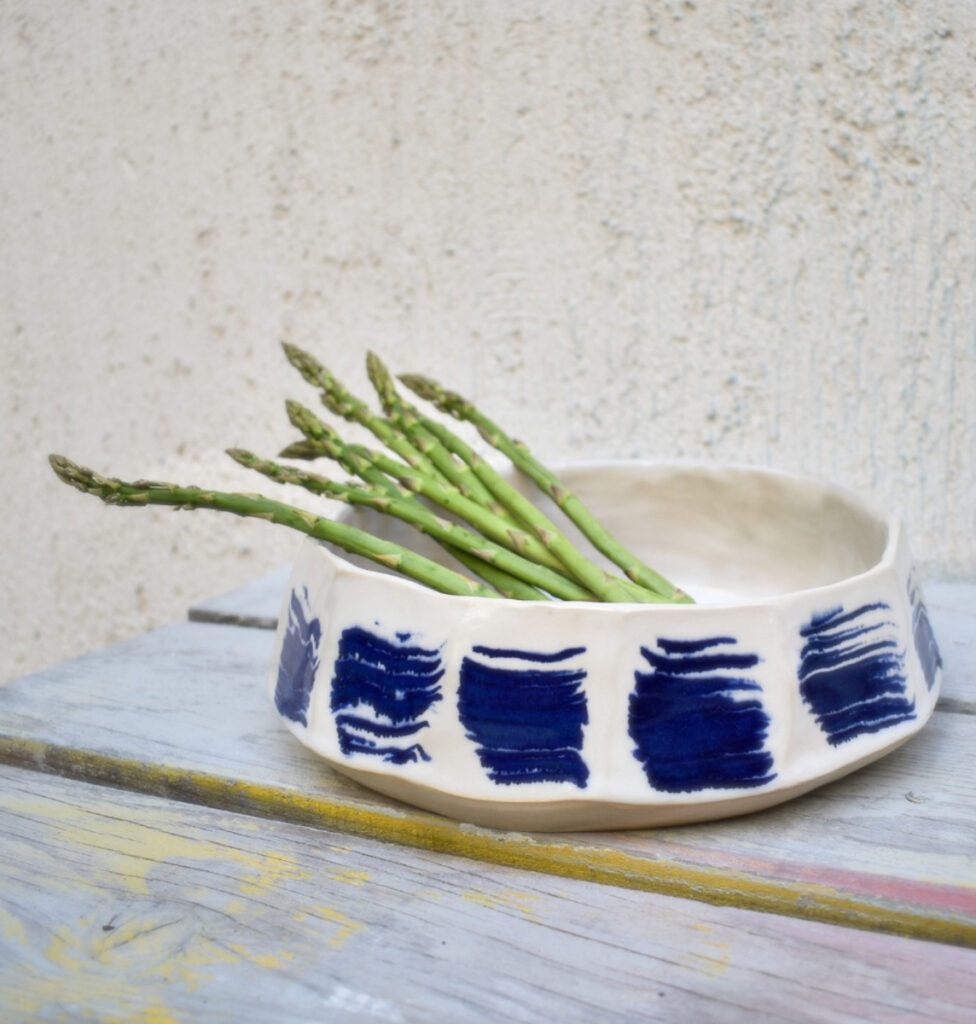
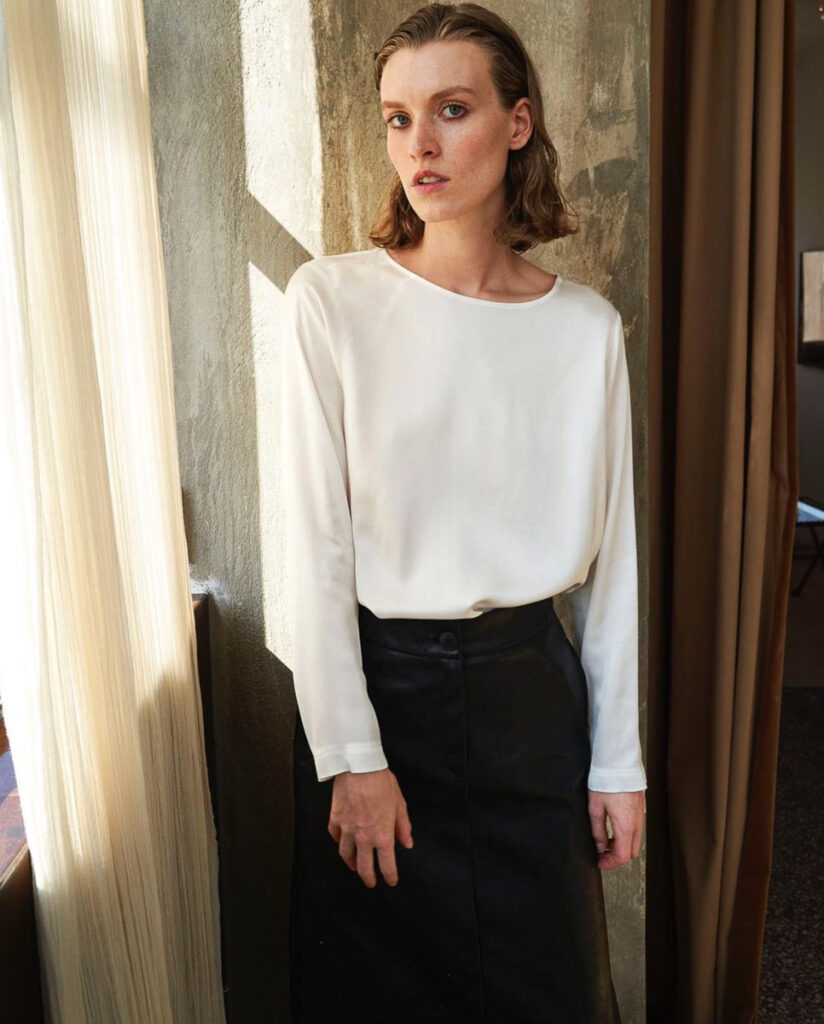
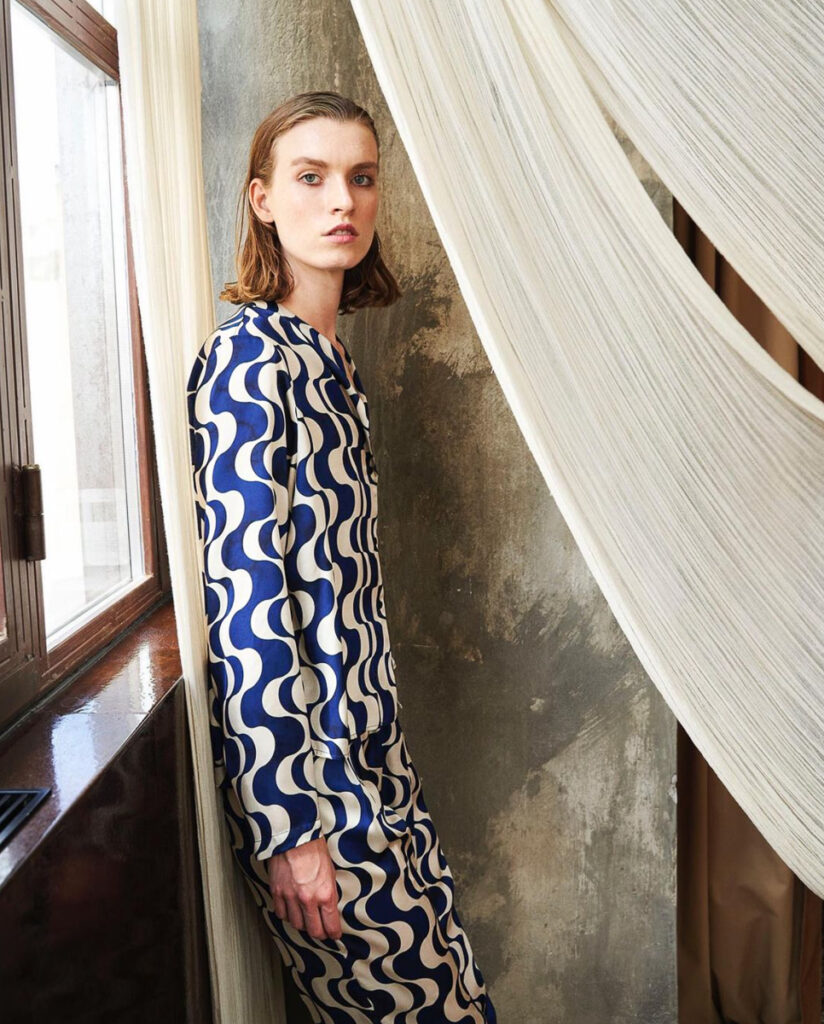
Over the past few years, Naked Summers has developed a strong following through hand-painted ceramics, mosaics, silk pareos, paintings and wearable pieces inspired by mythology, memory, the sea and Mediterranean life. Through this project, Athens-based artist Christina Mandilari has created one of the most distinctive artistic voices to emerge from Greece in recent years.

Christina’s connection to creativity began long before Naked Summers itself- from studying Classical Archaeology in Ioannina to later living in Berlin and working in curation and art management, art remained part of her life throughout different chapters, eventually leading her back to creating her own work full time.

Today, Christina works from her studio in the heart of Exarcheia, where ceramics, paintings and textiles sit alongside recurring motifs that have become closely associated with Naked Summers, featuring shells, sea forms, mythological figures and fragments of landscapes that reflect both Greece and her own personal experiences. While the work moves across different mediums, there is a clear thread connecting everything she creates.

We spoke with Christina about the beginnings of Naked Summers, the influence of archaeology and mythology on her artistic language, the Greek landscapes that continue to inspire her, and how the project has grown over the years.

Tell us a little about your background and your first relationship with creativity. Was there a defining moment where you realised art would become such an important part of your life?

To be honest, I don’t even know exactly when it started. It feels like creativity was always there. Like most children, I started drawing naturally, but in my case, it became such an instinctive part of my everyday life that I didn’t even realise it was something special.

I think I truly understood what creativity meant to me during periods when I wasn’t creating as much. There were years when studies, responsibilities and life in general pulled me away from it, and that absence made me realise how necessary creation was for me as a person.

For most artists, creativity isn’t simply work. Of course, it may eventually become your profession, but before that, it’s communication. It’s a need to express something, to share something, to translate emotions and thoughts into a form that can exist outside of you.

Even while working in curation and management, I never stopped creating privately. I was constantly drawing, experimenting, testing new formats and materials. Eventually there came a moment where turning fully toward my own work happened naturally, and that was essentially the beginning of Naked Summers.

How did the name Naked Summers come about?

If someone still owns one of the very first T-shirts, they’ll remember they originally had the phrase “Ena Gymno Kalokairi, (A Naked Summer) written across them. At the time, the project didn’t yet formally exist as a brand. I was actually still living in Berlin, creating pieces and sharing them mostly within a circle of friends. The phrase emerged very naturally during conversations, but for me it was always connected to the forms themselves. The figures in my work were almost always naked, so the phrase described the emotional world of the drawings.

When I eventually decided to give a name to the project, I realised all these stories, emotions and memories were my Naked Summers and that’s how the name remained.

Your work feels very connected to Greece and the Mediterranean. How would you describe the artistic identity of Naked Summers?

Emotion is always the starting point. And yes, my work is also very Greek- it’s inspired by nature, by love, by human relationships, by mythology, by observation itself. I think people who grow up around the Mediterranean have a very particular relationship with light, nature and emotion.

The shell has evolved into one of the central symbols of the project, as it appears repeatedly across different collections and mediums because it represents something very instinctive and natural to me.

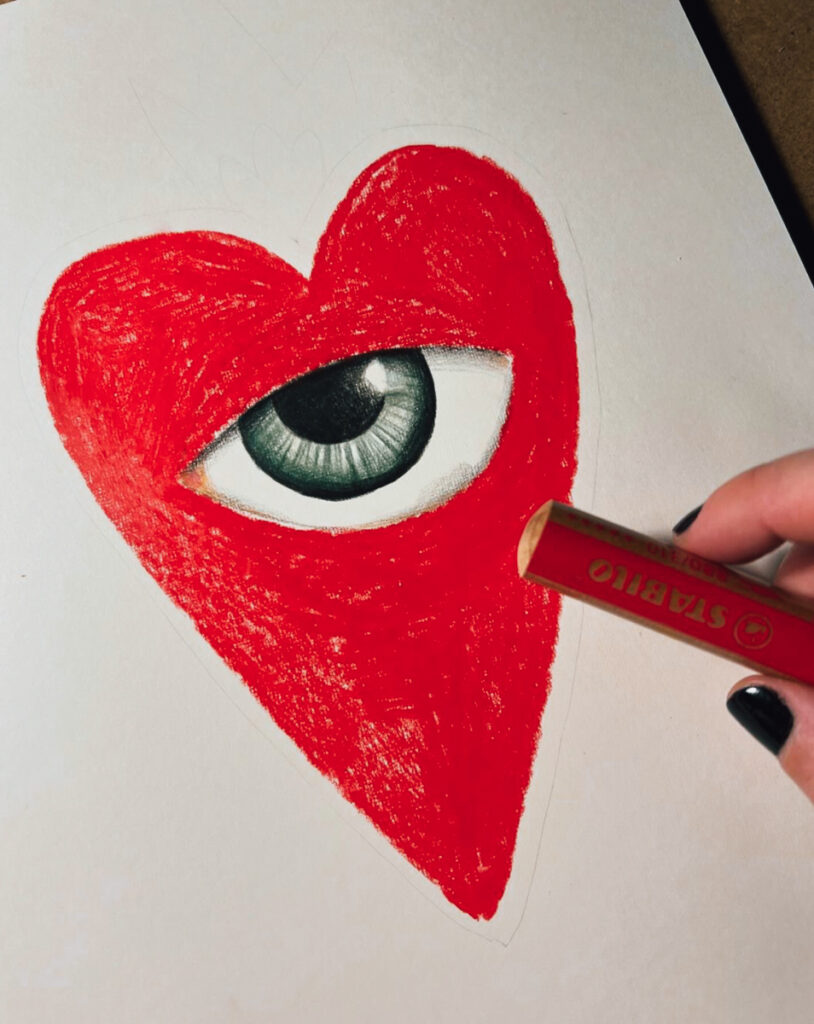
I want to communicate a kind of purity that emerges from nature, from love, from moments lived by the sea. And because these emotions are so free and intense, I don’t think they can exist in only one artistic format. I never want to limit creativity to one material; experimentation is part of the process. Every collection involves extensive research, testing and exploration before it fully takes shape, and I really believe that unpredictability is one of the most beautiful parts of creating.

Mythology and ancient symbolism seem to play an important role in your work. How has your academic background in archaeology influenced your artistic language?

My studies influenced me enormously. Through archaeology, I came into very deep contact with mythological forms, symbolism and the emotional power these stories still carry. I’m not interested in simply reproducing mythological motifs, what interests me is reimagining them through movement, sensuality, playfulness and contemporary emotion.

There’s something deeply spiritual about mythology- these stories continue to survive because they express timeless emotions and archetypes. This idea became the foundation of the collection, Archetypes, which approaches ancient symbols through a more modern and emotional interpretation, the figures almost become reborn beneath Mediterranean light. The collection includes painted ceramics, mosaics, textiles, wearable pieces and larger artworks, all connected through the same visual language.

Nostalgia seems to appear often throughout your work. Do you think that feeling plays an important role in your creative process?

Definitely, I think my work is very connected to the feeling of something that existed once but no longer does. A moment you lived and wish you could experience again. There’s something about the sea especially. Even though we live close to it in Greece, we still long for it constantly. We miss summer throughout the entire year and for me, nostalgia is not sadness, it’s emotional memory.

My work often carries this feeling of a moment suspended in time- a memory, an encounter, a summer evening, a love story, something fleeting. When people connect with a piece, it’s usually because it reminds them of something personal they already carry within themselves and that’s the beautiful thing about art.

Travel and landscape also seem inseparable from your work. Are there places in Greece that continue to inspire you creatively?

Absolutely, places affect me enormously. One of my favourite destinations is Donoussa, an island I return to almost every year. There are certain places where you feel very connected to yourself, and for me Donoussa has always carried that feeling. I also feel very connected to Ioannina and the lake there, where I often walk for hours to clear my mind. I also love Serifos because of its wildness, the contrast between the red rocks and the intensely blue sea. I’m more inspired by dramatic, raw landscapes than perfectly peaceful ones, as they give me energy- the light, the sea, the heat and the wind all somehow become part of the work.

Your studio in Exarcheia feels very personal. Are there certain routines or habits that help you enter a creative mindset?

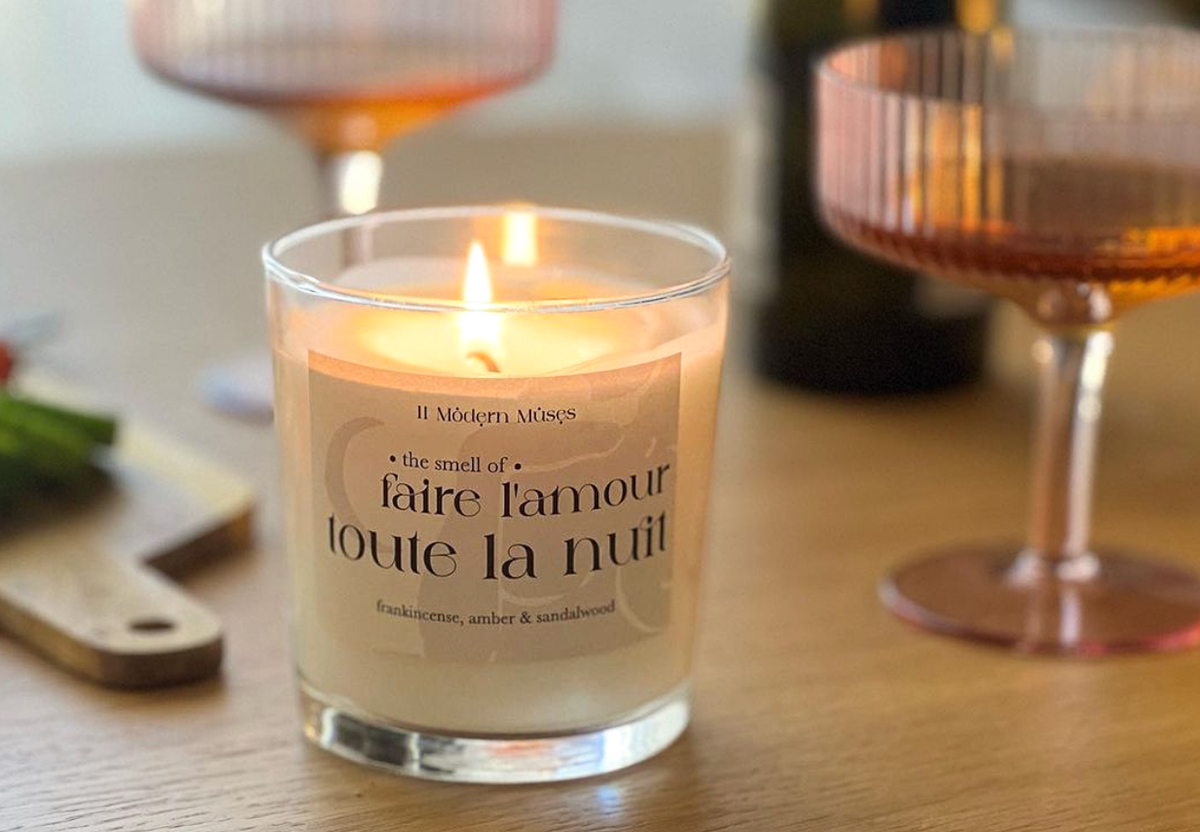
Yes, very much so. I like taking a moment to fully realise that I’m entering my space again. To synchronise with the environment, with the work and with the energy of the studio. I usually light palo santo or incense every morning, as it creates a beautiful beginning to the day.

Also being near the sea, as things become quieter for me there. I’ll sit alone with music in my headphones, look at the sea, breathe deeply and think about my goals or where I currently am emotionally.

Naked Summers has developed a very strong following over the years. What kind of relationship do you feel exists between your work and the people who connect with it?

I feel incredibly grateful and what makes me happiest is that people immediately understood Naked Summers as an artistic project rather than simply a product-based brand. I wanted the collections to communicate stories, emotions and a certain atmosphere in a very intentional way. There’s a great deal of thought behind how each collection is presented, both visually and emotionally, and I’m very happy people recognise that. The studio in Exarcheia has also become a place where I meet people from all over the world who first discovered Naked Summers online before visiting Athens. There’s something beautiful about seeing people connect with something you have created- it’s like placing a message in a bottle into the sea and eventually someone finds it.

Finally, what is your vision for the future of Naked Summers?

For me, the most important thing is protecting the essence of the project. Of course growth matters to me, but only if it remains connected to the artistic identity of Naked Summers. I want the project to continue evolving naturally while staying connected to my own artistic voice and intuition. I always want to keep exploring new formats, new materials and new ways of creating and what matters most to me is that people continue connecting with the feeling behind the work.

Images by Dimitris_Tairis © and Joseph_Alexiadis ©

Dimitris Kokonakis on His Journey From Crete to the Runway

Dimitris Kokonakis interview

From his father’s tire shop in Chania to the ceremonial precision of the Greek Presidential Guard in Athens, Dimitris Kokonakis’ path to the runway was anything but expected.

Raised in a village on the island of Crete, his life once revolved around discipline, routine, and simplicity- far removed from the fast-paced world of fashion. For Dimitris, it was not aspiration that led him here, but timing. A life-changing scouting moment shifted everything, setting him on a path he hadn’t planned, but instinctively chose to follow.

Today, with two appearances on the Dolce & Gabbana runway already behind him and a steadily rising career, it’s clear that Kokonakis’ achievements stem from his character- grounded, humble, and quietly driven. Speaking with IN+SIGHTS GREECE, he reflects on the unexpected start of his journey, the mindset that keeps him focused as his career continues to evolve, and what lies ahead.

You grew up in Chania, working in your father’s tire shop, before moving to Athens to serve as an Evzone. Looking back, was there a moment during that time that shifted something in you, or did modelling come entirely by chance?

I grew up in Chania, in a village. I was very into sports, and as I got older, I started working at my father’s tire shop. My life was simple- training, work, routine. Fashion wasn’t part of my world at all.

One of the most important periods in my life was when I moved to Athens and served in the Presidential Guard as an Evzone. It’s something I’m really proud of. That experience gave me discipline, structure, and helped me understand myself on a deeper level.

Modelling came later, completely unexpectedly. I got scouted at a time when I wasn’t even thinking about it. I didn’t plan this path, but I chose to follow it.

Athens is a city of contrasts- intense, layered, and constantly moving. How has living there shaped you, both personally and as a model? Did you feel any sense of pressure or competition early on?

Athens is a chaotic city, but in a good way. It has a lot of energy, a strong rhythm, and there’s always something happening. What really helped me here were the people. Being in Athens gave me access to the right environment and the right connections within the industry.

That made a big difference for me, especially in the beginning. As a model, it helped me grow and understand how things work. The real competition is abroad; Athens is more about building yourself and finding your direction.

Your first major runway moment came in July 2022 with Dolce & Gabbana. What was your immediate reaction when you realised you would be walking for one of fashion’s most recognised houses?

When I found out I was walking for Dolce & Gabbana, what I felt most was a sense of relief. It felt like something I had been working towards finally became real. Like all the effort, the patience, everything- it connected at that moment. I didn’t get carried away. I just saw it as a turning point and told myself to stay focused and make the most of it.

Returning to the Dolce & Gabbana runway in January 2026 must have felt different. Did it come with a sense of confirmation, or did it mark a new chapter for you?

Going back to Dolce & Gabbana in 2026 felt different, in a good way. The first time, everything was new and a bit overwhelming. This time, I felt more calm, more confident, and more aware of myself. I could actually enjoy the moment more and understand what it means to be there. It felt like a natural progression, not just a repeat.

Backstage before a show is often intense and fast-moving. What kind of mindset do you bring into that moment, and how do you prepare yourself?

For me, preparation doesn’t start backstage, it’s something constant. The way I train, the way I live, how I take care of my body and my mindset… I’m always in that process.

So before a show, I don’t feel like I need to switch into something different. I’m already there. Backstage, I just stay calm, focus on my breathing, and stay present in the moment.

Has modelling changed you in any way, or has it simply revealed more of who you already are?

I think this career revealed who I already was more than it changed me. It puts you in situations where you have to stand on your own, and you see how you handle things-pressure, responsibility, expectations. It made me more aware and more focused, but at the core, I’m still the same person.

As someone now based in Athens, how do you see the city’s dining scene today?

Athens has really evolved over the last few years. There are so many good restaurants and places to go out- it’s impressive how much the city has grown. You can find everything, depending on your mood, from something very simple to something more refined.

For our readers planning a trip to Greece this summer, where in Chania would you suggest they go to experience it more authentically?

Chania is home for me. It’s where I grew up, where my family is- it’s a place I’m always connected to. If someone visits, I’d say start with the Old Town and just walk around without a plan. That’s the best way to experience it.

Of course, Balos and Falassarna are beautiful and worth seeing, but I’d also suggest exploring quieter beaches and small villages around the area. That’s where you really feel the authenticity of the place.

And if anything happens to your tires while you’re there… you know where to find us! 

Is there a particular runway or fashion house you hope to walk for one day?

There are many incredible shows, but I’m always drawn to houses that have a strong identity and a clear sense of storytelling. For me, it’s not just about the runway- it’s about the feeling behind it, the people, and the vision that brings everything together.

As your career continues to evolve, how do you see the future unfolding? Do you feel your ambitions lie solely in modelling, or are you open to opportunities beyond the runway?

Right now, I’m focused on modelling and on improving step by step. I try not to rush anything or think too far ahead. I stay consistent, I work, and I stay open to opportunities. For me, it’s about progress- doing things the right way and seeing how far I can go.

Images Courtesy of Dimitris Kokonakis

Vassilis Zoulias: On Elegance, Craft and Dressing Women Today

Interview Greek designer Vassilis Zoulias

From the pages of Vogue to the Met Gala red carpet, Vassilis Zoulias has built a career that extends well beyond Greece. 

Before launching his own label, he spent nearly two decades working as a fashion editor for publications including Vogue Greece, developing a sharp understanding of how fashion moves, both on and off the page. In 2002, he opened his Old Athens boutique, initially focusing on accessories- shoes, hats, and small, carefully produced collections- before expanding into ready-to-wear in 2007 and later into couture.

Since then, his work has steadily moved onto the international stage. His designs have appeared at the Met Gala and on major red carpets, worn by names including Gwen Stefani, Alison Brie and Laura Dern. More recently, his collaboration with Patricia Field brought his work into the spotlight through Emily in Paris, where a series of his pieces were selected for Emily’s wardrobe- introducing his designs to a broader international audience.

There is a distinct mood that runs through Zoulias’ collections, it is one that draws on old-world glamour and a certain cinematic elegance, while still feeling relevant to today’s woman. Structured silhouettes, defined waists, and richly detailed fabrics come together in pieces that are at once soft and striking. It’s a balance between nostalgia and modernity that continues to define his work, offering something that is both familiar and refined.

We recently spoke to Vassilis about his latest SS26 collection, his Emily in Paris moment, and the career that has taken him from fashion editorial to dressing women on some of the world’s most visible stages.

Your SS26 collection, Beautiful, carries a strong sense of cinematic elegance, through texture, tailoring and subtle nods to nostalgia. What inspired this season, and what mood did you want to create for the woman wearing it?

This season, my new prêt-à-porter collection, titled Beautiful, is a deliberate ode to beauty in its most timeless form. My partner, Periklis Kondylatos, and I dedicated this work to the concept of beauty as a protest against the fast-paced trend of “celebrating ugliness” that has emerged in recent years. I wanted to evoke a mood of optimism and positive energy. For the woman wearing it, I envisioned a refreshed, airy femininity with a Mediterranean footprint, expressed through vibrant colours, polka dots, floral prints, and classic marine looks. As I noted in our invitation, “Only beauty will save the world.”

Looking back at your career, from fashion editorial at Vogue Greece to founding Maison Zoulias, what have been the defining moments that shaped your vision as a designer?

Transitioning from a fashion editor at Vogue Greece to a designer allowed me to see clothing through a narrative lens. Defining moments include the opening of our flagship in Kolonaki and seeing our aesthetic resonate on a global stage. My vision has always been shaped by the belief that style should be an enduring signature rather than a fleeting moment.

Your work has reached an international audience– from red carpets to Emily in Paris. How did those collaborations come about, and what have they been like for you creatively?

The international recognition, particularly through Emily in Paris, was a wonderful creative synergy. Working with Patricia Field, a true visionary, felt like a natural extension of my aesthetic. Professionally, it confirms that the “Zoulias woman” is a universal character- someone who appreciates whimsy, structure, and a nod to the golden age of cinema.

Your “Shop Like Emily” pieces have become closely associated with your brand. What has it been like seeing them embraced by such a wide, global audience?

Seeing these pieces embraced globally is incredibly rewarding. It proves that there is a worldwide appetite for meticulous tailoring and a romantic, nostalgic silhouette. It has turned our heritage-inspired designs into a cultural touchstone for a new generation.

Are there particular pieces that best capture the essence of Maison Zoulias?

While every collection is a new child, the pieces that truly capture our essence are those that balance “old school Hollywood glamour” with wearability- our signature full skirts and structured bodices. They represent the “classic with a twist” spirit that is the heartbeat of Maison Zoulias.

If you could dress anyone (past or present) who would it be, and why?

If I could reach back through history, I would have loved to dress Audrey Hepburn. Her innate grace and understanding of line and proportion are exactly what I design for today. In a modern context, anyone who carries themselves with a sense of “Aretē” (excellence/virtue) is a muse to me.

Athens is a city where history and modern creativity constantly intersect– where do you find yourself drawn to, whether for inspiration or to unwind?

Athens is my home and, as W Magazine quoted, Athens is the New York of Europe. I frequently visit traditional restaurants that possess a distinct character and soul. I am particularly fond of places that serve authentic, high-quality traditional food, such as Oikonomou in Petralona and Leloudas on Petrou Ralli. For me, the best way to relax and truly unwind is a long drive in a convertible along the coastal road, following the Athenian Riviera all the way to Sounio. There is something incredibly restorative about the sea breeze and the horizon. I also enjoy the vibrant energy of the city when surrounded by friends and the creative community of Athens. The “summer vibe” and optimism of this city are exactly what I poured into my latest collection.

Beyond Athens, where in Greece do you go to switch off- and what places continue to shape your work?

Beyond the urban energy of Athens, my heart and my creative process are deeply tied to the Greek landscape and the unique quality of Aegean light. For over 30 years, Mykonos was my primary destination, but in recent years I have found my true sanctuary on the island of Tinos. I have a home there right by the sea, which serves as my ultimate retreat for peace and creative clarity.

On weekends, I consistently escape to my country house in Anavyssos. It is a place that never fails to inspire me and provides the perfect backdrop for reflection between collections. This connection to the sea and the “summer vibe” of the coast is a recurring theme in my work. The natural beauty of these locations often mirrors the vibrant colours and floral prints seen in our latest designs, which aim to radiate optimism and positive energy.

Maison Zoulias is known for its craftsmanship and attention to detail. How do you see that evolving in your work going forward?

Since the beginning of my career in the accessories industry, I have always sought out Greek manufacturers who shared my same passion and creative “madness.” Greece is home to exceptionally talented artisans and a long-standing tradition of craftsmanship. In fact, we shouldn’t forget that Manolo Blahnik’s very first collection, showcased at Bergdorf Goodman, was produced right here in Greece.

Our jewellery is designed and handcrafted by Pericles Kondylatos, the designer behind the iconic crown created for Lady Gaga, while our hats are the work of Katerina Karoussou, the only milliner in Greece with four decades of expertise. We remain committed to seeking out those who work by hand, as we believe that manual artistry is the new luxury, ensuring that every single detail meets our standards of excellence.

Your Kolonaki boutique has become a destination for experiencing your work in person. How else can an international audience discover your collections?

For those wishing to visit our boutiques in Athens, we look forward to welcoming you to our Kolonaki location, as well as our Atelier at 4 Akadimias St. In addition, we are pleased to continue our successful partnership with One&Only, while launching a new presence in Santorini with another monobrand store. For our clients who cannot visit our physical locations, you may explore our collections at our official e-shop. 

Easter in Greece: Celebration, Symbolism and Tradition

Greek Easter celebrations and traditions

Eastern Orthodox Easter celebrates the Resurrection of Christ with deep traditions dating back to the Byzantine period.

In Greece, Easter or Pascha is the most important religious holiday of the year: a period of solemnity, renewal, and reflection leading to the joyous culmination of the Easter day celebration. Each day of lent follows a story- the 40 days preceding the Resurrection of Christ- across a tapestry of rich and colourful traditions deeply rooted in symbolism, history, reverence and community. 

The 40 Days Before

Lent, or Sarakosti in Greek Orthodoxy, is a season of preparation and introspection. A quieter cadence of daily life slowly takes hold, with shared traditions spreading from the mainland to the islands in anticipation of Pascha. Clean Monday marks the start of the Great Lent, and the beginning to the great fast. Children fly kites hillside or seaside symbolising the soul’s ascension into heaven and above earthly matters. Families, friends and neighbours share plates like taramosalata, a traditional Greek meze made from cured fish roe, Gigantes or large beans, horta (boiled, wild greens), and seafood. Lagana, a special flatbread baked only on that day, is also shared amongst family and friends over bustling tables or picnic blankets.

Greek Lenten meals are full of simpler meals spanning centuries, centered on fasting and obstinance. This diet is plant-based, free from meat, dairy, eggs, and fish focusing on a traditional diet of vegetables and shellfish. Popular dishes include Ladera or oil-based vegetable meals, lentils, chickpea stew, and briam, roasted vegetables and grilled octopus. 

One week before Easter, Palm Sunday draws crowds spilling out of churches to honour Jesus’ joyful entry into Jerusalem. Historically, palm branches represented victory and triumph in Roman culture, signifying Christ’s victory over death. Small woven palm crosses are given to those attending. Although falling during the Lenten season, the fast is broken as families gather after the service to eat dishes like fried cod and skordalia, a traditional garlic sauce.

Holy Week: The Final 7 Days

Holy Week, or Megali Evdomda, brings daily liturgical services signifying the final seven days of Christ’s life. Holy Thursday honours the last supper and the long and solemn service of the Twelve Gospels. Grandmothers, mothers and daughters gather in the kitchen to dye red eggs, traditionally boiled in a colouring made of coffee, vinegar, onion skins, turmeric, beetroot, or the rizari plant. Known as Kokkinoftfti, a play on “Red Thursday”, eggs can be dyed only on Holy Thursday, preceding the crucifixion and symbolising the sealed tomb of Christ. According to Melbourne’s Hellenic Museum, women in Northern Greece use a tool called a kondili to paint intricate flowers, leaves and designs using beeswax. Although there are varying stories around the significance of the colour red, for many it represents the sacrifice of Christ on the cross, or as an expression of joy for the resurrection. 

Across Greece, women bring flowers like roses and lemon blossoms to the nearby churches in the evening to prepare to adorn the Epitaphios, meaning “on the tomb.” in anticipation of Good Friday. 

The Epitaphios

The Epitaphios is a sacred, richly embroidered cloth icon depicting the crucifixion and representing Christ’s burial. Laid in a Kouvouklion, an elaborately carved wood-shaped canopy, young girls called Myrofores or “Myrrh-bearing women,” dress in white and decorate what represents the tomb of Christ. Women young and old carefully crowd around, laying vibrant flowers in crevices of the Kouvouklion creating a sea of sweeping red, purple, white and pink- sprinkled with rosewater- symbolising burial spices in the Gospel. 

Good Friday is the deepest day of mourning in the Greek church. The strictest day of fasting known as the “black fast,” it is not uncommon for older generations or the most devout to abstain from all food and drink for the entirety of the day. Church bells sound from dawn to dusk, with the candlelight procession of the Epitaphios beginning in the evening, where it is lifted on the shoulders of priests or churchgoers and carried through the streets in a funeral-like procession, weaving through the alleys and narrow passages of the neighbourhood. Crowds spill out under the stars in the chilly spring evening, carrying the glow of lit candles as they trail the procession in reverence.

In Hydra, the Epitaphios is carried into the sea in the fishing village of Kaminia to bless both the waters and the boats of the harbor. On Pyrgos, Santorini, thousands of lanterns line rooftops and walls bouncing sparkling beams of light into the darkness. 

Anastasi: Light Across Greece

On Holy Saturday morning, the mood is lighter with a palpable sense of expectation as Easter is coming. On the island of Corfu, locals throw large clay pots called Botides from their balconies to symbolise the end of lent and the casting away of darkness. Folegandros uniquely honours the Virgin Mary through a procession through the island, with locals preparing and cleaning their homes in anticipation. 

The Anastasi, or Resurrection, represents the victory of light over darkness. Holy Saturday begins with the transfer of the Resurrection flame from the Holy Sepulchre in Jerusalem. After arriving in Athens by a special charter plane, it’s then dispersed throughout Greece via commercial flights, ferries, and land to reach even the most remote villages and areas. At midnight, a priest brings forward this flame to the congregation. The words “Christos Anesti!” (Christ is Risen), are rejoicingly proclaimed, to which the crowd joyfully responds, “Alithos Anesti!” (Truly He Has Risen!). 

From darkness there is light, as the eruption of the sweetest joy and celebration spreads throughout the crowds. On the island of Zakynthos, white doves are released from the church top at midnight, after the first bell sounds on Holy Saturday. On Kalymnos, the sound of dynamite can be heard for miles, a tradition unique to the area.

Across Greece, the moment of the Resurrection takes on unique beauty. In Athens, the chapel of Agios Georgios on Lycabettus Hill brings breathtaking views of the city, glittering in anticipation. Thessaly’s Agios Stefanos Monastery high atop the cliffs of Meteora offer a sight unseen. In Leonidio, Arcadia, colourful paper lanterns are lit and released into the sky, an Asian tradition that local sailors are believed to have experienced in their travels. 

Arriving home from church with their candles still alight, people smudge the sign of the cross three times above their front door to bless their house with the light of the resurrection. They feast on the traditional midnight dinner of Magiritsa, marking the end of Lent. Made with lamb offal, herbs, and rice, it prepares the stomach for the Easter feast, as people gather and younger generations join their friends at the club or local bar to begin the Easter celebration. 

Food as Memory and Meaning

The cooking, ingredients, and recipes passed down from generation to generation are what make Greek culture rich and full of deep significance. Greek Orthodox Lent centers around vegetables and shellfish during the 40-day Lenten period, and richer meals for the Easter feast. 

Lambrokouloura – Popular in the Peloponnese, Messinia and Laconia regions, this sweet Easter bread with spices like anise or orange zest is customarily made on Holy Thursday and often baked in a horseshoe or ring shape. 

Tsoureki – Made with mahlepi, a spice from ground cherry seeds, and mastiha, this sweet braided Greek Easter bread symbolises rebirth. It is typically baked on Holy Thursday to mark the end of Lenten fasting, with modern bakeries often glazing loaves with chocolate or a sprinkle of citrus fruit. 

Lamb – Easter Sunday’s lamb is sacrifice and tradition, representing the “Lamb of God,” and often roasted whole in villages, and seasoned with oregano and olive oil. 

Koulourakia – Popular in Crete and the broader Aegean region, Koulourakia are traditional Greek Easter cookies symbolizing joy and renewal. Their braided shapes represent eternity. 

Kokoretsi – Lamb offal wrapped in intestines, roasted over the fire, and grilled alongside the lamb, often as a meze while the lamb roasts. 

The Easter Table

Joyful gatherings across Greece mark the two-day holiday as Pascha has finally arrived. Early on Easter morning, a pit is dug and a charcoal fire is lit. The lamb is set on the spit and turned slowly over the coals for hours, a ritual as much as a meal, drawing people together throughout the day. Families gather amid the strum of the bouzouki, singing folk songs native to the area, as outdoor tables are cluttered with dish after dish. Glasses of Tsipouro, similar to moonshine, spill out onto the tablecloth as long, unhurried meals unfold. It is a day of life, renewal, and togetherness. 

On the islands and areas of the mainland, the celebration spills into public spaces, centering around panigiria, a festival of dancing set against a backdrop of Nisitoika (island) music and a shared, communal spirit. Wherever you are in Greece, the scent of spring citrus, smoky lamb, and charcoal karvouna drifts through trees and courtyards. Tsougrisma, or egg tapping, is a common game played throughout the day, the red-dyed eggs cracked with another’s representing the cracking of Christ’s tomb. The one whose egg remains unbroken is believed to have luck for the year ahead.

In Southern Thessaly, the “Double Dance” unfolds in village squares on Easter Sunday, with the priest leading and the community joining in. On the island of Skyros, sunrise brings the celebration of the Resurrection. Spirited gatherings of music and fellowship are accompanied by lamb slow-cooked in clay ovens, ready to be devoured. 

Easter in Greece blends faith and identity, stretching across generations and regions and strengthened by a shared religious tradition. It is a moment of unity, sweet joy, Christ’s Resurrection, and the enduring bonds of history, tradition and family. 

Main Image by Panos 

Christina Loridas: Find her at christinaloridas.com | @christina.creative

12 Greek Pharmacy Skincare Brands to Know in Greece

Greek pharmacy skincare brands

The Brands Our Editors Always Look for Inside Greek Pharmacies

Anyone who has spent time in Greece knows that stepping into a local pharmacy is rarely just about picking up medicine. Greek pharmacies are fascinating spaces as they are part apothecary, part neighbourhood consultation room, part beauty hall. Behind the counter you will usually find a pharmacist who has spent years observing what the Mediterranean sun, salt air and dry summers do to skin, and the shelves are lined with formulas designed with exactly those conditions in mind.

Many of Greece’s best skincare brands began inside pharmacies, created by pharmacists, dermatologists or herbalists who understood both traditional remedies and modern cosmetic science. Olive oil, honey, mountain herbs and propolis appear in formulas alongside active ingredients such as vitamin C, peptides and hyaluronic acid. The result is skincare that sits somewhere between botanical tradition and clinical dermocosmetics.

The experience is refreshingly straightforward. A pharmacist will often look at your skin, ask a few questions and suggest products that actually suit the climate you are in. Sun protection, hydration and barrier repair are priorities here, which is why so many Greek pharmacy brands have earned the trust of locals long before international beauty editors discovered them.

For travellers, a visit to a Greek pharmacy has become one of the most satisfying beauty rituals of a trip to Greece. What begins as a quick stop for sunscreen often turns into a discovery of creams, cleansers and serums that find their way into bathroom cabinets long after the holiday ends.

For anyone serious about Greek skincare, a Greek pharmacy is the place to begin. Each brand has been carefully curated by our editors, reflecting decades of experience observing what works for sun-exposed, dry, sensitive and aging skin alike. Consider this your insider map to the skincare that locals trust and travellers rediscover with every visit.

Korres

Few Greek beauty brands have travelled as widely as Korres, yet the story still begins in a small Athens pharmacy. Founded in 1996 by pharmacist George Korres, the company built its reputation on natural formulas inspired by traditional herbal remedies and homeopathy. Ingredients such as wild rose, Greek yoghurt and black pine appear throughout the range, each selected for its skin nourishing properties. The Greek Yoghurt skincare line has become a favourite for soothing sun exposed skin, while the brand’s shower gels and body lotions are loved for their fresh botanical scents. Sustainability also sits at the centre of the company’s philosophy, with initiatives that support local ingredient sourcing and Greek farming communities.

Apivita

Beekeeping traditions and Mediterranean botany form the foundation of Apivita, one of Greece’s most respected pharmacy skincare brands. Created in Athens in 1979 by pharmacists Nikos and Niki Koutsianas, the brand was built on the idea that nature holds the key to effective skincare. Honey, propolis and royal jelly appear throughout the formulas, alongside aromatic herbs drawn from the biodiversity of the Greek landscape. Over the years Apivita has balanced this natural philosophy with modern cosmetic research, producing everything from antioxidant serums to its well-known express face masks and haircare treatments. Today it remains a staple in Greek pharmacies and a strong ambassador for Mediterranean botanical beauty.

Frezyderm

Dermatologists in Greece frequently recommend Frezyderm for its science driven approach to skincare. Developed by pharmacists and dermatologists, the brand focuses on targeted solutions for concerns such as acne, sensitivity, pigmentation and sun protection. One of its most talked about products is Velvet Sunscreen, known for its unusual silky texture that glides over the skin while delivering high sun protection. The formula helped introduce many international visitors to the brand and remains one of the most recognisable sunscreens found in Greek pharmacies.

Youth Lab

Modern dermocosmetic innovation defines Youth Lab, a Greek brand created to support the skin’s natural metabolism through carefully selected active ingredients. Rather than relying primarily on botanical extracts, the formulas focus on ingredients such as vitamin C, peptides, hyaluronic acid and retinol. These target common concerns including dehydration, uneven tone and early signs of ageing. Lightweight textures and minimalist packaging have helped the brand attract a younger audience looking for effective skincare that fits easily into everyday routines.

Froika

Reliability and dermatological research sit at the centre of Froika, a pharmaceutical skincare line developed to address everyday skin concerns. The brand’s formulas combine modern cosmetic science with active ingredients designed to maintain skin balance and resilience. Hydration, anti-ageing treatments and sun protection are key areas of focus, with many products incorporating ingredients such as hyaluronic acid, vitamins and peptides. Over time Froika has become a familiar name on the shelves of Greek pharmacies for customers seeking practical, dermatologist inspired skincare.

Pharmasept

Gentle formulations designed for sensitive skin have helped Pharmasept build a loyal following among families across Greece. Dermatologically tested and carefully formulated to minimise irritation, the products are widely used for baby and pediatric skincare as well as daily care for adults with delicate or reactive skin. Mild cleansers, soothing lotions and protective creams form the core of the range, and pharmacists often recommend the brand when skin requires something exceptionally gentle.

Fresh Line

Ancient Greek herbal traditions find a colourful modern expression in Fresh Line. For more than three decades the brand has drawn inspiration from traditional botanical recipes, transforming them into contemporary skincare, haircare and body treatments. Plant oils, herbal extracts and aromatic ingredients appear throughout the range, often prepared in small batches. Handcrafted soaps and rich body treatments are especially popular, and stepping into a Fresh Line store often feels like entering a traditional herbal apothecary filled with natural aromas and vibrant colours.

Sostar

Donkey milk, an ingredient associated with beauty rituals since antiquity, sits at the heart of many Sostar products. Rich in vitamins, proteins and fatty acids, it has long been valued for its moisturising and restorative properties. The brand combines this traditional ingredient with modern formulation techniques to produce moisturisers, cleansers and anti-ageing treatments designed for everyday use. Accessible pricing and straightforward formulas have helped make Sostar a familiar presence in Greek pharmacies.

Kyklos

A philosophy of balance guides the approach behind Kyklos skincare. The brand focuses on botanical extracts and plant oils selected to support the skin’s natural equilibrium. Cleansers, creams and serums are designed with simplicity in mind, encouraging a routine centred on gentle care rather than complicated layering. The name itself refers to the idea of a natural cycle, reflecting the brand’s belief that skincare should work in harmony with the body.

Skynn

A newer presence in the Greek skincare landscape, Skynn reflects the growing influence of clean beauty and ingredient transparency. The brand focuses on formulas that prioritise skin health while avoiding unnecessary additives. Botanical extracts are often paired with modern cosmetic actives to deliver hydration and protection, and the range includes cleansers, serums and moisturisers designed for everyday routines.

Bioaroma Crete

On the island of Crete, Bioaroma approaches skincare through a farm to skin philosophy. Many of the herbs used in the formulas are cultivated by the company itself in the Cretan countryside before being transformed into essential oils, extracts and organic cosmetic products. Lavender, sage, thyme and olive oil appear throughout the range, drawing inspiration from traditional Cretan remedies and ancient herbal medicine.

Olive Era

Olive oil has been a cornerstone of Greek skincare for centuries, and Olive Era places this ingredient at the centre of its collection. The brand sources extra virgin olive oil from groves in Crete, using gentle mechanical processes to preserve its natural qualities. Combined with Mediterranean herbs and citrus extracts, the oil forms the base of body lotions, shampoos and skincare products designed to nourish and protect the skin.

Papoutsanis

Founded in 1870, Papoutsanis is one of Greece’s oldest soap makers. The company built its reputation on well-crafted products centred around olive oil and traditional Greek botanicals. Bar soaps, body washes and hair products remain the focus, offering straightforward formulas that feel both classic and dependable. Today the company operates one of the largest soap production facilities in Europe while maintaining the heritage of Greek soap making traditions.

The Naxos Apothecary

Inspired by Greece’s oldest homeopathic pharmacy, The Naxos Apothecary blends traditional herbal knowledge with a contemporary apothecary concept. The original pharmacy operated near the Panathenaic Stadium in Athens and became known for its homeopathic remedies and phytotherapy products. The modern brand celebrates the flora and culture of the Cyclades, producing natural fragrances, skincare and body care products made with herbs sourced from the island of Naxos. The Athens flagship near Syntagma Square brings together an apothecary, concept store and café style space, offering a modern interpretation of Greece’s long herbal tradition.

For travellers exploring Greece, adding a stop at a local pharmacy can reveal an entirely different side of the country’s beauty culture. Between the shelves of sunscreen, herbal creams and dermatologist developed formulas, these brands offer a glimpse into how Greece has built one of Europe’s most distinctive skincare traditions.

Main image by Skynn 

Greek Islands in the 1950s: Robert McCabe Exhibition in Paros

Robert McCabe Exhibition Paros

A new exhibition opening in Paros this spring offers a rare look at the Greek islands long before tourism reshaped them.

From March 28 to September 30, the Environmental and Cultural Park of Paros will present Memories from the Aegean, an exhibition of photographs by acclaimed American photographer Robert A. McCabe. Hosted at the Porto Aoussa Art Space in Naoussa, the exhibition brings together 82 photographs taken across the Aegean between the 1950s and the late 1970s.

The images were selected by McCabe himself together with curator Costas Vidakis and form a powerful record of the islands at a time when daily life remained closely tied to local traditions.

McCabe first arrived in Greece in 1954 while studying at Princeton University. The trip marked the beginning of a lifelong connection with Greece, and over the following years he travelled widely throughout the Aegean, photographing island communities, landscapes and the everyday scenes that defined them.

His striking photographs show a Greece that feels very distant from the one visitors encounter today. Fishermen returning from the sea with their catch, women pausing in the doorways of stone houses, and children gathering in village courtyards- these are simple, unposed moments, but together they form a portrait of traditional Greek island life.

Some of the most vivid images capture places that have since become some of the most visited destinations in the Mediterranean. In McCabe’s photographs, Mykonos and Santorini appear as small island communities, with quiet harbours, empty lanes and whitewashed houses standing against the stark Cycladic landscape. 

Over the decades, McCabe’s work has been shown in leading museums and institutions, including the Acropolis Museum, the Museum of Cycladic Art and the Benaki Museum. Today his photographs are widely regarded as an important visual record of post-war Greece and the Greek islands before the arrival of modern tourism.

Seen together, the images in Memories from the Aegean offer something increasingly rare, which is a clear view of the islands before their transformation into global travel destinations.

For visitors spending time in Paros this summer, it is also a reminder of how recently that change took place.

Exhibition Details

Memories from the Aegean–  Photographs by Robert A. McCabe
Date: March 28 – September 30, 2026
Address: Porto Aoussa Art Space, Naoussa, Paros
Opening: Saturday, March 28, 7pm
Admission: Free

Greece’s Best Holidays and Celebrations for Winter and Spring 2026

Greece's best Greek holidays winter and spring

Experience the most iconic Greek public holidays and festive traditions from January to May 2026, including Carnival parades, Clean Monday picnics, Orthodox Easter and Protomagiá flower celebrations.

Greece in winter and spring is a season of contrasts: snow-dusted mountain villages, sunlit islands awakening, and streets alive with centuries-old traditions. From the hope and optimism of New Year’s Day to the flamboyant mischief of Carnival and the spiritual intensity of Easter, the first months of 2026 offer travellers an unparalleled opportunity to experience the country at its most vibrant. 

Whether you are drawn to religious processions, colourful parades, or centuries-old village rituals, these public holidays and major festivals are the perfect way to immerse yourself in Greek life.

New Year’s Day in Greece 

Thursday, 1 January 2026

The Greek New Year is a delicate balance of tradition, hope, and intimate celebration. Central to the day is the Vasilopita, a sweet bread baked with a hidden coin, whose finder is believed to enjoy good fortune throughout the year. Children sing carols, families gather around tables laden with festive dishes, and pomegranates are broken at doorsteps to invite abundance. The day is intimate, warm, and symbolic, a reflection of the Greek emphasis on family and tradition.

As night falls, cities like Athens and Thessaloniki come alive with fireworks, bars, and bustling squares where locals and visitors celebrate together. Just after New Year’s day, Kastoria hosts the Ragoutsaria festival from January 6 to 8, where masquerades, music, and Dionysian revelry bring energy and colour to the start of the year, making it a unique alternative for travellers seeking something extraordinary.

Where to experience it:

Athens: Join locals in city squares to watch fireworks and share in the festive atmosphere of bars and restaurants.

Thessaloniki: Enjoy lively celebrations in central squares and traditional tavernas with music and communal joy.

Kastoria (6–8 January): Witness the Ragoutsaria festival, a pre-Christian masquerade with elaborate costumes, parades, and Dionysian music filling the streets.

Epiphany – Theofania 

Tuesday, 6 January 2026

Epiphany, or Theofania, is one of Greece’s most visually striking Orthodox holidays. Across the country, priests bless rivers, lakes, and the sea by throwing crosses into the water, while young men dive in to retrieve them, earning blessings for the year ahead. The day blends solemn religious devotion with spectacle, as communities gather to witness the rituals, accompanied by hymns, processions, and communal meals.

Coastal towns and islands provide particularly stunning settings for the celebration and beyond the religious ceremony, the day is filled with community gatherings, festive meals, and family participation, offering a deeply immersive cultural experience for travellers.

Where to experience it:

Piraeus: Witness grand sea blessings and local processions in the main port of Athens.

Thessaloniki: Join the crowds for large-scale ceremonies along the waterfront.

Hydra and Chania: Experience smaller, intimate island processions with strong local involvement.

Kalymnos: Watch the legendary diving tradition, where young men plunge into the sea to retrieve the cross.

Carnival – Apokries

Sunday, 1 February to Monday, 23 February 2026
Tsiknopempti (Smoky Thursday) – Thursday, 12 February 2026

Apokries is a three-week pre-Lenten festival combining ancient Dionysian rituals with playful modern celebrations. Streets are alive with costumes, masks, and parades, while families feast on meat-heavy dishes before the fasting period begins. Tsiknopempti is the highlight, filling streets and tavernas with the aroma of barbecues, music, and communal cheer, with everyone consuming as much meat as they can before lent begins. The festival is theatrical, lively, and deeply cultural, reflecting centuries of Greek tradition in a vibrant way. 

Across Greece, regions bring their own character to Carnival. Patras dazzles with elaborate floats and citywide parties, while Rethymno on Crete delights with Venetian-inspired family-friendly parades and Skyros preserves ancient customs, including men wearing goat bells and dancing through town. The festival is playful, immersive, and unforgettable.

Where to experience it:

Patras: The largest and most spectacular Carnival in Greece, with grand floats, citywide parties, and costume balls.

Rethymno (Crete): A colourful, family-focused Carnival with street parades, music, and mask-making.

Skyros: Experience centuries-old rituals, including bell-wearing dancers and traditional dances through the streets.

Naousa: Northern Greek communities celebrate with traditional dance, music, bonfires and lively neighbourhood gatherings.

Clean Monday – Kathara Deftera

Monday, 23 February 2026

Clean Monday marks the start of Lent, a day of purification, renewal, and light-hearted celebration. Families gather for outdoor picnics featuring vegan foods, fresh legumes, vegetables, and shellfish dishes. Kite-flying symbolises spiritual elevation, while playful flour-throwing in some villages adds a whimsical touch. It is a day where reflection, fun, and connection with nature intersect.

The holiday provides an authentic glimpse into Greek traditions and seasonal rhythms, as communities take to hillsides, beaches, or open spaces, enjoying food, music, and spring air. Clean Monday is as much about local identity and community spirit as it is about personal renewal.

Where to experience it:

Filopappou Hill, Athens: Fly kites against the backdrop of the Acropolis and enjoy citywide gatherings.

Galaxidi: Participate in the famous flour-throwing festival, Alevromoutzouroma, for playful fun.

Pelion villages: Offer scenic locations for picnics amidst blossoming nature and tranquil landscapes.

Greek Independence Day & Annunciation

Wednesday, 25 March 2026

March 25 combines patriotic pride with religious reverence, marking Greece’s independence from Ottoman rule and celebrating the Annunciation of the Virgin Mary. Streets fill with military parades, ceremonial school processions, and folk costumes, while families enjoy traditional meals such as fried cod with skordalia. The day blends civic pride with spiritual reflection, creating one of Greece’s most meaningful celebrations.

Small towns and villages offer intimate experiences where locals pass down songs, rituals, and storytelling. Athens’ Syntagma Square hosts the main parade, while Nafplio, Kalavryta, and Messolonghi provide poignant, local commemorations, giving travellers insight into Greece’s history and enduring national identity.

Where to experience it:

Syntagma Square, Athens: Witness the main military parade and ceremonial events.

Nafplio: Historic first capital of modern Greece with vibrant local commemorations.

Kalavryta and Messolonghi: Experience regional ceremonies filled with folk music and history.

Greek Orthodox Easter – Pascha

Sunday, 12 April 2026
Holy Week: 6–11 April 2026

Easter is Greece’s most significant holiday, celebrated with a combination of solemnity and exuberance. Holy Week begins with candlelit processions, leading to the midnight Resurrection Service on Holy Saturday. The chant “Christos Anesti” signals the arrival of joy, accompanied by fireworks and the passing of candlelight from hand to hand. Easter Sunday is celebrated with family gatherings, music, and feasting, including lamb and tsoureki. Red-dyed eggs are cracked in the traditional game of tsougrisma, symbolising new life and good fortune.

Regional customs provide unique experiences, as Corfu explodes with colour as clay pots are smashed on Holy Saturday, Hydra floats the Epitaphios on the sea during Good Friday, creating a magical and solemn spectacle, while Meteora’s monasteries offer a breathtaking spiritual and visual backdrop. Easter engages all the senses and offers an unforgettable insight into Greek faith and communal celebration.

Where to experience it:

Corfu: Clay-pot smashing on Holy Saturday, a vibrant local tradition.

Hydra: Good Friday sea processions with candlelit boats.

Meteora: Holy Week services at cliffside monasteries for a spiritual and scenic experience.

Labour Day & Spring Celebration – Protomagia 

Friday, 1 May 2026

Labour Day blends International Workers’ Day with a traditional spring festival, making it a celebration of both civic pride and the season’s renewal. Villages and islands embrace open-air festivities, where locals gather wildflowers to craft intricate wreaths for doors and weave delicate red and white bracelets for children and visitors. These symbols of life, fertility, and protection are central to the day’s rituals, offering travellers a hands-on way to connect with Greek folk traditions. Cities host parades and demonstrations, while the countryside bursts with nature, song, and community spirit.

Travellers can immerse themselves in the festival by participating in the wreath-making and bracelet-weaving traditions, enjoying picnics, and joining folk dances. Syntagma Square in Athens features urban parades and celebrations, while islands such as Tinos and Skyros and regions like Arcadia provide workshops for crafting floral wreaths and bracelets. Coastal towns offer relaxed, scenic outdoor celebrations, perfect for soaking up spring and enjoying the communal atmosphere.

Where to experience it:

Syntagma Square, Athens: Civic parades and public demonstrations.

Tinos: Hands-on folk traditions, wreath-making, and weaving red and white bracelets.

Skyros and Arcadia: Village festivals, seasonal crafts, and outdoor picnics with wildflowers.

Seaside towns: Relaxed springtime celebrations with scenic surroundings and local flower-themed rituals.

Main image by @tzo_tsio

Discovering the Most Beautiful Wedding Venues in Athens

Most Beautiful Weddings Athens

In recent years, Athens has become a sought-after setting for destination weddings, and it’s easy to see why.

The Greek capital captures the best of both worlds- rich history, striking architecture, and a creative energy that feels distinctly modern. Whether exchanging vows under sunlit marble or celebrating by the sea along the Riviera, couples are drawn to its mix of beauty, culture, and understated glamour.

Across the city, Athens offers an extraordinary variety of venues- from art-filled boutique hotels and neoclassical estates to contemporary spaces and coastal hideaways overlooking the Saronic Gulf. Ceremonies unfold in private villas shaded by olive trees, or in elegant resorts where the horizon meets the sea. With its exceptional hospitality, world-class gastronomy, and golden light that seems made for celebration, Athens is a destination that feels both authentic and deeply evocative.

To help couples discover the city’s most memorable places to say, “I do,” IN+SIGHTS GREECE chatted with Anna-Jill Gierhards, the creative mind behind Kiss from Fleur. Recognised among the world’s leading wedding designers, Anna-Jill is known for her refined eye and ability to weave emotion and style into every detail. Drawing on her experience across Greece and Europe, she reveals her top venues in and around Athens- each chosen for its sense of place, atmosphere, and the kind of beauty that lingers long after the day itself.

“Athens is an effortlessly convenient and inspiring destination for international couples,” says Anna-Jill. Its proximity to the airport means guests can arrive with ease, while the city’s mostly sunny weather allows for a full wedding weekend of experiences- from seaside dinners to elegant ceremonies and island escapes.

She points to the city’s versatility, where a celebration might begin with a relaxed evening at a waterfront taverna before unfolding at one of Athens’ many extraordinary venues. From the dramatic setting of the Dionysos Marble Quarry to the natural splendour of Lake Vouliagmeni, each location offers something unique. For couples seeking glamour, the Athens Riviera is home to a string of five-star resorts that blend jet-set sophistication with the warmth of Greek hospitality.

Post-wedding, couples can extend the celebration with a private sailing trip to nearby islands such as Aegina or Hydra- a suggestion Anna-Jill often makes to her clients. For couples Athens is more than a single-day destination; it’s a city where every moment of the wedding journey, from pre-wedding gatherings to the honeymoon, can be filled with romance, culture, and sensory delight.

Stretching from Glyfada to Vouliagmeni and all the way to Sounio, the Athens Riviera remains a favourite. “For those who love a full celebration with friends, properties like One&Only or Cape Sounio are ideal,” says Anna-Jill. “You can host a three-day wedding weekend, enjoy the spa, relax by the beach the next day, and make the most of every moment together.”

For couples drawn to the city centre, she suggests Plaka’s rooftops for welcome drinks or rehearsal dinners overlooking the Acropolis. These settings, she explains, “combine historic charm with modern celebration- the perfect way to set the tone for the weekend.”

Other standout venues along the Riviera include Island Resort, which is a destination in itself. With its private chapel for Greek Orthodox ceremonies and multiple event spaces, it offers complete flexibility for both intimate and grand affairs. Often dubbed the “Club of the Celebs,” it captures the essence of chic Athenian style while ensuring a seamless, full-service experience.

Another icon, the Four Seasons Astir Palace in Vouliagmeni, embodies timeless elegance. “This is where the golden sunset in Athens becomes part of your celebration,” notes Anna-Jill. Couples can start the weekend with a party at Beefbar or Taverna 37, followed by a tranquil recovery day at the Kyma pool or private beach club. With modernist interiors, sea-view suites, and Riviera charm, it’s no wonder the Four Seasons remains a dream location for couples from around the world.

Athens is also embracing a bold new aesthetic. Industrial and urban-chic venues are on the rise, attracting couples who want something modern and unconventional. Spaces like Lab Piree Superstudio in Piraeus and Mona Athens in Psyrri combine art, architecture, and atmosphere. These creative settings, often doubling as design studios or galleries, allow for a wedding that feels fresh, personal, and fashion-forward- a perfect match for today’s style-conscious couples.

Adding to this sense of modernity is a growing influence from Athens’ nightlife scene. Many couples are now incorporating elements of club culture into their celebrations, with curated DJ lineups, immersive lighting, and dance floors that rival the city’s trendiest venues. The result, says Anna-Jill, is “a truly personalised party atmosphere that turns a wedding into an unforgettable experience.”

Weddings are now also centred around photogenic settings, and a few stand above the rest. Lake Vouliagmeni, with its mirrored waters and pine-shaded terraces, remains a magical favourite. The Dionysos Marble Quarry offers an equally breathtaking alternative- a striking, sculptural space where couples can design every detail from scratch. And for those who love history and wine, the Markou Wine Museum delivers rustic romance and cultural depth, with its ruin-like stone walls, vintage barrels, and space for evening fireworks.

Together, these venues reveal the sheer diversity of Athens- a city that can shift from dramatic to serene, from cosmopolitan to timelessly Greek, all within a short drive.

Of course, beauty is only part of the equation. Anna-Jill emphasises that logistics, guest comfort, and even curfews are key to ensuring a seamless event. “The most unromantic decisions can make or break a wedding,” she says. “That’s where expert planning really matters- managing details so couples can truly relax and enjoy the day.”

Seasonality is another consideration. While Athens basks in sunshine most of the year, she advises couples to have a backup option for autumn or winter celebrations. “Even a city as sunny as Athens benefits from a well-thought-out Plan B,” she adds.

According to Anna-Jill, careful planning and expert guidance allow couples to focus on the joy of the day while still making choices that are realistic, comfortable, and true to their vision. She believes that every great celebration begins with trust and collaboration. “A good wedding designer doesn’t just coordinate logistics,” she explains. “We translate your story into a visual and emotional experience- from the layout and flowers to the lighting, music, and every tiny detail that brings it all together.”

“It’s about creating something that feels natural yet deeply considered,” she says. “We know the venues, the vendors, and how to balance creativity with practicality. Our role is to guide couples toward the right decisions- always with style, ease, and heart.”

For Anna-Jill, a wedding in Athens should feel effortless, elegant, and entirely personal. “It’s a once-in-a-lifetime day,” she adds. “Couples should feel like guests at their own celebration. Let us handle the details so they can be fully present- to savour the beauty, the emotion, and the beginning of their new life together.”

Ultimately, for Anna-Jill, the goal is for couples to feel like guests at their own wedding. “It’s a once-in-a-lifetime day,” she says. “With the right planning and creative vision, a wedding in Athens can feel effortless- a celebration where every detail reflects your story and the beauty of this remarkable city.”

Main Image by Vasilis Siampalis Photography 

Kingley & Ashleys Wedding Credits 
Wedding Planning & Design @kissfromfleur
Venue @islandresortathensriviera
Makeup and hair specialist @joannaspapathanasioubridal
Photography & Cinematography @louisgabrielphotography
Florals @fiorentino_fsd by @theo_antonello
Wedding stationery @studiovanhart
Wedding cake @makogiastories
Rentals @rakorstudio_
Lounge furniture @stylebox_rentals
Nanos Fireworks & Special Effects @nanos_fireworks

Pre-Wedding Credits
Wedding Planning & Design @kissfromfleur
Venue @lake_vouliagmeni_athens
Makeup and hair specialist @joannaspapathanasioubridal
Photography & Cinematography @louisgabrielphotography
Florals @fiorentino_fsd by @theo_antonello
Wedding stationery @studiovanhart
Textiles and Rentals @rakorstudio_
Rentals @tore_event_furniture_rentals
Sound and voice @soundvoice.gr
Duo Violins @duoviolins

10 Greek Fashion Brands to Know This Summer 

Best Greek fashion brands

Whether you’re island-hopping in the Aegean or weaving through buzzing Athenian streets on a balmy evening, these ten Greek fashion labels deliver effortlessly chic, consciously crafted pieces. 

As the heat rises and holidays beckon, we’re turning to our favourite homegrown designers for style inspiration. These Greek fashion brands aren’t just ticking seasonal boxes- they’re shaping a new narrative around craftsmanship, sustainability, and Mediterranean ease. With distinct points of view and thoughtful design at their core, each label brings something fresh to the table.

From polished resort wear to versatile staples made for city days and salty evenings, these collections are made to move with you- wherever summer takes you.

Dyemonde

Vivian Pappa’s Dyemonde channels a soulful kind of minimalism- one that prioritises feeling just as much as form. Her summer 2025 collection, Pneuma, is a study in quiet power: think breathable natural fabrics, fluid tailoring, and silhouettes that move with the body like a second skin. Made entirely in Greece and rooted in slow fashion values, each piece is designed to evoke ease, presence, and understated elegance- whether it’s a feather-light maxi or a softly structured linen suit. 

Arpyes

Vibrant, playful, and unafraid to stand out, Arpyes’ Jamaica collection brings a hit of retro energy to summer wardrobes. Inspired by the colour and rhythm of the Caribbean, the Athens-based brand delivers sun-soaked prints, breezy silhouettes, and versatile pieces that move effortlessly from city streets to seaside escapes. Founded by Eva and Iakovina in 2015, Arpyes channels a global spirit through a distinctly Greek lens- its minimalist streetwear roots reimagined with bold patterns, fluid tailoring, and a rebellious sense of freedom. Every piece is designed and made in Greece, for women who dress on their own terms.

Ergon Official 

With a focus on textile innovation and heritage craft, Ergon Official merges Greek tradition with avant-garde design. Their SS25 mεtafolkloric collection reimagines ancient motifs through a modern lens- think structured jumpsuits, coordinated sets, and sculptural dresses cut from 100% Greek cotton. Each piece begins with the brand’s signature loom-woven fabrics, engineered in-house using a pioneering blend of techniques like fil coupé and sanforization to create texture, durability, and depth. The result? One-of-a-kind garments that feel both rooted and radically refined. 

Madame Shoushou

Romantic and softly whimsical, Madame Shoushou’s SS25 collection captures the essence of a Greek summer daydream. Designer Elli Palaiologou leans into her signature femininity with flowing silhouettes, vintage-inspired lace details, and a palette of sun-faded pastels. These are pieces made for golden-hour strolls and barefoot garden gatherings- effortlessly graceful, never overdone. With its nostalgic charm and contemporary ease, the collection invites you to slow down and dress with a sense of softness and joy. 

Themis Z

Inspired by the understated beauty of Hydra, Themis Z’s latest collection captures the island’s quiet elegance through fluid silhouettes and a sun-washed palette. From the ruffled Flora kaftan to the silk Artemis maxi, each piece is crafted from luxe natural fabrics with a meticulous, artisanal touch. Soft terracottas, sky blues, and organic whites echo Hydra’s serene architecture and Aegean light, while tailored cuts lend a sense of relaxed refinement. Whether you’re dressing for a sunset dinner or a stroll along cobblestone lanes, Themis Z delivers effortless luxury with a distinctly Mediterranean soul.

NEMA Resort Wear

Steeped in Mediterranean ease, NEMA Resort Wear delivers a refined take on island dressing- think flowing kaftans, delicately embroidered tunics, and breathable fabrics designed for sun-soaked days and moonlit dinners. Made in Greece and inspired by the rhythm of Aegean life, the brand balances bohemian elegance with thoughtful craftsmanship. Each piece channels a sense of relaxed sophistication, making it a versatile staple for both beachside escapes and city summers alike.

Ancient Kallos

Celebrated for its intricate embroideries and deep ties to Greek mythology, Ancient Kallos honours centuries-old traditions through contemporary design. Crafted entirely in Greece, the brand’s SS25 Aegean Myth and resort collections showcase embroidered linen dresses, cotton kaftans, and softly pleated pastels that balance heritage with modern elegance. Marking their tenth anniversary, Ancient Kallos has also partnered with Ancient Greek Sandals for a limited-edition capsule featuring leather sandals adorned with their signature winged motif-melding craftsmanship, symbolism, and timeless style.

Zeus + Dione

Rooted in rich Hellenic heritage and brought to life by Marios Schwab, Zeus + Dione’s Resort ’25 collection, The Mediterranean Garden Society, is a poetic exploration of nature and myth. Drawing inspiration from the iconic Acanthus plant and the legendary Melissae bee spirits, the collection weaves these symbols into semi-sheer organzas, sun-bleached cottons, and sculptural tailoring. Schwab’s signature techniques bring a contemporary edge to ancient stories, while a warm, earthy palette accented with metallics channels the sun-soaked Greek landscape. 

Nidodileda 

 Guided by a timeless “Gypset” philosophy, Nidodileda blends vintage bohemian spirit with a global sensibility shaped by founder Tonia Mitroudi’s travels. The SS25 collection channels this ethos through soft neutrals and classic shades, creating pieces designed to transcend seasons and trends. With versatile lines, a structural yet graceful range made for day-to-night wear-, Nidodileda’s offerings feel effortlessly elegant and enduring, perfect for those who favour style with both soul and substance.

Attrativo

Evolving into a contemporary voice for young women who value authenticity and self-expression, Attrattivo’s Untold Stories and summer capsule collection by Stelios Koudounaris is a celebration of those quiet moments when you truly feel yourself. Defined by sleek lines, impeccable quality, and a distinct aesthetic, the collection balances everyday city wear with standout pieces made for special nights out. 

Main image by NEMA Resort Wear 

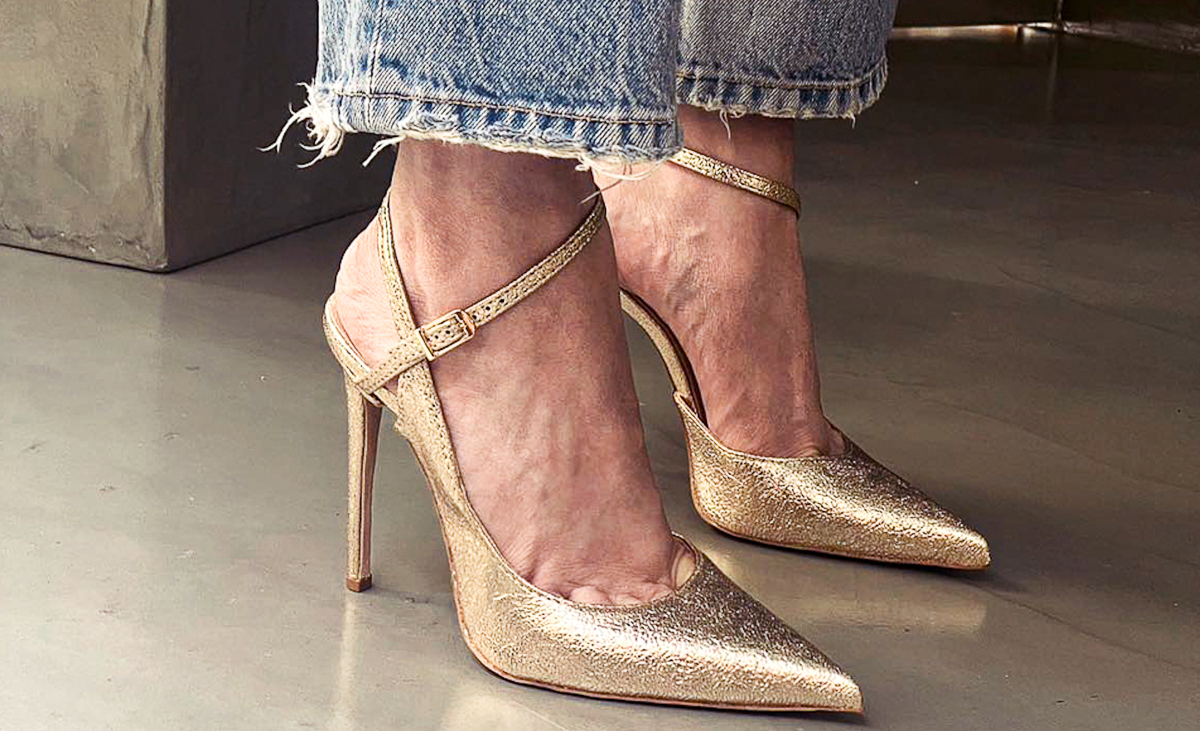
Top 7 Greek Sandal Brands for Summer 

Best Greek sandals

From timeless flats to contemporary silhouettes, these leading Greek sandal brands blend tradition with modern elegance.

Investing in a pair of Greek sandals is one of those smart summer decisions that pays off year after year. Whether your style leans classic and understated or bold and playful, Greek designers have perfected the art of combining quality craftsmanship with effortless style. The result? Sandals that elevate even the simplest outfit- whether you’re exploring an island town or heading out for dinner in the city.

To help you curate a summer footwear lineup that’s equal parts stylish and versatile, we’ve rounded up the top Greek sandal brands to know. From minimalist designs to beautifully embellished pairs, these labels deliver both form and function- ensuring your feet stay cool, comfortable, and chic all season long.

 Ancient Greek Sandals

Co-founded by designer Christina Martini and entrepreneur Nikolas Minoglou, Ancient Greek Sandals has become synonymous with timeless elegance and artisanal craftsmanship. Inspired by mythology and made by hand in Greece, each pair is crafted using traditional techniques and natural, chemical-free leather that softens and deepens in character over time. With their signature winged buckle and minimalist silhouettes, these sandals effortlessly bridge classic and contemporary.

Valia Gabriel

Sandals created by Valia Gabriel are the epitome of understated summer elegance. Handmade in Greece using premium leathers sourced from across the country, each pair is defined by its clean lines, earthy palette, and timeless simplicity. The brand blends classical inspiration with modern minimalism, resulting in refined silhouettes that feel both grounded and elevated. Designed for longevity and ease, these sandals slip seamlessly into a warm-weather wardrobe- offering effortless style and all-day comfort.

Kyma

Drawing inspiration from the Greek islands, Kyma infuses each sandal with the spirit of the Aegean- naming every design after a different island to reflect its unique character. Handcrafted in Greece with high-quality leather, Kyma sandals are known for their refined simplicity: clean lines, minimal stitching, and a distinctive blue sole that nods to the sea. Elegant and endlessly versatile, they’re a go-to for those seeking a balance of comfort, sophistication, and timeless summer style.

Ateneo

Ateneo Sandals combines decades of footwear expertise with fresh, trend-driven design to create comfortable, crafted sandals. Founded by a new generation of designers, the brand balances innovation with quality, using advanced production techniques to deliver soft, supportive footwear without compromising style. Ateneo is a reliable choice for those seeking everyday sandals that blend comfort and contemporary appeal.

Sandalia Sti Stoa

Founded in 1941 in the heart of Kalamata, Sandalia Sti Stoa is a heritage Greek brand that merges traditional craftsmanship with contemporary sensibility. Each pair is meticulously handmade using pure leather and natural materials, resulting in sandals that feel both timeless and fresh. With a focus on comfort, quality, and understated design, Sandalia Sti Stoa offers a modern take on a classic. 

ĒSIOT

Founded in 2014 by Irene Sioti, ĒSIOT sandals blend 25 centuries of history with modern comfort to create a uniquely versatile design. Each summer collection pays homage to a different Greek destination, weaving real stories and local connections into every pair. More than just footwear, ĒSIOT sandals embody a lifestyle rooted in heritage, travel, and timeless style.

Sandalaki

Rooted in the minimalist spirit of Greek summer, Sandalaki (based in Thessaloniki) crafts sandals that marry ancient tradition with contemporary design. Each pair is meticulously handmade by local artisans using premium materials and time-honoured techniques, capturing the essence of sun, sea, and sand. With timeless silhouettes refreshed through a rich palette of colours and textures, Sandalaki sandals embody the elegance and simplicity that define the Greek lifestyle.

Main Image by Ancient Greek Sandals

Chat With Leading Hotel Photographer Vangelis Paterakis 

Vangelis Paterakis

Light, simplicity, humility, genuineness- these qualities define Vangelis Paterakis, shaping both his character and his artistic vision.

His body of work, though expansive, remains precise, honouring geometric forms and the subtle interplay of light.

Born in Piraeus, Vangelis discovered the transformative power of photography early on- and it has shaped his life ever since. Known for his discerning eye, he captures details others might overlook: a fleeting shift in light, an unexpected angle, the quiet poetry of a space. Through his lens, moments become emotional landscapes- revealing not just what is seen, but what is felt.

An internationally renowned photographer based in Greece, his portfolio spans architecture, design, hospitality, and culinary arts. Among his distinguished clients are prestigious hotel brands such as Hilton, Aman Resort, Sofitel, Radisson Blu, and Grecotel, alongside esteemed architects.

His work has appeared in leading international publications including Wallpaper, Architectural Digest, Andrew Martin- Interior Design Review, Taschen, J.J. Magazine, and Yatzer.

Driven by an insatiable artistic curiosity, Vangelis continually explores new avenues for creative expression. His travels to Cuba and Japan sparked fresh inspiration, culminating in his first solo painting exhibition, Virtual World. He has also participated in numerous group exhibitions, collaborating with fellow artists and photographers.

Throughout his long career, Vangelis has been welcomed by some of the world’s most idyllic resorts, using his lens to introduce these hidden gems to discerning travellers worldwide.

We caught up with Vangelis to talk about what drives his passion, and the standout places around the world that have left a lasting impression.

Tell us about your work as a photographer. When did it all start?

My love for photography began the moment I first held my brother’s camera. Since then, there hasn’t been a day when I haven’t felt compelled to capture a moment, whether professionally or personally. From as far back as I can remember, art has deeply influenced my life, my thinking, and my soul- especially architecture. Photography became the perfect medium to unite these passions, leading me naturally toward architectural photography.

You have a passion for architectural design and hotel photography. What do you look for when capturing the perfect shot, and how would you describe your signature style behind the lens?

Architectural photography is my true passion. I aim to capture harmony, symmetry, and the natural beauty of the landscape, as well as the emotions and feelings within a space. When shooting in hotels during operating hours- whether at the pool, restaurant, or common area- I strive to be almost invisible, respecting guests as they enjoy their vacation and rest. This approach helps me capture the genuine sense of leisure and happiness without disruption.

For me, the key is that each image conveys essential information without exaggeration. I focus on simple compositions with clean lines. The space itself guides you to the right light, depending on its orientation, openings, and angles- lessons that come only with experience.

What have been some of the highlights in your career so far?

I treat every job as unique. Each space requires a different approach, a different kind of light. Every project evokes different emotions and offers many perspectives. One standout for me is the Aman-i-Khas in Ranthambore, India. It’s a self-contained, 10-acre oasis nestled in the pristine wilderness of the Aravalli Hills in rural Rajasthan, featuring just 10 luxury tents. This project gave me the rare chance to capture not only the facilities but also the entire philosophy of life the resort embodies.

Another significant moment was when Hilton Hotels Group selected me to photograph over 60 of their hotels across Asia. Interestingly, a year earlier, I hadn’t been chosen in a competition to shoot their hotels in Greece. But that didn’t deter me. After the project, Hilton Athens reached out directly, and a fruitful collaboration began.
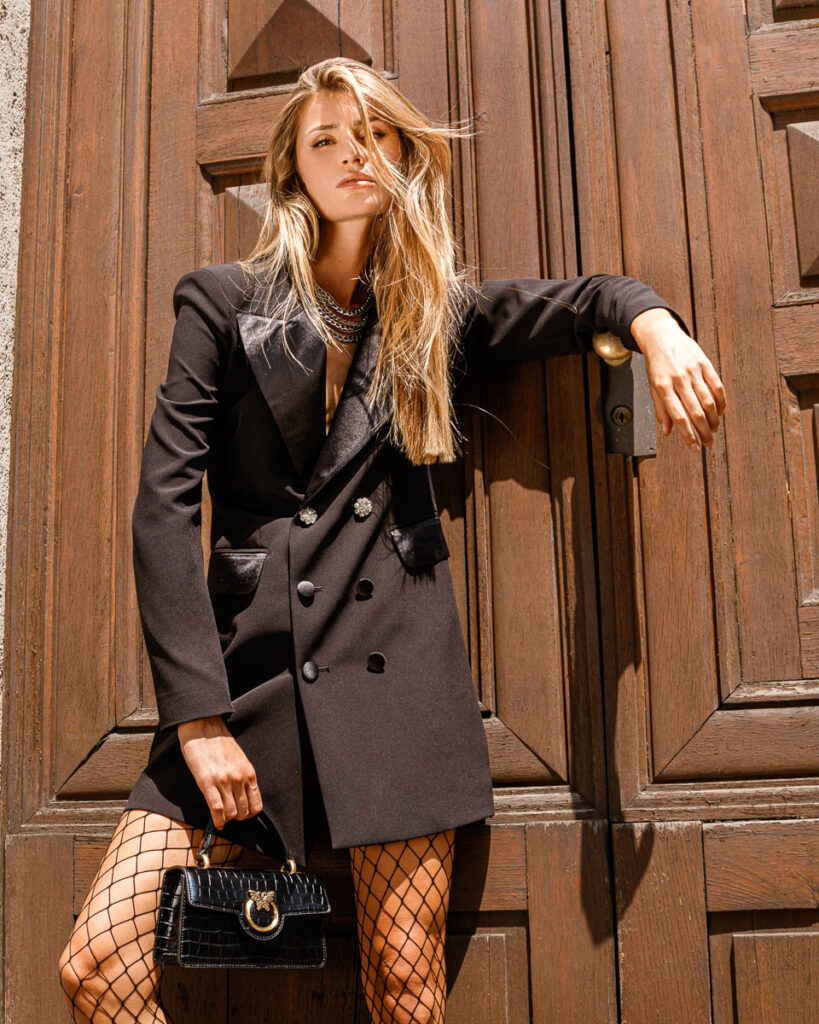
What are some sources of inspiration for your work?

Professionally, architectural photography is where I find the most authentic expression of myself. I also come from the world of publishing, having worked with magazines like Maison Decoration, Vogue Casa, Maison Figaro, and Vima Deco. On a personal level, I find great satisfaction in capturing genuine emotions with my camera- wherever I come across them.
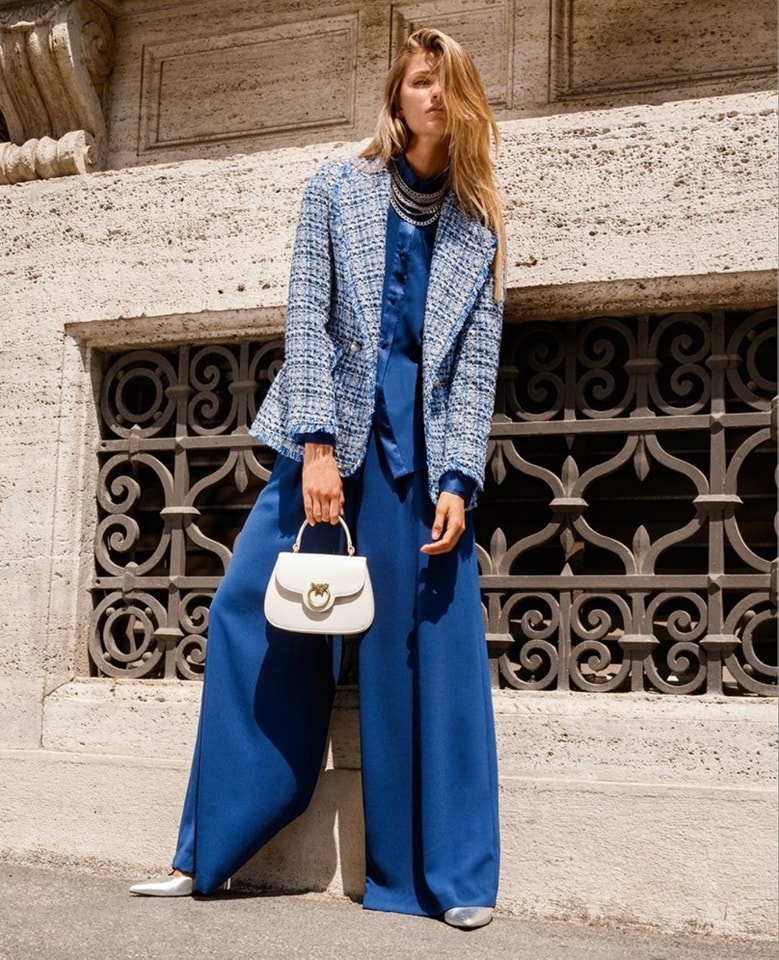
What do you enjoy most about your job?

From the very first hotel I worked in, I knew this was the kind of photography that truly suited me. Since then, it’s been my passion and my constant pursuit. Working with hotels means travelling to exciting places, meeting fascinating people, and enjoying incredible food. I now consider myself a nomad- I’ve travelled from South America to Asia.

One of my favourite photography trips was to a Philippine lagoon, about 300 kilometres from Manila, at an Aman Resorts property. It was a lush green island with palm trees and stunning sandy beaches. The reception was centrally located, and the villas were scattered throughout the island. Each villa had not only a private pool but also its own private beach- I think that’s the very definition of paradise.

Back home in Greece, the best hotel I’ve photographed is Amanzoe in Porto Heli, especially Villa 20. Everything about that villa is exceptional. While photographing there, I had two personal chefs, and a wonderful suite with a heated pool just for me, plus another for my partner.

Having visited so many hotels across Greece, which ones stand out?

I would definitely highlight Kalesma in Mykonos. It’s a contemporary paradise- an elegant hotel with high aesthetic standards that embraces the latest trends and promises every visitor an unforgettable experience.

Would you like to share some of your favourite summer destinations in Greece?

I have a country house in Kea, which is my sanctuary. I spend a large part of my time there, as it’s close to Athens- it offers me rest, and lets me work and create right by the sea. Thanks to my work, I’m fortunate to travel a lot, and I have a special fondness for the Cyclades, especially Mykonos and Santorini.

How have your website and social media presence contributed to building your profile and attracting new opportunities?

Social media has definitely helped me promote my work, but for me, the most important thing remains my website and the projects showcased there.

All images by Vangelis Paterakis ©

Top 10 Open-Air Cinemas on the Greek Islands

Best open air cinemas on the Greek islands

Discover the best open-air cinemas that are scattered all over the Greek islands- from Paros and Spetses to Kimolos and Crete.  

Greece isn’t just about sun-soaked beaches and ancient ruins- its open-air cinemas under the stars are also a beloved summer tradition, cherished by both locals and travellers. 

Imagine settling into a cozy seat, popcorn in hand, as a film unfolds against a backdrop of sea-scented air and a sparkling night sky. Surrounded by fragrant blooms and cooled by gentle sea breezes, these cinemas blend cinematic escape with unmistakable local charm.

Cine Kamari | Santorini

Tucked beneath palm trees and bougainvillea, Cine Kamari is Santorini’s open-air cinema dream. Expect indie gems and cult classics under the stars, a chilled local wine in hand, and the Aegean breeze drifting through- this is where island charm meets vintage movie magic.

Rex | Paros

A local favourite for over 60 years, Rex Paros is a laid-back outdoor cinema showing everything from new releases to cult classics. Its easy-going vibe and nostalgic charm make it a go-to spot for both locals and visitors.

Ciné Titania | Spetses

Running from June to October, Titania in Spetses offers two nightly screenings, blending old-school cinema fun with modern sound and projection. It’s a quintessential summer escape under the stars.

Cine Diana | Poros

Fully renovated, Diana Cinema on Poros pairs nostalgic charm with modern comforts. With comfy seating and crisp projection, it’s one of the island’s most beautiful spots to catch a summer film.

Anesis | Aegina

Since 1967, Anesis has brought open-air cinema magic to Aegina with its retro charm and updated sound. Screening both first-run films and art-house picks, it’s a true island institution for film lovers.

Cine Pallas | Ermoupolis, Syros

Set in Ermoupolis’s elegant Miaouli Square, Cine Pallas blends Cycladic style with cinematic history. Housed in a neoclassical building dating back to the 1850s, it offers starlit screenings amid grand architecture and leafy surrounds, making it an unforgettable island film experience.

Cine Kalisperitis | Kimolos

Cine Kalisperitis in Kimolos is a volunteer-run open-air cinema that offers free summer screenings in breathtaking natural settings- from castle ruins to sandy beaches. With films projected under lantern light and starlit skies, it’s a magical, poetic blend of nature, culture, and cinema.

Cine Manto | Mykonos 

Cine Manto in Mykonos is more than a cinema- it’s a lush garden hideaway blending film, food, and art in a uniquely serene setting. Watch first-release movies under the stars, explore the botanical garden filled with cats and koi fish, and enjoy all-day dining at the Cine Manto Café. A one-of-a-kind island experience.

Attikon Cinema | Skiathos 

Attikon has been a summer staple since 1962, showing new releases in English (with Greek subtitles some nights) from May to September. With a real retro vibe, the cinema delights guests with traditional Greek dancing at intermission and ends screenings with a lively ABBA-themed party- celebrating its link to Mamma Mia! Two daily screenings and a minibar complete the experience.

Cine Kipos | Chania, Crete  

Kipos open-air cinema, nestled in Chania’s historic municipal garden is Greece’s first-ever municipal cinema that’s been operating for over 100 years. Screenings begin at 7pm and 9pm under evergreen trees, with the dramatic Roloi Clock Tower standing beside the screen. The nearby traditional Kipos Café adds ambience, while a small snack spot and simple seating complete this timeless garden cinema experience.