How to Be Savvy & Satisfied at a Greek Fish Taverna

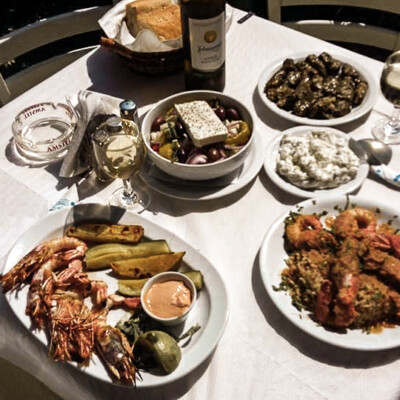
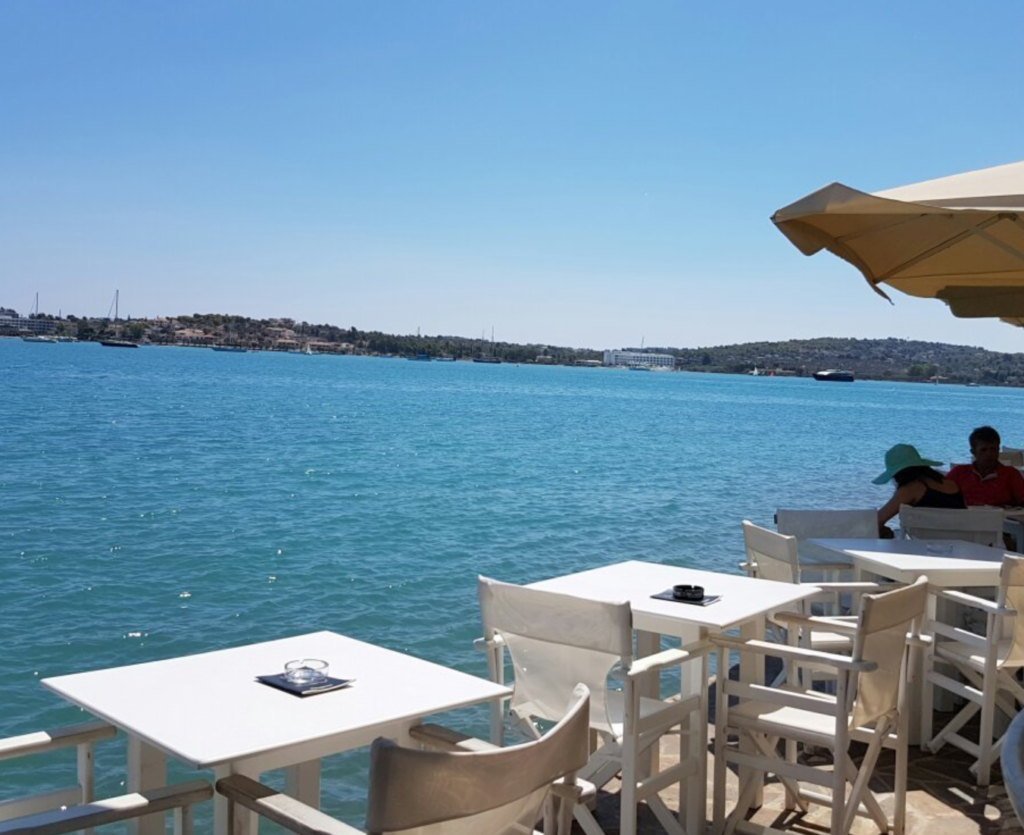
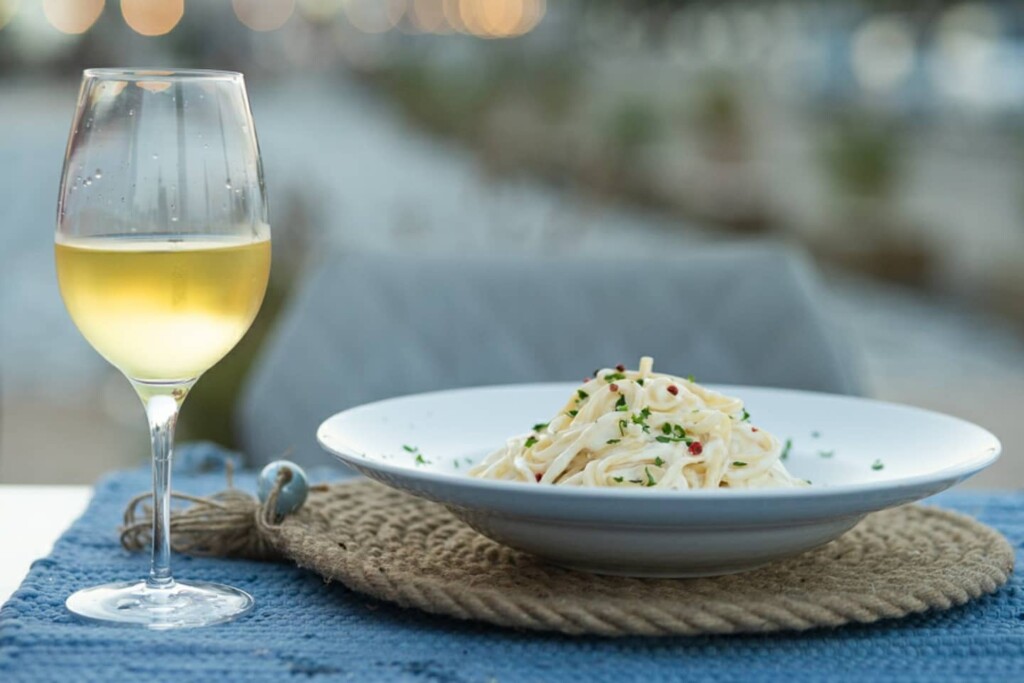
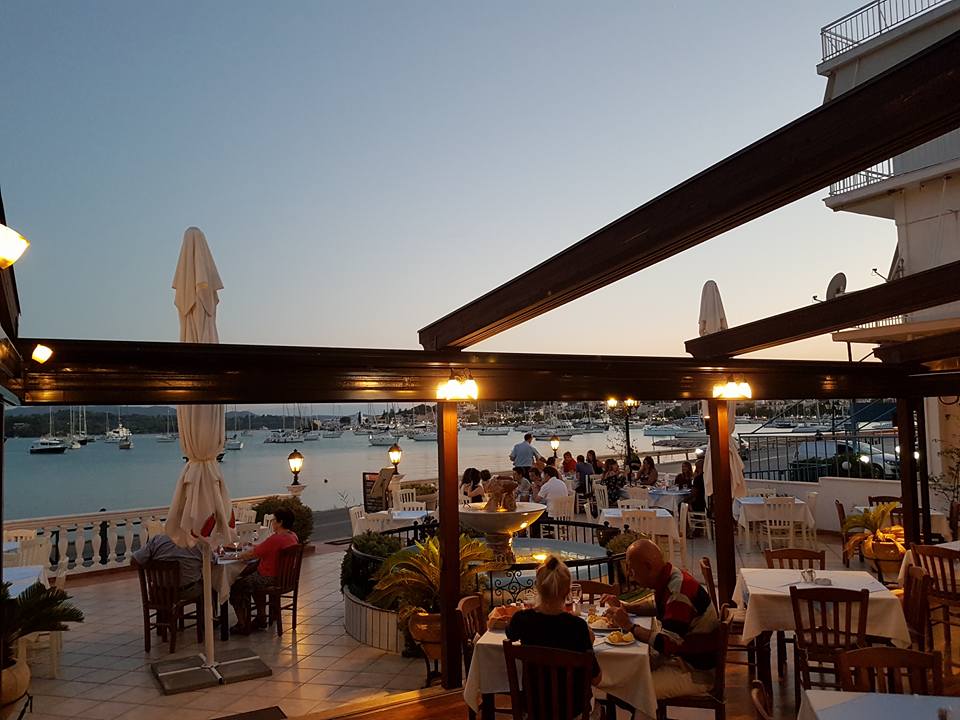
Whether you find yourself at a Greek fish taverna (Psarotaverna) with knowledgeable local friends or totally unaccompanied by accommodating translators/explainers of mysterious-sounding things on the menu, it helps to have a decent knowledge of what you’re eating.

As a rule, the best fish tavernas and restaurants overall are those that have only the freshest dishes available – the more pages on the menu, the more you can be certain that half the foods are frozen and microwaved as opposed to whisked out of the fisherman’s bucket and cooked. Usually fish taverns and other Greek restaurants divulge whether a fish on their menu is fresh or frozen by including an asterisk next to the name of the said
fish, but it’s better to be gratified by fresh catch than have your senses dulled by something that’s edible but tastes blah. Here we offer you a guide to the most commonly found delights served up in fish taverns around the country.

Atherina
What it is:
A tiny fish (sand smelt in English) that’s dipped in batter and deep fried to a delicious crispy consistency.

How it’s eaten: With your fork or, for the Boho-beach-carefree ones among you, with your hand, and entire. Some people chop off the heads due to psychological reasons (especially with the thicker, larger types of atherina fish) but really, it makes no difference to the overall taste. Served with a sprinkling of salt and squeeze of lemon.

Insights Greece - How to Be Savvy & Satisfied at a Greek Fish Taverna

Kalamarakia Tiganita
What it is:
Calamari that is cut into rings and tentacles, dipped in batter and deep fried to a crisp. When cooked properly the calamari will be only very slightly chewy and not at all rubbery. It will have an almost creamy consistency when masticated that mixes perfectly with the crunch of its batter.

How it’s eaten: With a sprinkling of salt and lemon, using a fork and often very fast as this is one of the most popular fish tavern delights.

Kalamari Stin Schara
What it is:
Calamari cooked on the grill with a little olive oil and salt, usually half-sliced along its length. As with all calamari, the fish should not be too rubbery, although the grilled version is usually a little more al dente than the fried rendition.

How it’s eaten: With a squeeze of lemon.

Barbouni
What it is
: Small to medium-sized Red Mullet that’s passed through flour before being pan-fried. The skin becomes crispy and the flesh should be juicy and tender.

How it’s eaten: First cut off the head. Next, be cut it open by slicing it across the middle and opening into two fillets. Remove the spine and bones, sprinkle with salt and lemon and enjoy.

Insights Greece - How to Be Savvy & Satisfied at a Greek Fish Taverna

Htapodi
What it is: Octopus, which is usually beaten to death on a rock upon being caught in order to soften its texture.

How it’s eaten: Most commonly the octopus tentacles are cooked on the grill and served with a drizzle of balsamic vinegar and salt, or it can be marinated with lemon and vinegar and in more recent years has become trendy in a carpaccio rendition.

Ahinosalata
What it is
: Sea urchin eggs. The word ‘salata’ can be a little misleading as there is no lettuce (or anything else for that matter added). The bright orange insides of the urchin are usually scopped into a bowl, sometimes with a little drizzle of olive oil added.

How it’s eaten: With (hopefully good) bread and (optional) lemon. Note: this is one of thise love or hate tastes. Either you will find it slimy and disgusting or you will want to slug the whole thing down alone because it tastes of the sea like nothing else.

Bakaliaros

What it is: Cod that is cut into steaks or chunks, dipped in batter (of often flour mixed with either soda or beer foe extra fluffiness) and deep fried or pan fried.

How it’s eaten: Traditionally (and especially on March 25th, when Greeks celebrate Independence Day as well as the second day in the religious fasting tradition leading up to Easter (for those who follow the 40 day fast), called Evangelismos tis Theotokou, when they are allowed to break their fast) bakaliaros is accompanied by two very complimentary friends – skordalia (a puree with tons of garlic in it) and boiled beetroots. But it’s just as tasty with some lemon.

Garides Saganaki
What it is: Shrimps slow-cooked with cheese, usually feta, and tomato sauce, with various seasonings and spices, and often in a clay pot.

How it’s eaten: It needs nothing added to it. Just scoop onto your fork and enjoy. If no one is looking, go ahead and dip your bread into the remnants and finish it off!

Insights Greece - How to Be Savvy & Satisfied at a Greek Fish Taverna

Gavros Marinatos
What it is: Anchovies that are marinated in salt, vinegar and spices. The texture is tender and juicy and the flavour is pungent.

How it’s eaten: Ideally accompanied a few sips of ice cold ouzo and maybe a few forkfuls of grounding fava to balance out the sharp yet delicious taste.

Mydia Achnista

What it is: Steamed Mussels that are cooked either in wine a la moulles marinier or even with tomato and spices.

How it’s eaten: When you serve yourself, make sure to also scoop some of the sauce onto the mussels. Pluck the mussel out with your fork, dip into the sauce and enjoy.

It’s not over ‘til it’s over…. And next of course, comes the fish of the day…

A proper dinner at a fish tavern involves sharing several of the above-listed dishes as starters, and then moving on to the actual fish of the day. Usually restaurant owners will happily (read proudly) invite you into the kitchen area to see the catch of the day and convince you to order some, which will usually be cooked on the karvouna (coals) and served with an olive-oil and lemon sauce. Don’t worry, regardless how stuffed you may feel after all the starters, there is always space for a few delicate pieces of beautifully cooked super-fresh and tender fish, which Greeks like to call “frouto”. You got that right, fruit, as in dessert. This is often the most expensive part of the meal, by the way, as a good quality, freshly caught, large fish is worth its sea salt.

14 Reasons to Add Arachova to Your Next Winter Holiday List

Arachova is a stunning mountainous village that sits perfectly at the foot of Mount Parnassos, at an altitude of 973 meters. It’s considered to be the most cosmopolitan winter destination in Greece thanks to its cool all-day cafes/bars, fine dining restaurants, chic boutiques and luxurious hotels. 

Due to its close proximity to Athens (around a 2-hour drive) over the cooler months, it is buzzing on the weekends with guests (many local and international celebrities and socialites) looking for a classy and cozy escape. We’ve gathered the Top 14 reasons as to why Arachova is a must-visit winter destination!

1. Discover the traditional character of Arachova Village by taking leisurely strolls through its narrow cobblestone streets. Here you will discover traditional little shops and you can mingle with the friendly locals. Make sure you sit down at an old kafeneio (cafe) and enjoy a traditional Greek coffee.

2. Here you will find Greece’s most popular ski resort, which is only a few minutes drive away from the village centre. You can enjoy skiing down the slopes of Mount Parnassos. 

Insights Greece - 14 Reasons to Add Arachova to Your Next Winter Holiday List

3. Thrill seekers can take part in outdoor activities such as hiking, and mountain biking as well as other winter sports like snowboarding and sledging at Gerontovrachos, Kelaria and Fterolaka.

4. Indulge in some shopping as here you’ll find local and international luxury brands as well as a great variety of skiing and outdoor gear. At the main shopping strip you will come across a range of chic boutiques stocking well-known brands as well as the popular concept store L’escalier which is full of stylish pieces. 

5. Enjoy a winter cocktail, a glass of port, or a shot of Tsipouro at Isidora Gallery Bar, Sehre Cafe, Gospel or Doctor John Chillout Bar, which all serve up amazing drinks for the colder months. 

6. Taste some local wines such as the Parnassos red variety “Mavroudi”, which has Protected Designation of Origin status since 2006, or the “Black Arachova Vine.”

7. Try the amazing Formaela cheese- usually served as melted ‘saganaki’ with a squeeze of lemon.

8. Also make sure you taste the local Amfissa olives.

9. To warm up, sit in front of a fireplace and sip on the locally grown organic mountain tea.

10. Taste authentic specialties including Trahana (soup), free-range wild boar, goat or rooster with Hilopites (handmade pasta), as well as Kotosouvli, Kokkoretsi, at taverns such as Panayiota, Fasouli, Kaplanis, Archontiko and Dasargiris. And for some French cuisine check out Le Sapin.
 
 
11. Make sure you try the spoon sweets and honey, which you will definitely want to take home with you!
 
12. Visit the church of Agios Giorgios with its picturesque clock tower rising over the village. Byzantine churches and monasteries are very special here and every year, on the name day of Agios Giorgios, there is a huge festival in Arachova, celebrating this historical event and the Protector Saint of the town. There is a Holy Mass and celebrations outside the beautiful church, which sits on the highest spot of the town.
 
13. From here you can easily make your way to Delphi, the ancient sanctuary that is recognised by Unesco as a World Heritage Site. Visit nearby Parnassos National Park too.
 
14. The region of Arachova is well-known for its textiles and woodwork, before you leave make sure to pick up some hand-made coloured woven carpets (flocati rugs) and textiles to take with you.

Syntagma’s European Gastronomic Bar

A “contemporary European gastronomic bar”, this place serves brunch in the mid-morning and a great selection of sexy cocktails at night. With a recently renovated space and cocktail menu, this elegant bar near Syntagma Square especially draws a chic after-work crowd. 

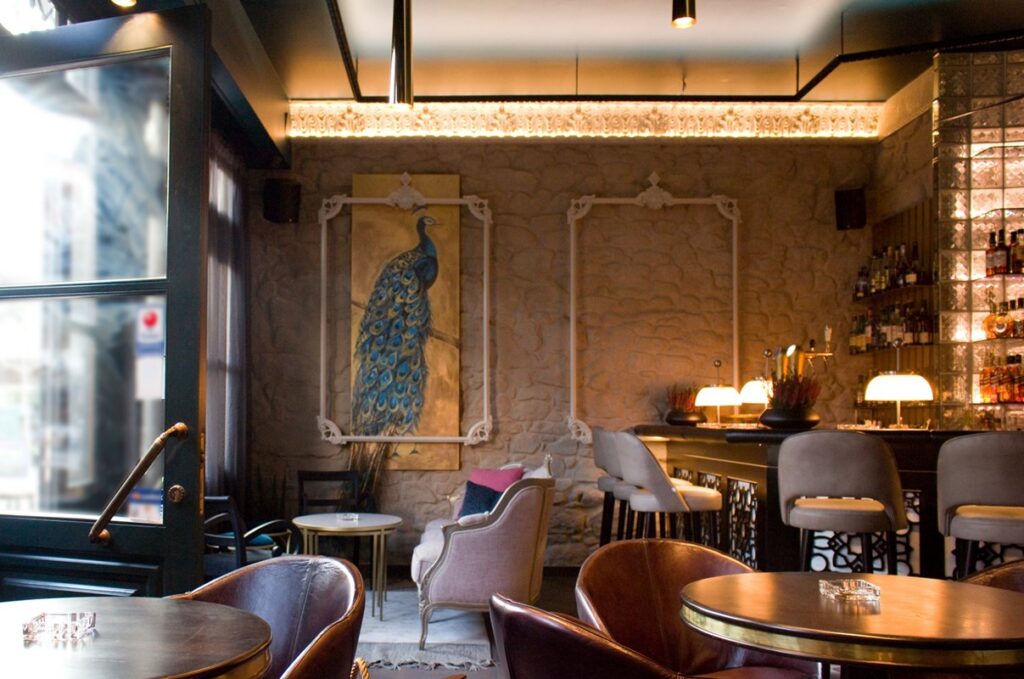
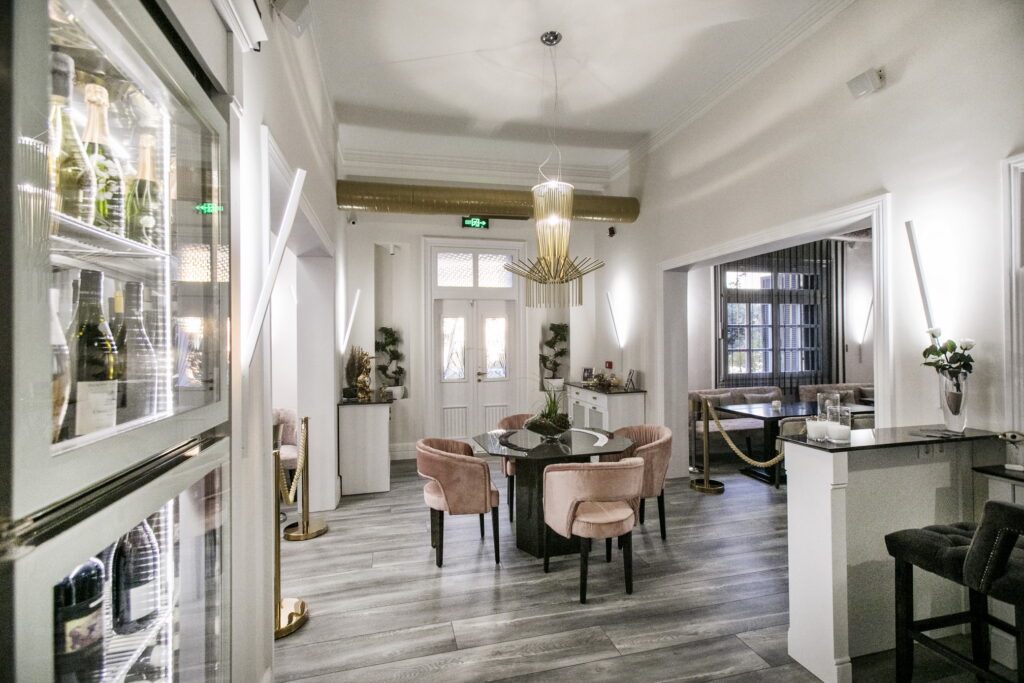
Style / Décor: Like its cocktail menu, the décor leans toward classical elegance. A shiny wooden bar and polished wooden floors, modern versions of classic items like chandeliers and leather stools and gilded gold-framed mirrors create an ambience of old fashioned opulence and contemporary urban charm at once.

What makes it special? This bar prides itself on its cocktails. The ways in which they are mixed, the ingredients they contain, and the way classic recipes are given a unique twist or completely creative drinks are there for hours of tasting, are characteristic elements here. Release the Kraken, with rum, spicy mango chutney and lime or Liza Banana ball with Metaxa 12 stars, roasted coffee, pineapple, banana essence, kaffir lime leaves and peanut butter powder are just two examples of the bar’s original take on drinks. For something almost completely Greek, try Mastiqua with Skinos mastic liqueur, chia seeds, tahini, bergamot, agave syrup with Saffron from Kozani, Greek coffee powder and orange aroma.

Corfu Revisited: Rediscovering the Roots of My Family and Wine

The alluring attraction and wanderlust for discovering the world prompted me in 1971 to leave my native Corfu behind. Fourty nine years later, with a life’s journey across four countries outside Greece in two different continents, I have returned to my island of birth.

It was for a very special kind of research – and impressive discoveries – that involved both my work in wine and my hundreds of years’ old family history.

Insights Greece - Corfu Revisited: Rediscovering the Roots of My Family and Wine

Wine was part of my upbringing as early as from the age of nine, when my mother handed me a tumbler with a small amount of wine and topped up with water as I was the eldest. Little did I know then that wine would become a major part of my adult life. When I set off on my travels as a young man, exploring and recording the fragmented Greek vineyard in the 1990’s, I knew nothing of Corfu’s wine. Of the 60 wineries featured in my Greek Wine Books I had included only one Corfu winery, that of Livadiotis from Halikouna. Over 25 years and 730,000 km later I became increasingly curious to discover what the status of wine on my island really was, as there is a wide difference in public perception and reality regarding this matter.

Meanwhile, Corfu magnetised me later in life for a different reason as well. What I was stunned to learn only a decade ago, after deciding to deep dive into my ancestral roots, was that my paternal family history connected to Corfu dates back to 1503. This was a time when Venice gave my stradioto ancestors passage and privileges from Nafplio to Corfu. Fascinatingly, the Archives on Corfu are incredibly well organised, something that is unique to the modern Greek state. A long-standing research had taken me to a point where a documentary was now within reach. The digitalised archives of my Notaro Publico ancestors 1686 -1830 make for riveting reading of the island’s social history. The documentary is not about my family per se but about the merchant classes and their often-scandalous lives. Their dealings, affairs and more.

Insights Greece - Corfu Revisited: Rediscovering the Roots of My Family and Wine

This research simultaneously brought me to finally see first-hand what changes, if any, had occurred over time in the local wine scene. Timing could not have been better as there have been completely unknown developments. Two of my contacts on the island introduced me to exciting new ventures. Nikos Kotinas in Lefkimi led me to the most recent of vineyards and winery of Borovino; and chef Aristoteles Megoulas, to the local produce he has been supporting, Pontiglio in Lefkimi and Nicolouzo in Ano Korakiana. These three vineyards and the second generation of Livadiotis of Halikouna to be reviewed on my website Greek Wine World.

As I write these lines Gerald Durrell’s tongue in cheek comment on Lawrence runs through my head: ‘My brother is conducting an exhaustive study of the islands wine’. I have been doing the same but probably in a different way. This visit was my great chance to get fully up to speed with the impossibly verdant island’s wine bounty. For example, I discovered that new, 15-year-old vineyards are heralding a revival. Another great revelation regarded the true face of Cacotrigis, Corfu’s signature grape. Forget the farmer-produced, orange-coloured stinky brews; the new generation is semi-aromatic and textured. And yet Insights Greece - Corfu Revisited: Rediscovering the Roots of My Family and Wineanother revelation: the new-to-me mysterious red grape called Skopelitis. It doesn’t, as you may presume, hails from the eponymous Sporades island, its vinous tasting profile bears no resemblance to anything else anywhere in Greece nor nearby Sicily or Southern Italy.

Perhaps the best part is yet to come. As I discuss my findings with my academic and technician friends new task lists are being created. There is so much more to come from custodians holding completely unknown to any of us grapes. That is another story to be told when DNA results have been completed. As for my ancestral DNA and all the stories to go with that, the roots run so deep and the fruits are so rich that all I can say is watch this space for a fascinating documentary.

Ultimate Guide to Astypalea

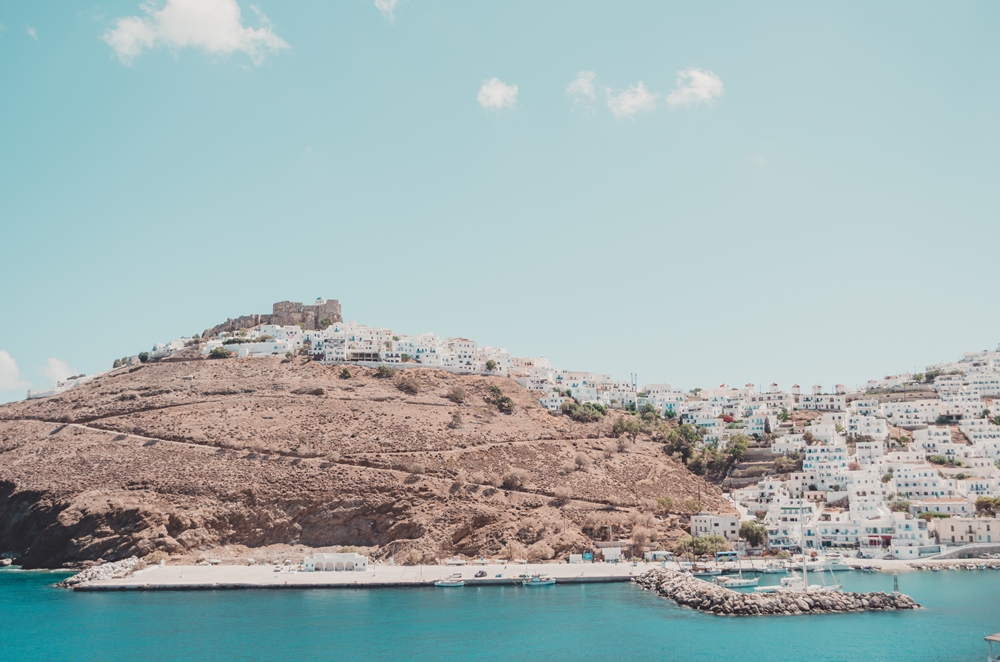
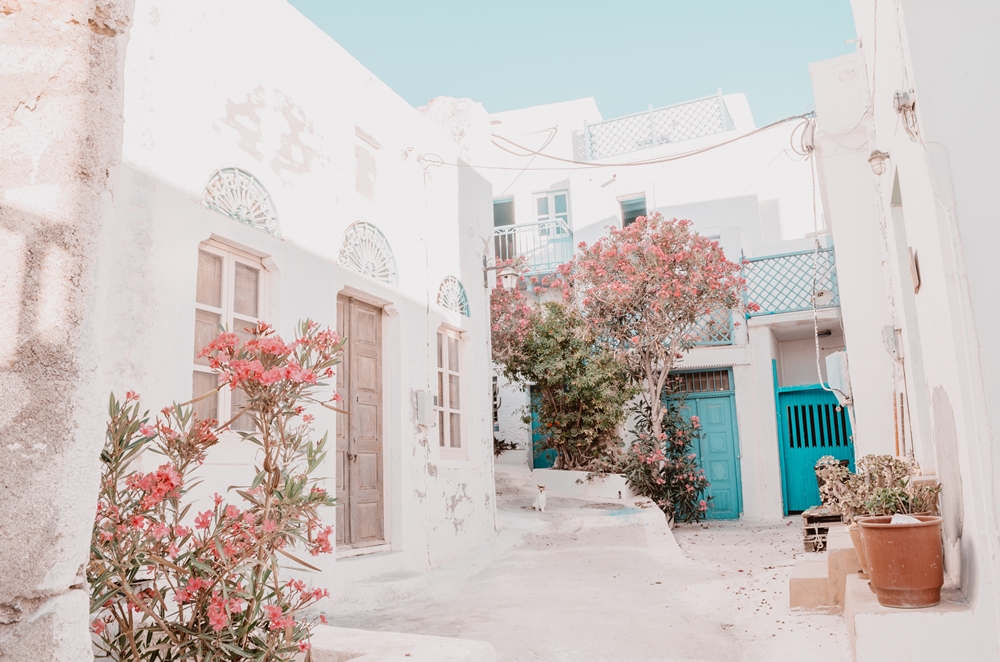
From the moment you arrive, Astypalea will take your breath away. The simplicity of this authentic island, which shares aesthetic elements of the Cyclades and the Dodecanese, is what makes this destination extra special! 

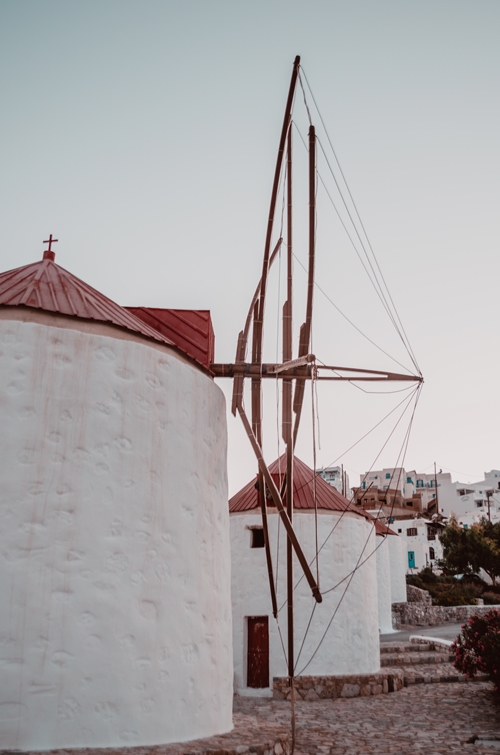
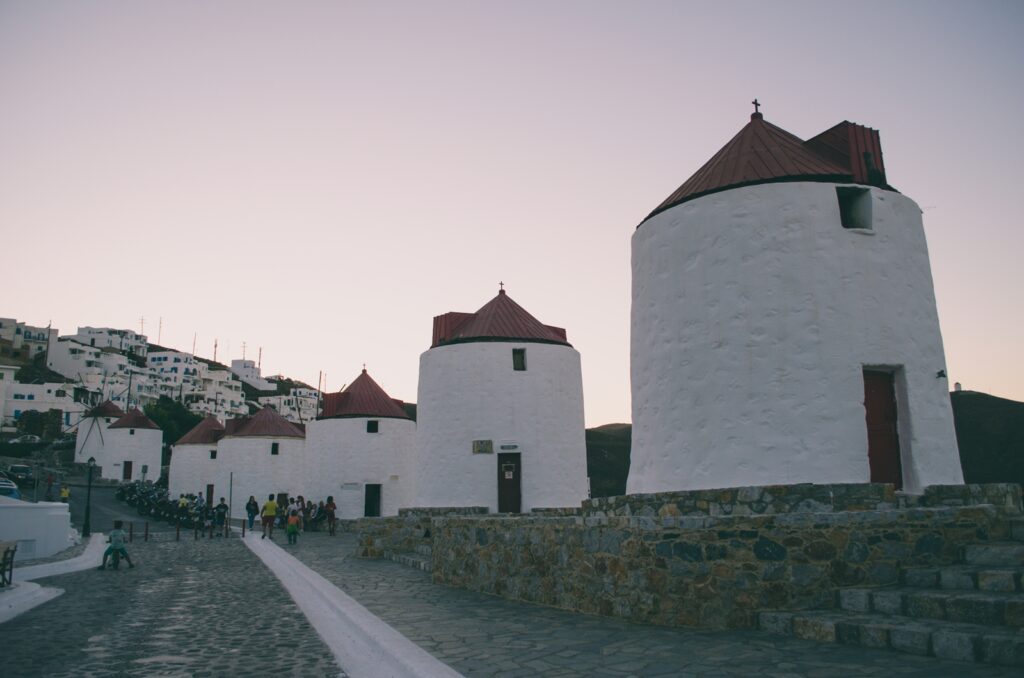
Its magnificent Chora, the old port, eight picturesque windmills, an imposing Venetian castle built of dark stones; and stunning beaches with crystal clear waters are the main reasons to fall in love with this beautiful island. 

What you need to know before you arrive…

Astypalea is a butterfly-shaped isle, located in the Dodecanese in the southeastern Aegean but looks a lot like a Cycladic island. Its position contributed to the fact that it was not included in the wave of rapid tourism developments that evolved on other islands in the 80s and 90s.

Getting there

You have two options- either by ferry or by plane. The journey by ferry takes around 11 hours from Piraeus, Athens. Blue Star Ferries run every Monday, Wednesday, Thursday, and Saturday from the port of Piraeus and Olympic Air flights run daily except Tuesdays, during summertime.
Insights Greece - Ultimate Guide to Astypalea

Where to stay- I would strongly recommend staying near Chora.

Getting around- Around Chora, all roads lead to the Castro.

If you just want to explore Chora, the castle, and its surroundings you won’t need a car. But if you’re planning to do some trekking, explore the villages of Livadi and Analipsi, the charming beach of Agios Konstantinos and other distant beaches you’ll definitely need transport. Astyapalea has a regular bus service which connects all the main points of the island. Bus services run between Livadi – Astypalea – Analipsi – New Port – Airport.

Best time to visit 

If you are looking for a summer escape the hottest months are August, July, and also June. It’s also perfect in spring, as you can discover the paths through the flower-filled landscape. Some paths pass through traditional creameries producing local cheese.

Where to sleep

Kalderimi Hotel on the road from Chora to Livadi. Designed in traditional island style, there are a total of 11 individual houses, all of which have their own distinct appeal.

Chrysalis Boutique Hotel offers superb views towards the twin-hilled town of Astypalea.

Pylaia Boutique Hotel, situated over a hillside in Astypalea it has two pools and a spa as an extra bonus.

Where to eat

Agoni Grammi at Chora’s square, just opposite the mills for amazing seafood and homemade Makarounes (pasta).

Ageri, simple and tasty.

Aeolos at Pera Gialos for delicious pizza and pasta.

Almyra at Maltezana for fresh fish and lobster pasta.

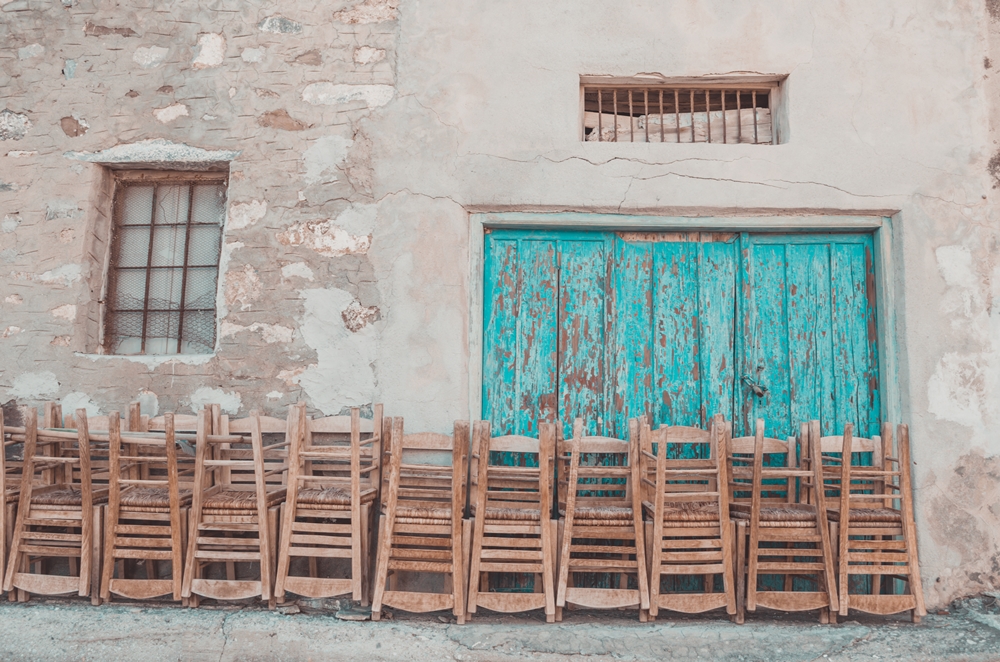
Paradosiako Kafeneio, a very traditional and authentic place close to the Windmills.
Insights Greece - Ultimate Guide to Astypalea

Local delicacies  

Homemade Makarounes- traditional pasta typically served with fresh cheese or a garlic sauce.

The island’s cheeses are produced by local shepherds from some 15,000-20,000 animals living in the countryside. 

Where to drink

Castro, a bar on top of the charming Chora of Astypalea. It has various levels as the walls of the castle.

Mylos Bar, hidden in the narrow road to the castle.

Kouros, the only nightclub playing Greek music, if you want a surreal experience with dancing on tables.

Where to swim
Insights Greece - Ultimate Guide to Astypalea

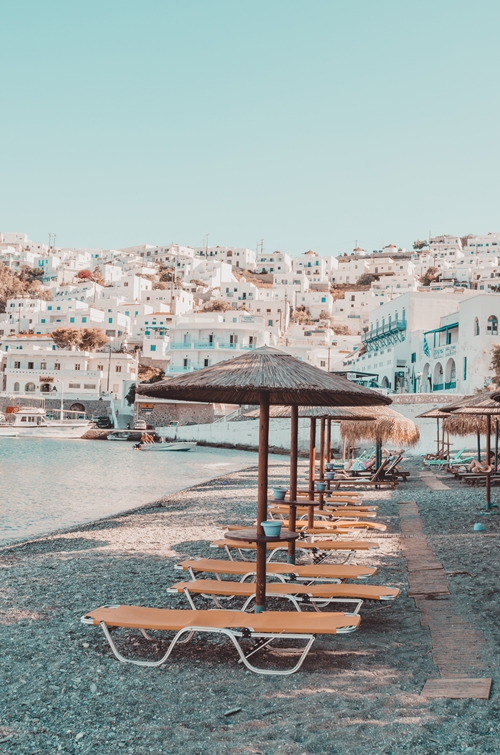
Livadi, the closest beach to Chora. Half of the beach has sunbeds while the other half remains unorganised.

Maltezana. The settlement consists of several smaller beaches, like Mple Limanaki and Plakes.

Another beach close to Maltezana is Steno, one of the best beaches in Astypalea, separated into two organised beaches, the Mikro Steno (small) and the Megalo Steno (big), both with crystal clear waters and two beach bars.

Vatses, one of the most beautiful beaches of Astypalea, and Tzanakia, another beautiful beach and the unofficial nudist beach of Astypalea. It also has a fantastic view of the castle of Astypalea.

Kaminakia. If you’d like to reach this beach you should calculate approximately 30 minutes of driving. A good part of the road has no asphalt. The beach also has some basic infrastructure and tamarisks that will provide you some shadow. It’s one of the most beautiful beaches of Astypalea, but it can also be crowded during the high season.

Agios Ioannis o Richtis is a hidden gem of Astypalea. You’ll have to walk around 30 minutes to reach this outstanding beach with a stunning landscape.

Discover history…

According to Greek mythology, Astypalea and Europe were the daughters of Finikos and Perimidis. The island of Astypalea was first inhabited in the 2nd millennium BC by the Caraes, who came from the ancient region of Caria in Anatolia (present-day Turkey). They were followed by the Minoans of Crete. Astypalea seems to have been a wealthy place during Classical times as it is evident from the high annual tribute they used to pay to Athens. There were many temples on the island at that time, another symbol of prosperity. Fruits and flowers practically covered the entire island, which is why the ancient Greeks used to call it the Table of the Gods. During the Hellenistic period (4th-1st century BC), Astypalea was an important naval base of Ptolemy of Egypt. During the Byzantine years, (4th – 13th century BC) the constant attacks from the pirates forced the inhabitants to abandon their houses at the coast and create new settlements inside the island with strong walls as protection. The castle of Saint John was also built at that time, parts of which you can still see.
Insights Greece - Ultimate Guide to Astypalea

Cultural events of the island

Every June, the Astypalea Summer Festival takes place on the island. On the 6th of August, the celebration of Sotiras takes place at the church of Sotiras Christos. On the  27th of July, is the feast day of Aghios Panteleimonas, and the celebration of Panagia Portaitissa takes place at the castle on the 15th of August. On the 8th of September, the traditional celebration in honor of the Virgin Mary takes place at the church of Panagia Poulariani. 

Do as locals do…

Have a Greek coffee or a meze at the historic Kafeneio tou Moungou in Hora, watching elderly islanders catch up and play “tavli” (backgammon). 

 Every local housewife has her favorite secret spot (they’ll probably only share it on their deathbeds) for collecting thyme, sage, and saffron that grows on the island. Every November, the local women get together in a mini-ritual to pluck the saffron threads.

Insider tips…
Insights Greece - Ultimate Guide to Astypalea

Watch the full moon pop up from behind the castle- it’s an absolute must in Astypalea. To enjoy the moment to its fullest, reserve a table at Archipelago Café, and devour one of its nice desserts.

Also, the Cave of Negrou offers a beautiful view of the sea and of Vatses Beach, a 20- minute hike away.

To taste breadsticks made with local ingredients such as thyme, oregano, saffron, honey, and cheese, go to Iliana Bakery.

For great breakfast go to Meltemi Café which serves delicious pougia (small pies with fresh cheese, honey, and cinnamon).

For amazing desserts head to Glykia Astropalia, where you can find cheesecake made with hlori and Kolokytha.

Ideal time to spend here? You need 5 – 7 days to really enjoy the place.

Favourite part? The calm and extremely charming alleyways of Chora and the stunning landscape that includes the windmills, the Castle, and Chora.

What to avoid? Believing that maps and roads here are friends. There are no decent maps of Astypalea, not many street names to refer to and as a consequence, Google was not much help. But this has a good part. You can just get lost on the island and explore it by chance.

Top activities-Hiking. Ftera, located just twenty minutes away from Chora by car, is an ideal climbing location. Also, hiking to the highest spot of Astypalea is a unique experience. The chapel of Prophet Elias offers magnificent views of the capital of Astypalea.

Where to shop

Don’t miss the opportunity to visit “KATOA -The second life of things” in Chora -practically a second-hand shop- where you can find old items that the owner has transformed into something new and each one of them comes with a unique story.

At Tsakalos in Maltezana, you can buy honey, jams, liqueurs, body and face creams made with honeycomb, and other local products from Keranthos in Hora.
Insights Greece - Ultimate Guide to Astypalea

What to see

The Venetian Castle that stands on a hill above Chora. Its’ walls survive till today.

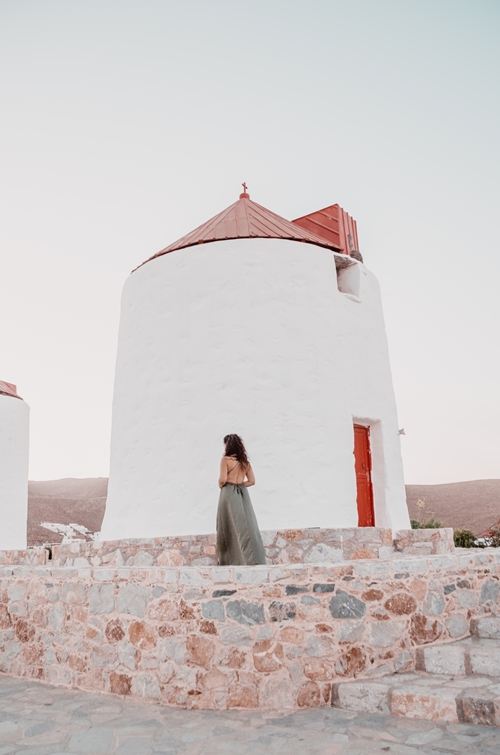
The eight traditional windmills, preserved until today- the most picturesque spot of Chora.

The Monastery of Saint John, nestled between two steep slopes. It offers a magnificent view of the islets Pontikoussa, Ofidousa, and Ktenia.

Drakos Cave (the Cave of the Dragon) with impressive stalactites and stalagmites of different colors.

The Archaeological Museum that hosts exhibits, such as stone tools, ceramic pottery and jewellery from the Prehistoric and Medieval times. You can also find photos from Negros and Drakos caves.

The Church of Panagia Portaitissa, considered among the most beautiful churches in the Dodecanese.

Also, the Church of Panagia Poulariani, accessed only by boat or on foot. It has a natural rock formation in the shape of the Virgin Mary embracing a child.
Insights Greece - Ultimate Guide to Astypalea

Take a day trip to… 

Τake the little boat to the nearby uninhabited islands of Koutsomitis and Kounoupi (or Kounoupes) with an unbeatable Aegean feel. There are several daily excursions that start from the port of Astypalea around 11 am and return in the late afternoon. They visit both islands and stay approximately two hours at each one. There are currently two options. The first choice includes lunch and drinks and costs 45 € while the other one doesn’t include any food or drink and costs 15 €.  Keep in mind that when winds are too strong the excursions are cancelled.

Can’t leave until- You treat yourself to some hlori (a soft local cheese), anthotyro (dried hlori) and kopanisti (a spicy, creamy cheese). And certainly, buy other local products, like sage, oregano, thyme, and chamomile.

*Images by Polina Paraskevopoulou © (Copyright) 
9 Best Coffee Table Books that Will Transport You to Greece

Coffee table books are a joy to browse. With stunning photography and loads of inspiration, they make a perfect addition to your home and an ideal gift for yourself or any travel lover.

We have put together a list of our favourite Greek themed coffee table books that feature breathtaking imagery- so you can be transported to Greece without leaving your sofa! 

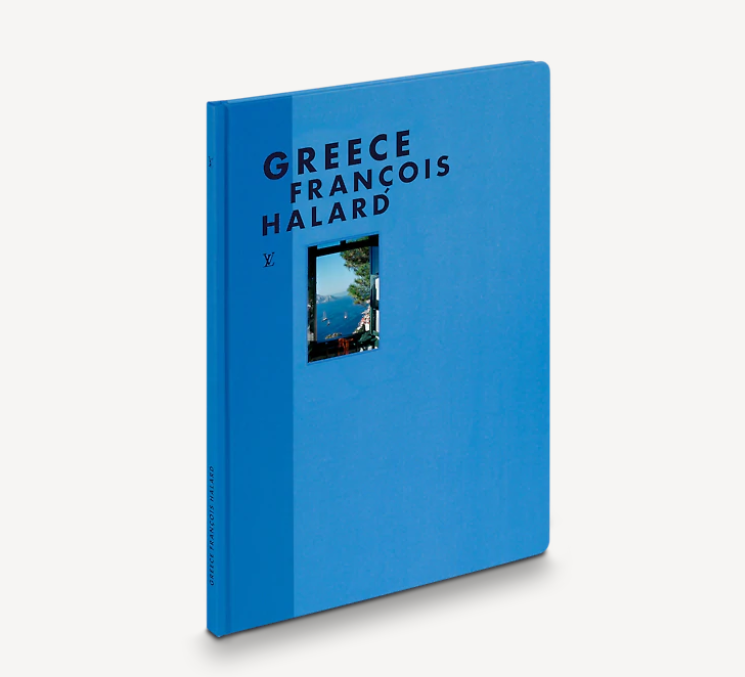
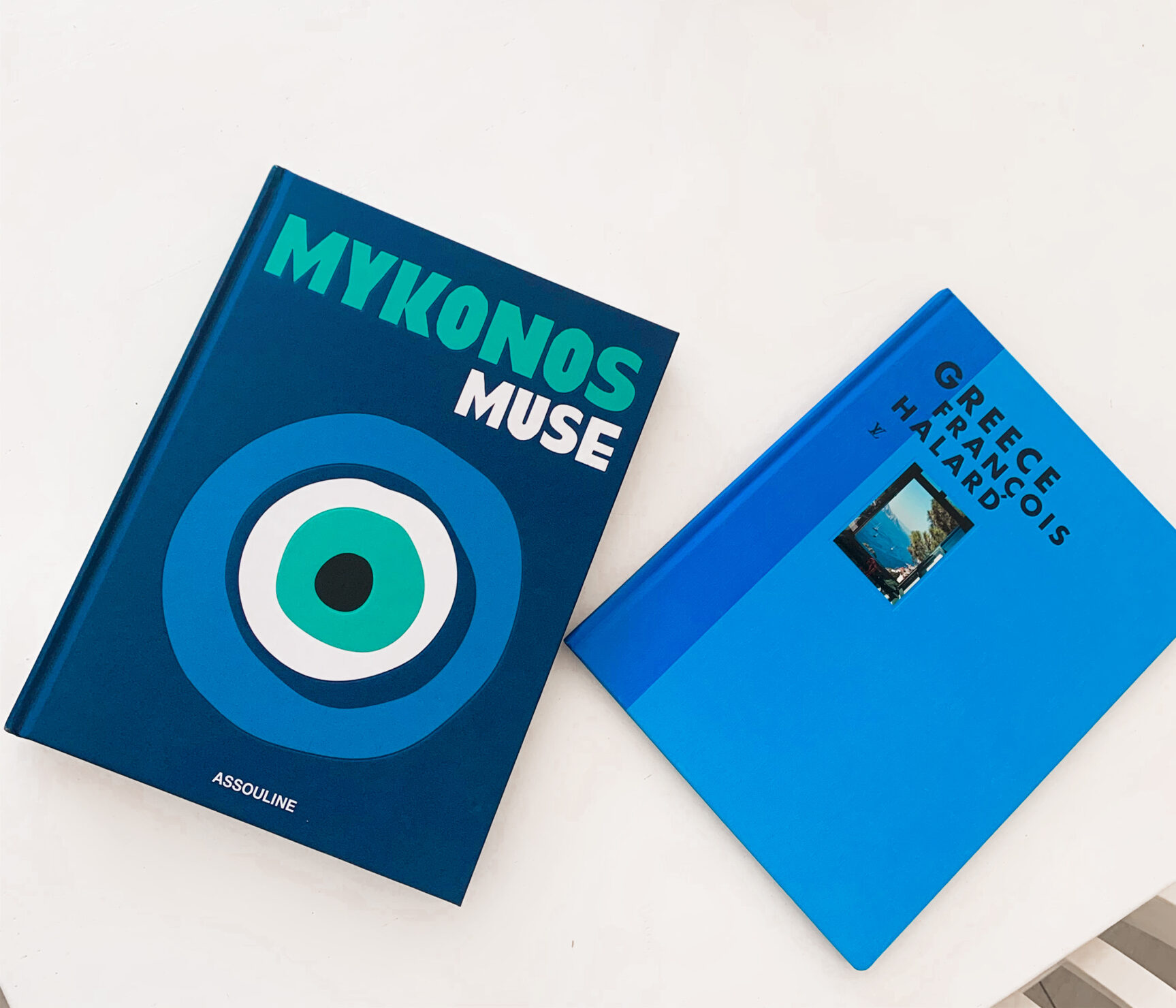
Greece, Francois Halard by LV

Famed for his photographs of interiors, François Halard captures places that are alive. Born in Paris to parents who were interior designers, François Halard has created a wide collection of travel books for luxury fashion house Louis Vuitton, presenting his travel photography with a fashion perspective that takes you to faraway places and dream destinations. Here, he presents his very personal vision of Greece, and in particular the island of Symi. Classical sculptures, mineral structures and landscapes rising up from the earth fill the pages, tinted in blue tones. 

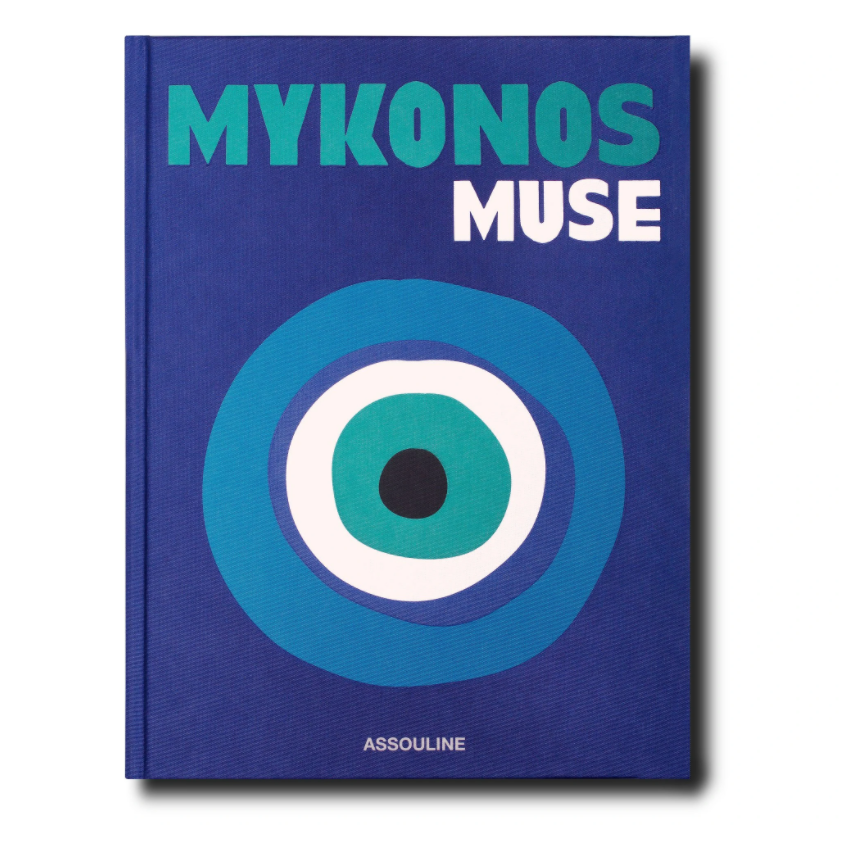
Mykonos Muse by Assouline

 This book chronicles the culture and society that has defined Mykonos over the past century—from its days as a hideout for such luminaries and elites as Le Corbusier and Antonis Benakis, to its moment as a sanctuary for the gay community, to its predominant party scene—all the while indulging the reader with the ruins and myths hidden there. Capturing the essence of the island, this book showcases the gorgeous architecture, fantastic beaches and artistic flair and the vibrancy of this Cycladic isle.

Athens Riviera by Stephanie Artarit

This stunning book gives a magical glimpse into Athens’ beautiful coastline which is filled with a string of stunning neighbourhoods that are home to a selection of high-end hotels, pristine beaches and a buzzing nightlife. Assouline’s Athens Riviera hardcover book showcases the beauty and luxury of this prestigious spot and there are 300 pages exploring the revival of art, culture and nightlife of the area. Accompanied by striking photographs, it truly celebrates the beauty of the Athenian coast.

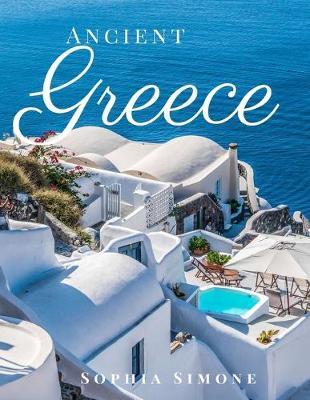
Ancient Greece by Sophia Simone

This book is filled with beautiful pictures allowing you to take a journey through Greece. With a range of spectacular photography from Athens to the islands, you will be transported to exquisite destinations across the country. This is perfect for all Philhellenes, as this beautifully packaged coffee table photo book showcases amazing pictures of different cities, art, architecture and culture from Greece.

Best Kept Secrets of the Greek Islands by Diane Farr Louis

Covering six of Greece’s island groups – starting in the west with the Ionian islands, moving east to the Argo-Saronics, continuing to the Cyclades, Crete and the Dodecanese, circling up to the North Aegean islands and back round to the Sporades and Evia – this book highlights some of the most beautiful landscapes and villages of the Mediterranean.

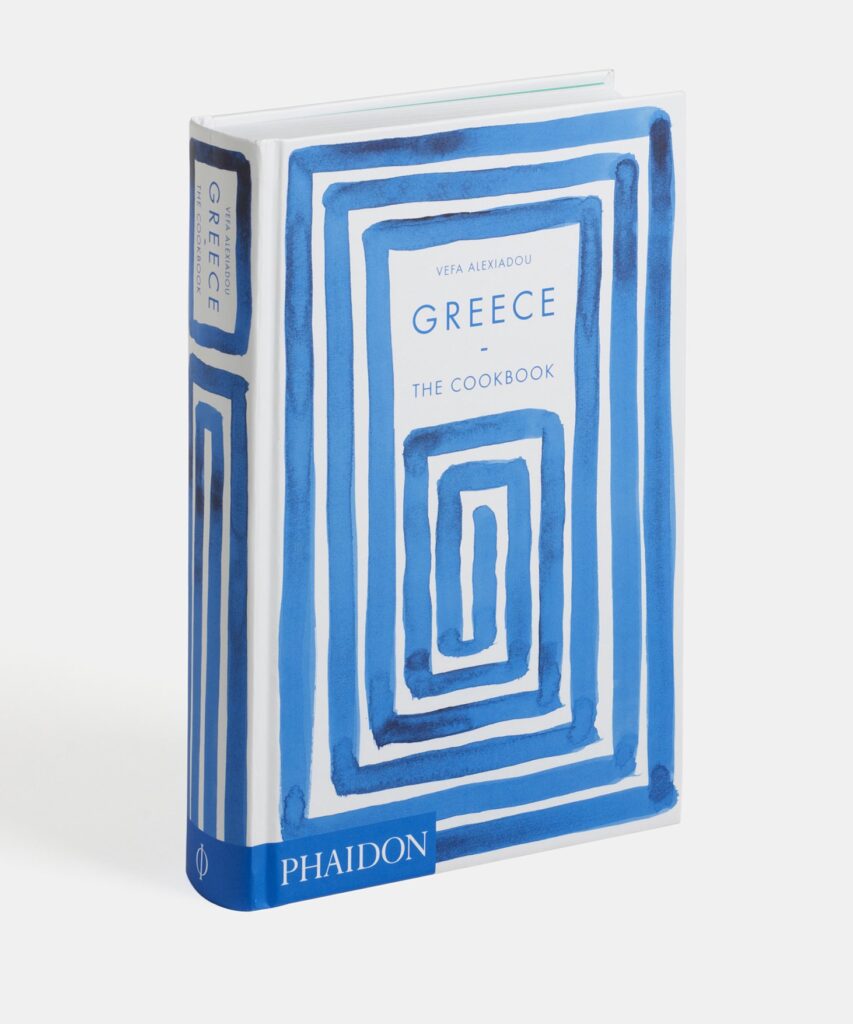
Greece: The Cookbook by Vefa Alexiadou

This gorgeous book highlights the rich and fascinating cooking of modern Greece and has been labelled as “the first truly comprehensive bible of Greek food in English.” With hundreds of simple recipes by Vefa Alexiadou, the authoritative grand dame of Greek cookery, the book also includes information on regional specialities, local ingredients and the religious and historical significance of the dishes. It is illustrated with 230 colour photographs.

At Home in Greece by Julia Klimi

From the one-room cubic Cycladic houses that inspired Le Corbusier to imposing Venetian towers and houses integrated into rocks, At Home in Greece reveals an astonishing collection of homes in the Aegean through the lens of Julia Klimi. The unique variety of Greek architecture is highlighted through the 468 photographs and text within this deluxe volume.

Greece: Land of the Light by Nicholas Gage

In the stark light of the Greek sun, colours become so pure and clear that they are almost audible. Brukoff’s bright colour images and Gage’s evocative words delineate the heart of Greece. Included are the great classical ruins, Byzantine monasteries, colourful fishing villages, and the ubiquitous cats. Gage’s insightful essays on the history of Greece, its myths and beliefs, life in the villages and the age old wisdom and spirit of the Greek people, are a passionate tribute to the country.

NG The Greeks: An Illustrated History by Dianne Harris Cline

On the culture that brought us democracy, the Olympics, Socrates, and Alexander the Great, this lavishly illustrated reference about ancient Greece presents the amazing history through gripping stories; the rise and fall of the phenomenal empire; the powerful legacy left by ancient Greece for the modern world; and the new discoveries shedding light on these ancient people that are still so much with us. Learn of spectacular discoveries such as the Uluburun shipwreck, the earliest writing ever found in Europe, and buried palaces. A stunning treasure, this lushly-illustrated, uniquely comprehensive and accessible history of Ancient Greece is perfect for anyone interested in the origins of our modern world.

Shop Greek Museum Stores Online for the Perfect Gift

Online shopping offers endless possibilities, but if you’re seeking a truly original gift that can’t be found in the thousands on Amazon, visit these fantastic Greek museum shops and discover a whole other level of ideas.

National Archaeological Museum

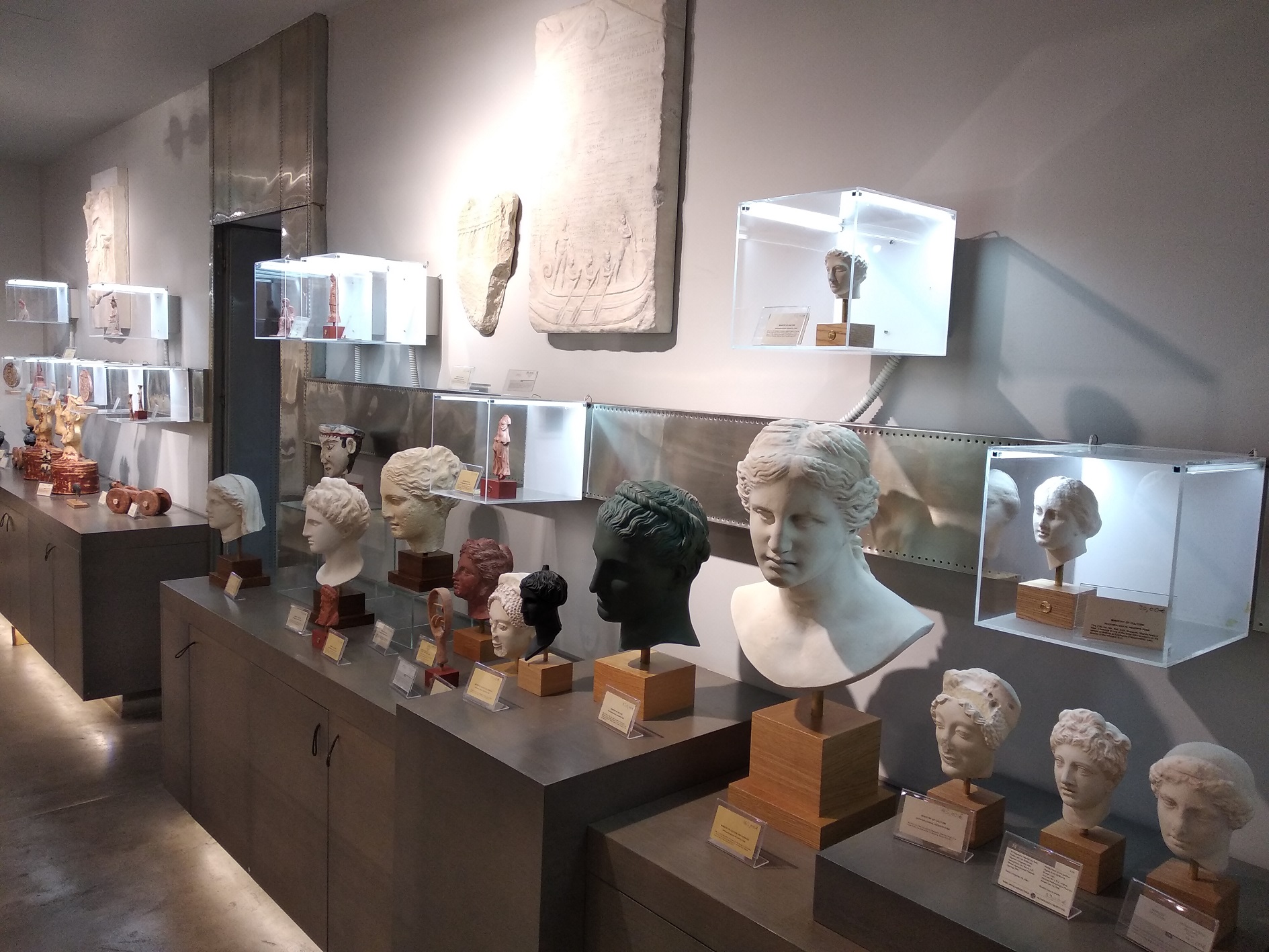
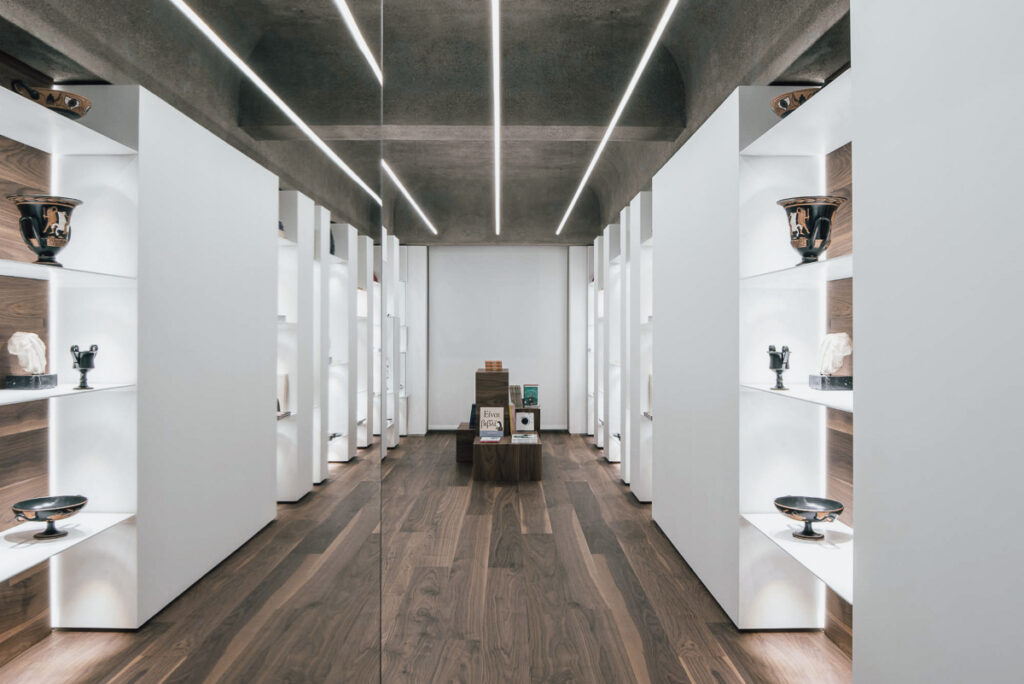
Beautiful replicas of jewellery, busts, statues and statuettes, objects like vessels and coffee table books are sold at the store of Greece’s largest archaeological museum. There is no online catalogue but you can get in touch directly with the museum shop via email or phone to enquire whether any specific item you are interested in finding is available. The museum presents antiquities from all over Greece, in the categories of Prehistoric Antiquities, Sculpture, Metalwork, Vases and Minor Arts, Egyptian Antiquities, and Cypriot Antiquities. It also features permanent and temporary exhibitions that centre on particular areas of time and cultural, political, and social history. For more information, visit the museum shop’s page.

Insights Greece - Shop Greek Museum Stores Online for the Perfect Gift

Benaki Museums

There are four Benaki Museums in Athens – the Museum of Greek Culture, the Pireos Annex, the Museum of Islamic Art, and the Toy Museum. At the Museum of Greek Culture, one can find permanent exhibitions featuring ancient Greek and Roman art, Byzantine, post-Byzantine and Hellenic art, historic heirlooms, a vast collection of drawings, paintings and prints, Chinese and Korean art, and more. At the Pireos 138 Annex, the museum presents modern Greek architecture and photography and temporary events and exhibitions – currently, it is hosting the Athens Photo Festival 2020 (until 15/11/2020). The Museum of Islamic Art houses one of the world’s most important collections of art from India, Persia, Mesopotamia, Asia Minor, the Middle East, Arabia, Egypt, North Africa, Sicily, and Spain. Finally, the Toy Museum presents the lifetime collection of Maria Argyriadi which is among the most important in Europe and includes toys, books, clothing, and other items associated with childhood from Europe, Africa, Asia, and the Americas.

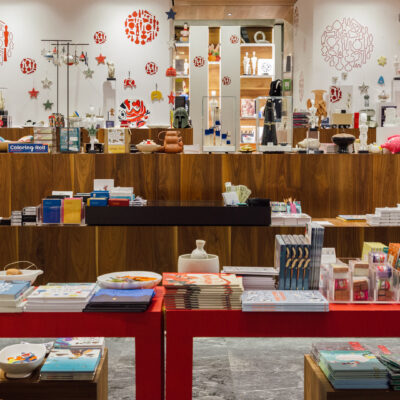
The online shop, the first of its kind in Greece, features museum replicas and inspired items from all the museums. You’ll find exclusive items like limited edition silkscreen prints by Greek artists, corporate gifts, contemporary and replica jewellery and an endless variety of unique art items created by Greek designers who were inspired by the breadth and depth of Greece’s and the world’s culture and art.

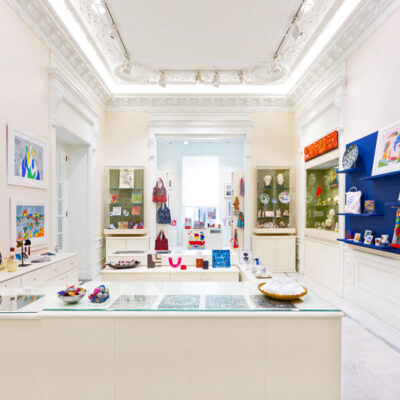
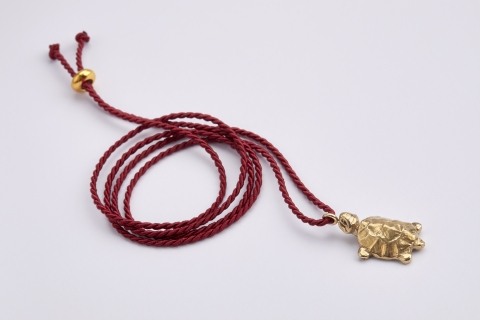
This impressive museum presents the most complete permanent collection of Cycladic art worldwide, as well as temporary exhibitions (currently one titled ‘Antiquarianism and Philhellenism: The Thanassis and Marina Martinos Collection’ which will go on until 05/04/2021). Cycladic art, ancient Greek culture and Cypriot culture are represented here in daily and utilitarian items, artworks, jewellery and sculpture. At the museum’s shop you’ll find replicas and modern creations by Greek designers inspired by the exhibitions, from household and décor items such as glasses, bowls and plates to jewellery and books. Explore the shop’s lucky charms for 2021 for upcoming Christmas pressies too.

Goulandris Museum of Natural History

The one-of-a-kind museum is known for its impressively massive replica of a dinosaur skeleton as well as its incredible variety of botanical, entomological, marine biology, paleontology, herpetology, mammal, mineral and other collections related to natural history collections. At the museum’s store you’ll find original presents for children, such as minerals and rocks, handmade ceramic, wood or stone figures of sea and land animals, and lovely books, puzzles and games related to the natural environment. There are plenty of gift options for adults too: Greek flora is portrayed on fabulous lithographies, silk scarves and porcelains designed by Niki Goulandris.

The Acropolis Museum

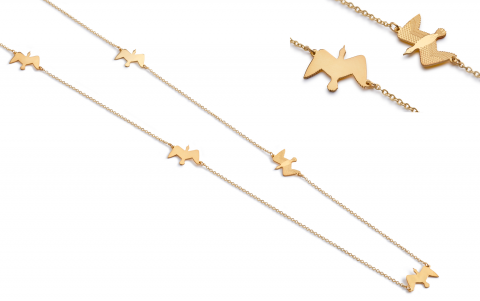
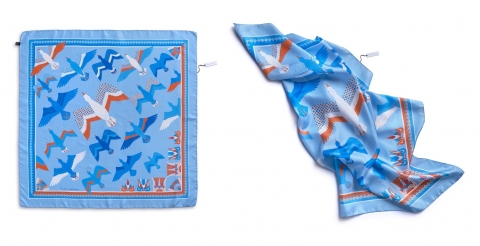
Greece’s most important museum, featuring spectacular beauties such as the Parthenon Frieze and a meticulously maintained, expansive and stunning collection of the most important finds from the Acropolis and Athens in antiquity, has just turned 10! The Acropolis Museum shop has created a special selection of festive, Christmas season gifts that includes lucky charms for 2021, decorative items and ornaments. The museum is also presenting a special selection of silk scarves, cups and other items themed on Cranes in Flight to celebrate its 10th Anniversary.

Relax the Senses at a Cool New Eatery in the Heart of Athens

NOAH Athens

Review by Gina Lionatos 

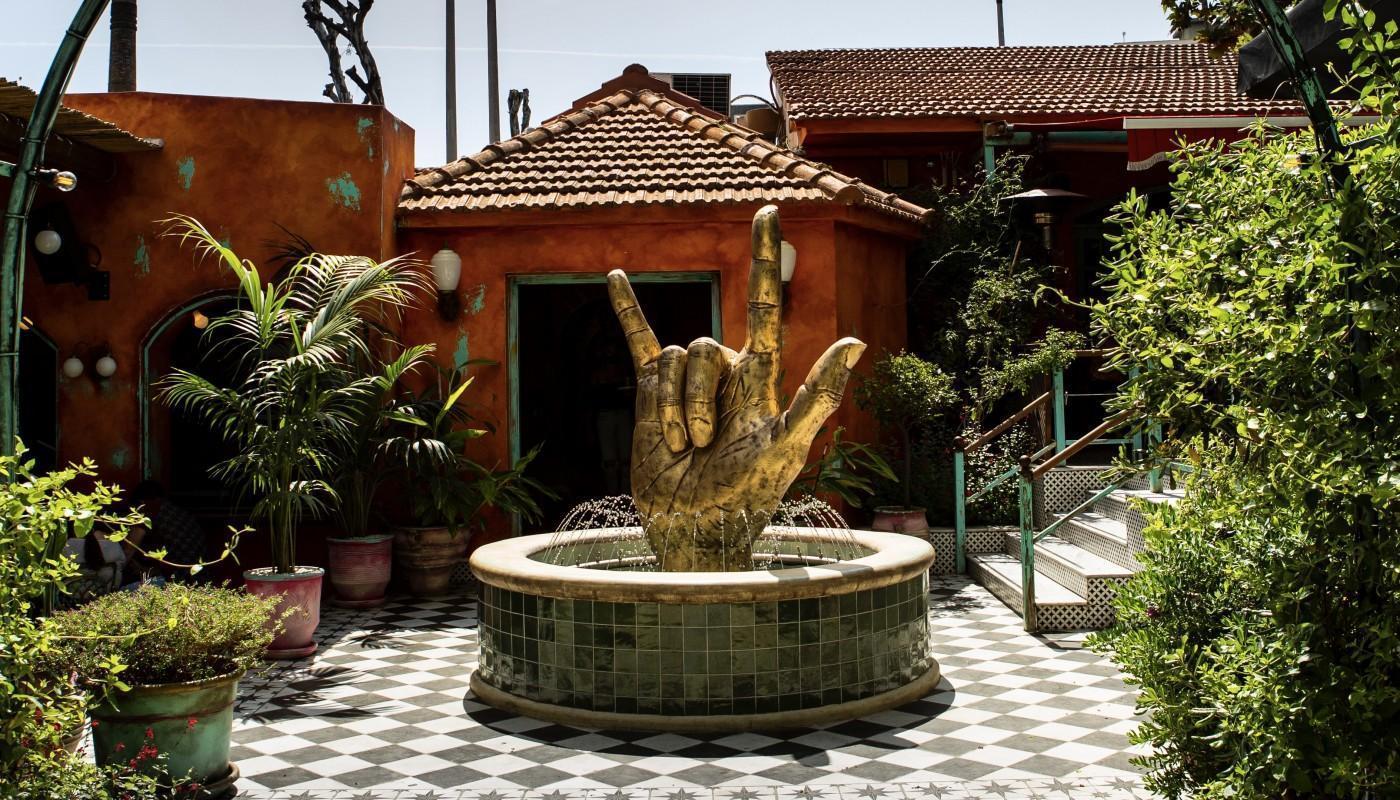
Since opening in June 2020, the trademark “I love you” fountain at the entrance of Noah has welcomed a steady stream of visitors. Nestled into the side of Parko Eleftherias, the chaos of nearby Vasilissis Sofias is instantly forgotten thanks to the thoughtfully designed space, leafy garden and ambient beats that instantly relax the senses and transport you to a far-away place.

Type of cuisine? At Noah, the menu changes seasonally. During its first summer the menu at Noah focused on vibrant Mexican flavours. The winter menu offers mixed European fare, including vegetarian and vegan options.

Type of eatery? Noah is ideal for a cocktail and a snack any day or night of the week. Dinner in the Noah garden is perfect for a special occasion, date or long overdue catch up with the crew.

The low down… Anyone who lives in the centre of Athens knows just how chaotic the city can be. Just a short stroll from the relentless bustle of Vasilissis Sofias, Noah manages to create an exotic, island vibe in the heart of the city.

Décor/ Ambience? Reminiscent of a Spanish villa with hues of burnt orange and turquoise and rustic accents, Noah completes the summer oasis experience with bohemian exotic house beats and a roster of DJs throughout the week.

Menu? By day, Noah serves up a bright and tasty brunch menu from 10am-2pm. Think avocado toast, healthy bowls, shakshuka and smoothies. By night, the menu is designed for sharing and includes salads, starters, a raw selection, pasta, pizza cooked in a stone oven, and mains. Standouts include the skirt steak salad, occhi ragu and zucchini pizza.

Something to drink? There is a handsome selection of European wines, however cocktails like the rum-based Yo Hoho  or the Jamon y Melon featuring mastic, melon and a surprising garnishing of jamon should not be overlooked.

Order my fave dish? Without a doubt, the beef tartare is fast becoming Noah’s unofficial signature dish. The usual components (beef, egg yolk, onion and seasoning) are mixed to your liking and served in front of you.

Price range? Brunch dishes at Noah are priced between 9-12 €. For dinner, entrees, pasta and pizzas range between 10 to 15 € and mains between 20 to 40 €.

Location? Parko Eleftherias, Megaro Mousikis, Athens 11521. Bookings can made for dinner +30 21 0723 3419

Opening hours/days? Open every day from 10am until late.

noahlife

Guide to Nafplio, Greece’s Most Romantic Town

Nafplio has been named Greece’s most romantic town, and for a good reason!

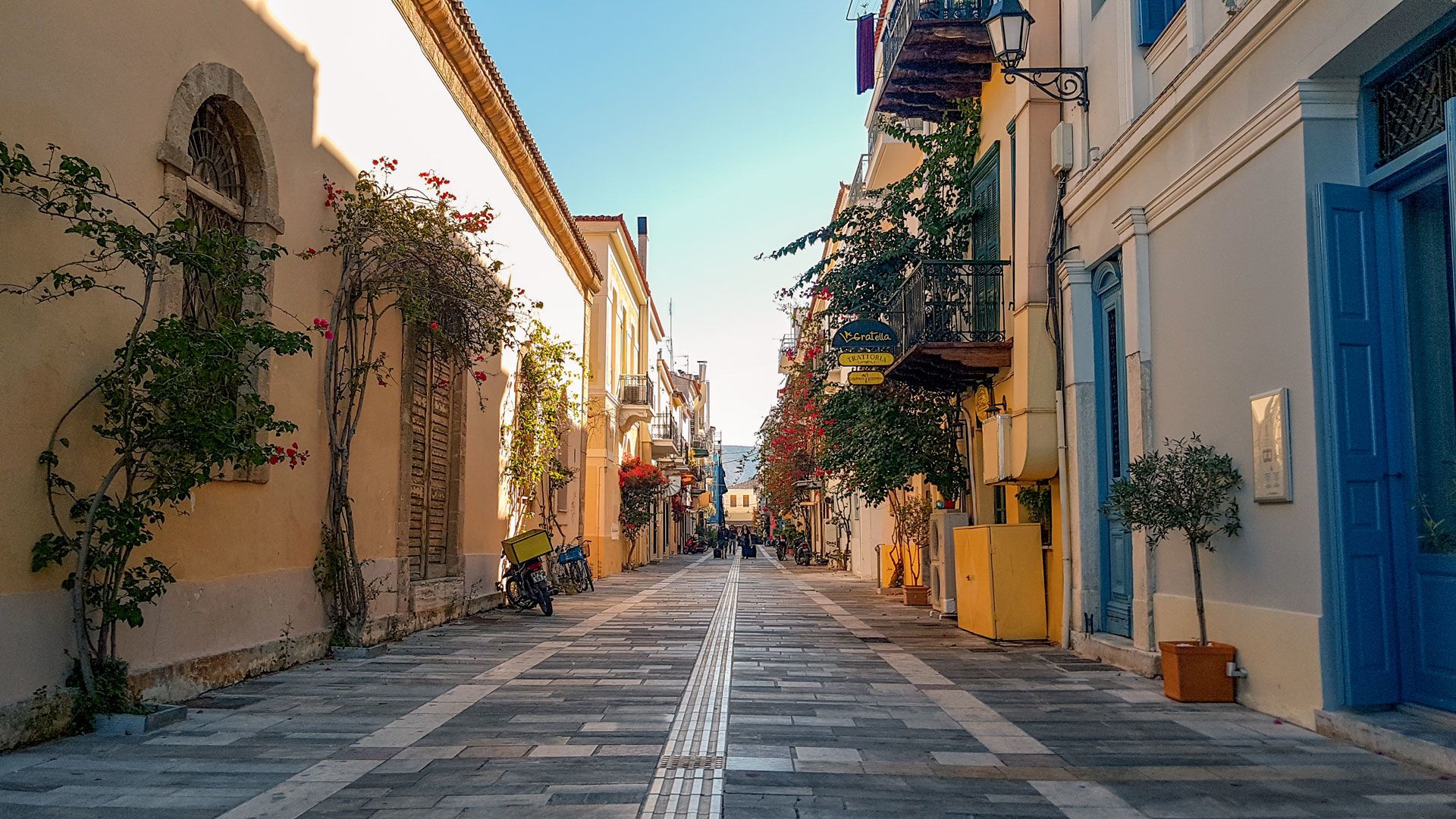
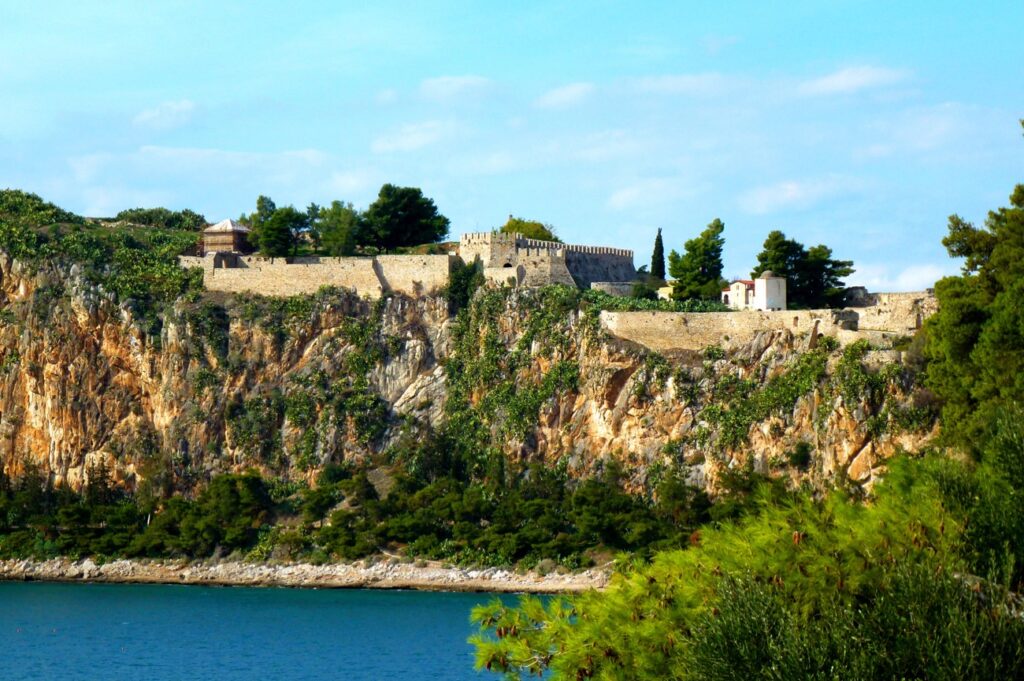
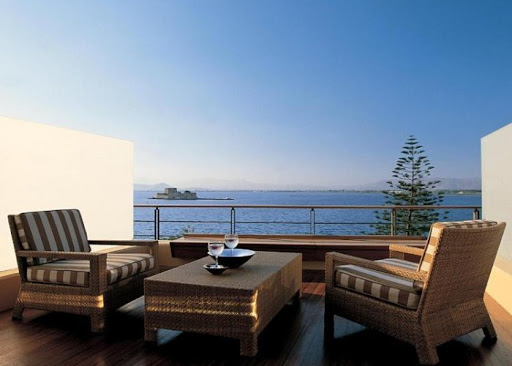
Set on a small port beneath the towering Palamidi fortress, it is filled with beautiful alleyways, neoclassical mansions and stunning Venetian houses. Located in the area of Argolis in the Peloponnese, Nafplio was the first capital of the newly born Greek state between 1823 and 1834. 

Here is our mini-guide for when visiting this oh-so-pretty destination!

Insights Greece - Guide to Nafplio, Greece's Most Romantic Town

Getting there

Nafplio is approximately 94 km far from Athens. You can reach the town either by car or by suburban buses (KTEL) departing regularly from Kifissos bus station.
When to Visit?

Nafplio truly is an all-year-round destination. With quite a few beaches, it can easily be on your list for a summer getaway, however we believe this charming town is ideal in spring and autumn, as the local taverns, restaurants, cafes, bars, museums, and archaeological sites can be enjoyed without the huge crowds and there’s perfect weather conditions. 

Museums and History

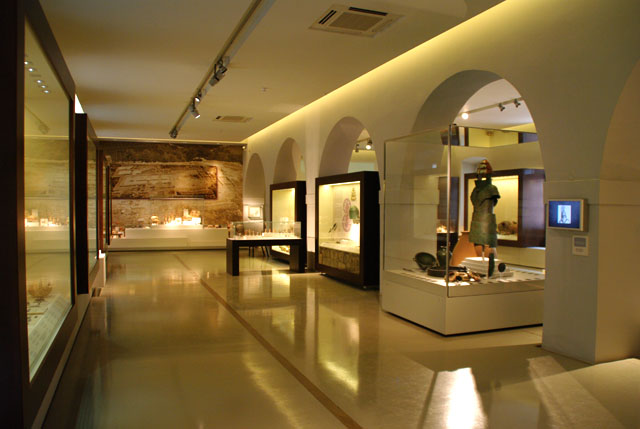
Nafplio is home to an Archaeological Museum housed in a Venetian building on Syntagma Square. The permanent exhibition features statues, jewellery, costumes, sculptures, ceramics and rare artefacts from the Neolithic Period.

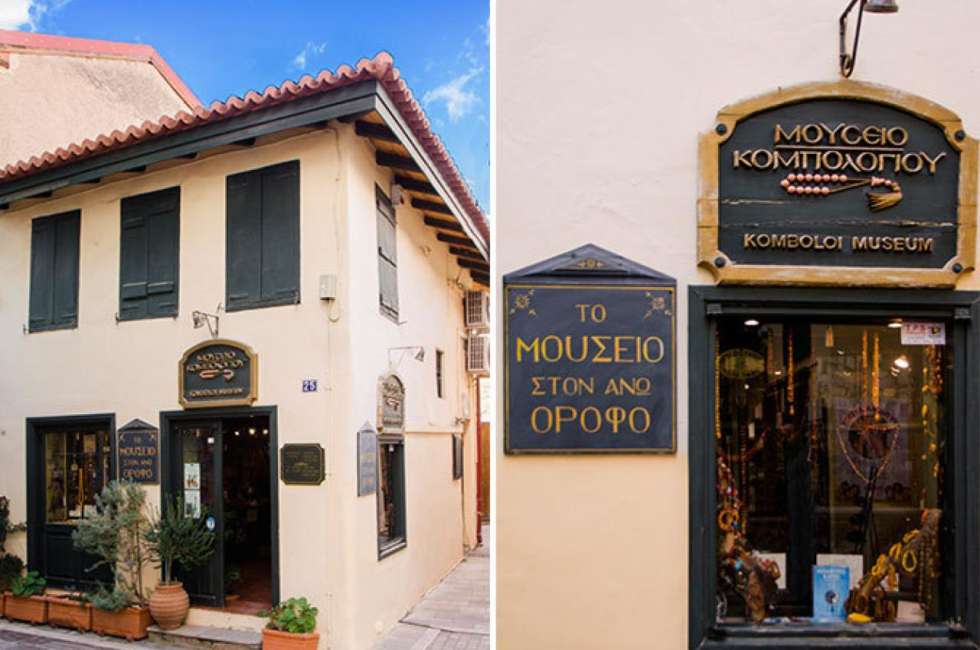
Make sure you also make your way to the Komboloi Museum, which opened in 1998 to showcase the history of Greece’s famous beads.

Nearby you will also find the first Greek Parliament, the War Museum, the Municipal Gallery, old Turkish Mosques, Trion Navarhon Square, and the Peloponnesian Folk Art Museum.

Located just one street before Syntagma Square at the center of the old town of Nafplio, is the church of Agios Spyridon. This church is known to every Greek because of an incident that sealed the fate of the New Greek State.

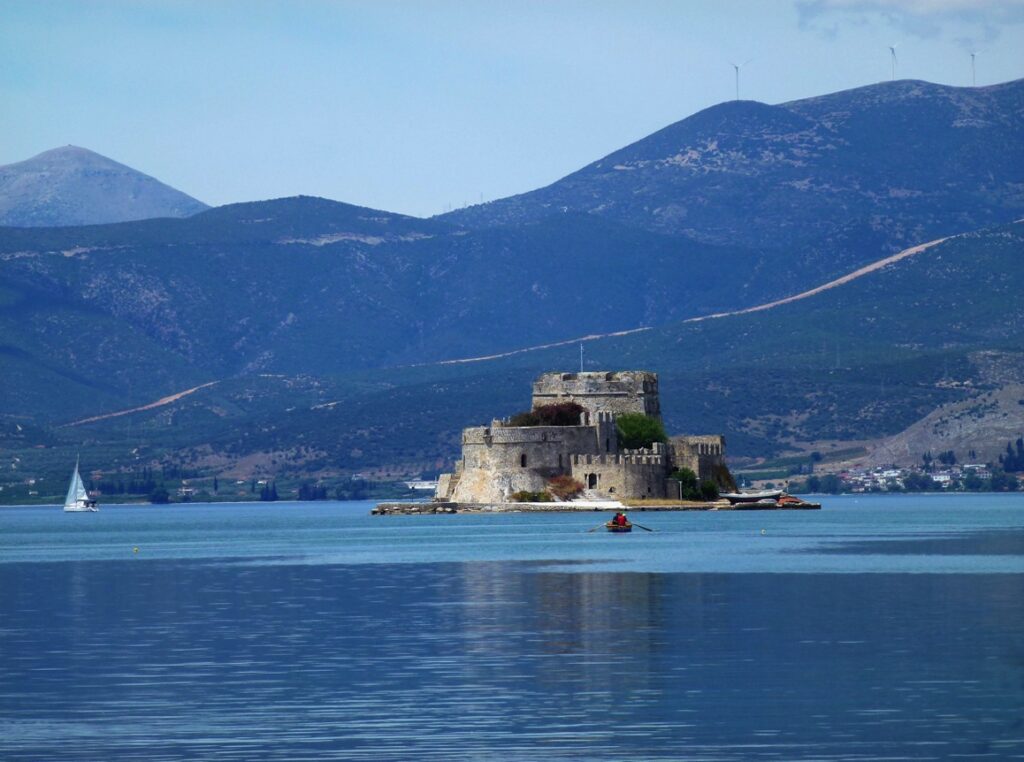
Also check out the Unesco sites: Tirintha, Mykines, Epidavros, and Mystras, and visit at least one of Nafplio’s three castles: Palamidi, Bourtzi, and Acronafplia.

Make sure you…

Bring some comfortable shoes, as this town is ideal for walking! Leisurely stroll around and enjoy the breathtaking beauty of the Old Town, with its bougainvillea-filled streets, hidden squares, and stunning neoclassical mansions.

And if you walk through the narrow alleyways, you will find an array of cafes and bars where you can sit down and enjoy a fine wine, throw back a beer, or sip on a cocktail. 

Where to stay…

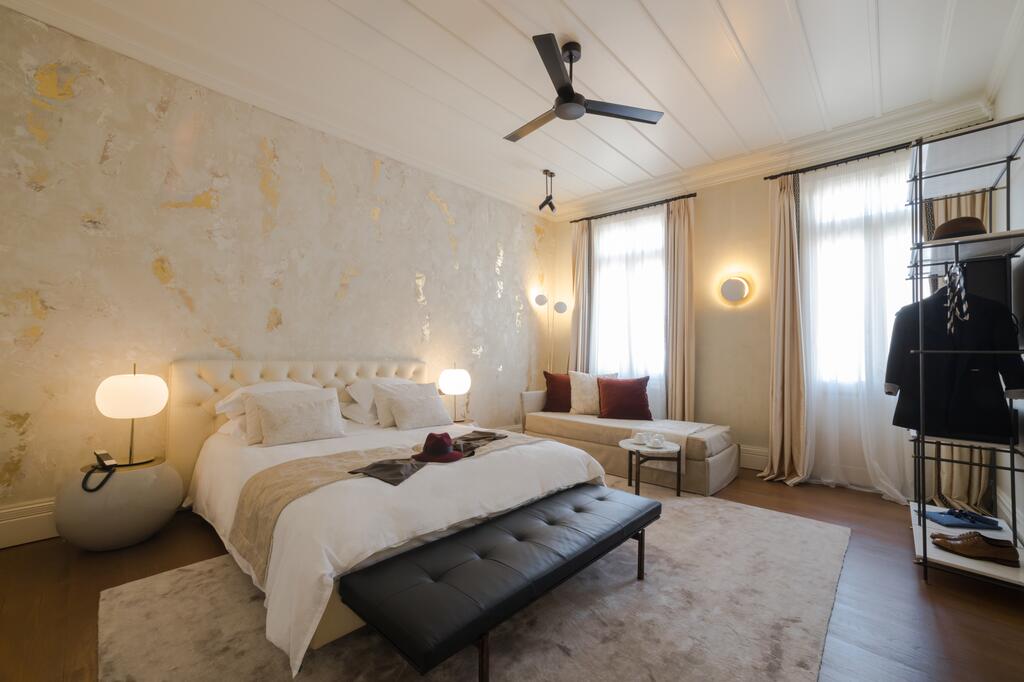
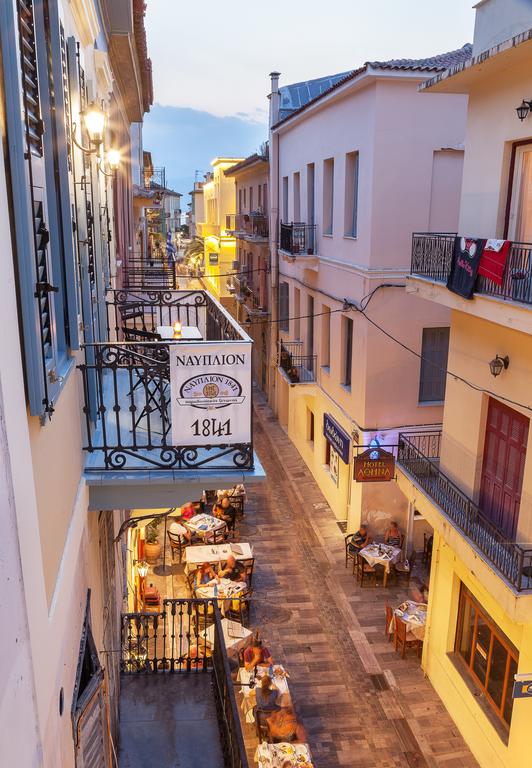
You are spoiled for choice with boutique accommodation, as there are a range of luxurious hotels, stunning mansions, traditional guesthouses, and lovely budget apartments- this picturesque town really caters to all. We recommend you check out: Nafplion 1841, Nafplia Palace Hotel & Villas, The Amphityron, Filoxenion Luxury rooms & Lofts, 3 Sixty Hotel & Suites, and Castellano Hotel Suites

To eat

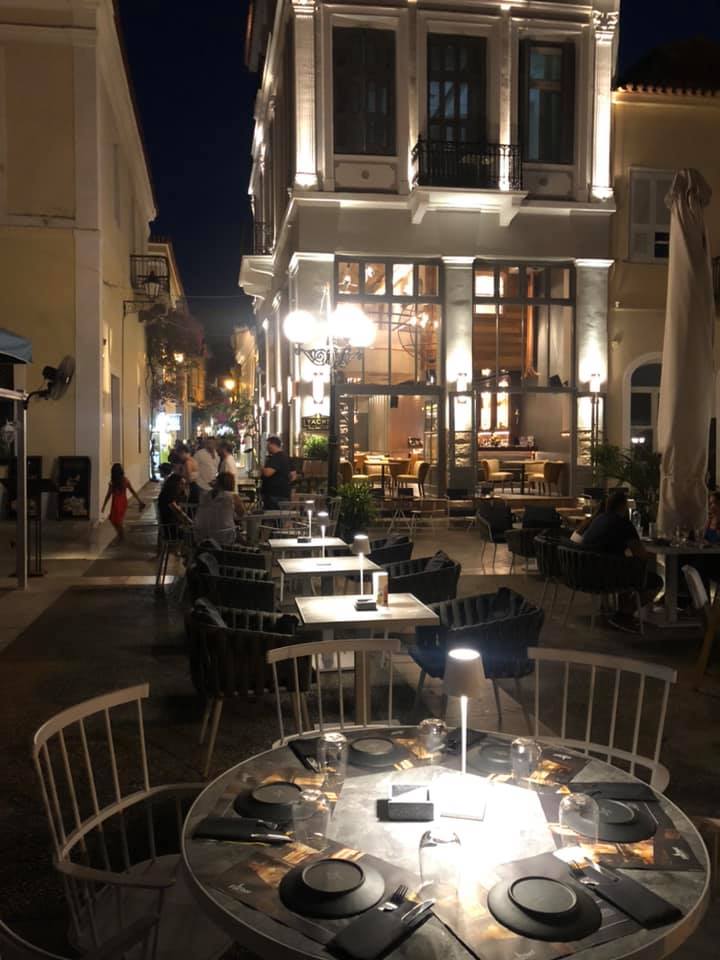
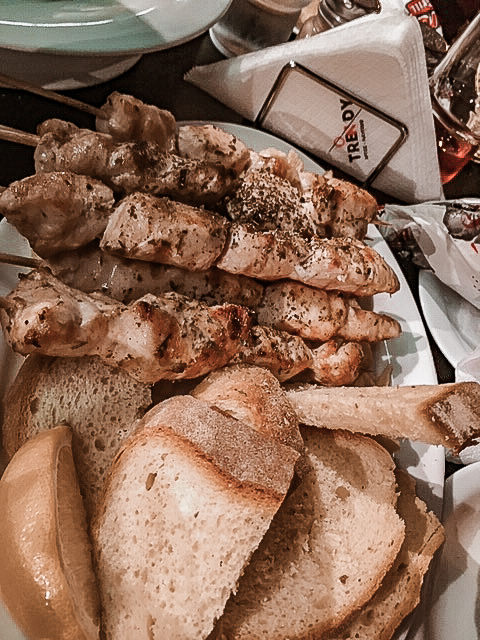
Nafplio has many traditional taverns that are ideal for those who love indulging in classic Greek dishes and some of our favourite eateries include: Karamalis, To Omorfo Tavernaki, Kavalaris Corner Mezedopoleoi, and Pidalio. Also make sure to check out: Taverna Old House, Zournal, and Taverna O Vasilis. For casual dining try Trendy Grill or Menta, Arapakos for seafood, and Scuola for pizza and pasta. 

Sweet treats

For some of the best desserts in town, we recommend Pergamonto, which serves traditional Loukoumades (Greek honey puff donuts). For gelato check out Antica Gelateria di Roma and Gelarto. And for a variety of Greek sweets head to Central Boulangerie Bakery

To drink

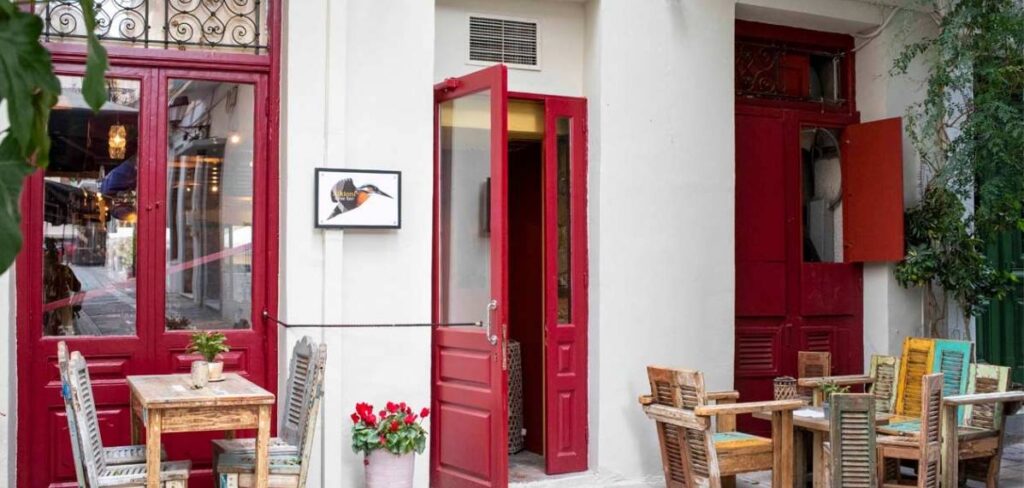
There’s a range of all-day cafes and bars where you can grab a great coffee or a luscious cocktail. When you’re in the mood for a drink, make your way to Kontogiorgos Café, Xenon Café, Arti, Teori Oldtown Bar, BluBlanc Beach Bar3 Sixty, Alkioni Wine Bar, Mediterraneo Wine & Deli, Sokaki Café, Teory, and Yacht.

Beaches

If you are here during the warmer months head to Arvanitia Beach, Karathona, Tolo, Kastraki, Banieres, Mili, Kiveri, and Neraki for a swim. 

Don’t leave until you…

Have an ancient Greek massage at Panta Rei.

Check out Karonis Distillery Exhibition and Shopestablished in 1869, the spirit producing company is one of the oldest in Greece. The current owner makes ouzo, tsipouro, liqueurs, and brandy with the same passion as his forefathers.

Savor a Nafplio food tour.

Go to the ‘Laiki’ (local markets) on Wednesday or Saturday.

Visit one of these three caves: Didima, Franchthi, and Kapsia

Deep Love for Greece Inspires Launch of New Olive Oil Blend

A Greek goddess with a deep love for all that Greece has to offer, a commitment to good health mind, body, and soul, and a yearning for wisdom chances upon the opportunity to bottle these elements into the ultimate elixir. The liquid gold universally recognised as pure extra virgin Greek olive oil.

Greek American Krystalan Chryssomallis has seen the world, pouring her marketing prowess and photography genius into the incomparable (we’re talking groundbreaking concerts at landmarks such as the Pyramids) tours of her father, legendary Greek musician, and composer, Yanni.

Insights Greece - Deep Love for Greece Inspires Launch of New Olive Oil Blend

Having searched the United States amidst a backdrop of widespread olive oil fraud, for pure, top quality extra virgin olive, it was serendipitous that Krystalan joined forces with an olive oil sommelier to create her own special blend, released last week. For the talented philanthropist who embodies kindness, optimism, philanthropy, and gratitude, it is fitting she labelled her blend Wise Life.

Krystalan spoke to us about her favourite places in Greece, the increasing need for wisdom and positivity in our lives, and paying homage to her ancestry in her special blend of liquid gold.

Interview by Gina Mamouzelos 

Tell us about your love affair with Greece?

I absolutely love Greece. Everything about it. The people, the air, the never-ending clear blue ocean, the olive trees, the singing birds, the food, the home-made wine, and all the special coves and surprises that you stumble upon as you wander around the cobblestone streets. The first time I visited Greece I was in university studying abroad in Spain and I was able to take several weeks to go and explore and enjoy. I remember my first experience very vividly… I felt a beautiful sense of peace. I felt at home. The energy there just seemed to match my own and I absolutely loved the people I came in contact with. Even though I didn’t grow up speaking Greek, I was able to communicate and connect with the locals in a way I’ve never experienced anywhere else. There is a big sense of love and inclusivity I experienced while on the islands and it remains one of my favorite places in the world.

Insights Greece - Deep Love for Greece Inspires Launch of New Olive Oil Blend

Favourite memory?

By far my time with my dad in our family home in Kalamata, Greece. Nothing beats waking up early in the morning and enjoying the most flavorful fresh-picked fruits, swimming in the ocean and finding the most fish, and enjoying our time together with nothing to do other than enjoy the deep blue. It is our special haven. Since we are constantly touring, working and on the go, Greece is where we do nothing else other than just “be.”

Favourite experience?

Greeks know how to have fun! There are so many that stand out, but one of my favourites was my time in Crete. I had just arrived and met some new friends who welcomed us to their home with open arms. Before I knew it, we were all up dancing and singing into the early hours of the morning. Nights turn into days and dancing is always part of the fun… which, if you know me, I’m always in for dancing.

Favourite place to stay?

There are so many beautiful places! Greece has such great hospitality, that nearly any place you go will be magical. The most incredible thing about Greece is that there is an experience for anything you are looking for. Each of the islands all have their own unique personality, cuisine, energy, and activities and there are so many of them that you can return to and have a different experience every time. If you want high energy fun, Mykonos remains the place to go. Paros has a beautiful unexplored calmness, and I’ve been interested in visiting Cana Ves Oia in Santorini for a more serene and peaceful time.

Favourite place to eat?

Insights Greece - Deep Love for Greece Inspires Launch of New Olive Oil Blend

One of the really exceptional things about Greece is that any corner you turn into has the most unbelievable food and wine. It’s always fresh, clean and the Mediterranean diet, to me, is among the best in the world. Nothing is overproduced and oftentimes, the owner made their own wine or picked their own veggies or fished what you are eating earlier that day. There is the cutest restaurant set right in the sand below my dad’s home in Kalamata that has the most amazing fish I’ve ever had.

Favourite beach?

I love the ocean and everything about it. You can’t go wrong anywhere you are in Greece. The water is crystal blue and clear and absolutely stunning. The beaches in Crete are quite spectacular. There are so many you can go to and visit while you are there. Preveli Beach is beautiful and unique in that Kourtaliotis River ends at the beach creating a delta that makes for a rare experience. That, coupled with the beautiful lush vegetation, palm trees and soft sand make for a beautiful landscape. It does get quite crowded, so it’s a great place for early mornings or later in the season. Milos is on my bucket list. They have a beautiful sun-bleached rock coastline set against the turquoise blue waters that I’ve been wanting to photograph!

Favourite spot to get your camera out?

Insights Greece - Deep Love for Greece Inspires Launch of New Olive Oil Blend

Greece has so many incredible locations to photograph. I hope to be able to return someday soon and really dive in and capture the beauty as I have seen and experienced it. The colors and vibrancy are what always catches my eye. My favourite experience shooting was hiking the trails in Kalamata with my family. The contrast of the trees and the cliffs with the sun setting over the ocean is one of my favorite things.

I would absolutely love to someday work alongside Greece and capture and share the beauty and magic that exists there. That is my next dream!

What do you love to cook?

Since I was travelling so much, I wasn’t cooking as much as I would like, but now, with the current situation and having time at home, I’ve really had the opportunity to bring cooking back into my life on a more consistent basis and I’m loving it! My favourite foods are healthy and simple. I believe that when you have organic fresh ingredients, you don’t need to do too much to them and allow their natural flavors to come through. One of my favourites is the traditional Greek salad! It’s so simple, yet the juices on the bottom mixed with the olive oil and Feta and dipped with some fresh homemade bread is just delicious!

How did your Wise Life collaboration come about?

Insights Greece - Deep Love for Greece Inspires Launch of New Olive Oil Blend

I absolutely love Greece and wanted to incorporate more of the things I love about it into my daily life, in a more meaningful way. It was a natural fit when I met Theo Stepan, the owner of a beautiful olive grove here in California, to create something that not only has a positive message, but also history going  back to our heritage in a way that we can share all the incredible benefits of “liquid gold.” From one Greek American woman to another, we knew we wanted to work together in some way and WISE LIFE comes out of that chance meeting. To me, being wise encompasses the ability to discern a moment in time and make a thoughtful decision. With all that is going on in our world, having wisdom in our homes is so important. Open communication and a willingness to listen and gain knowledge from one another, along with life experiences and understanding, provides the perfect combination to better understand one another and make wise decisions as we progress through life. My hope is that having a positive message and reinforcement of the powers of wisdom in your home in something you may use every day is a  reminder that together, we can live a healthy, happy, and wise life.

 Tell us about your delicious Wise Life olive oil?

Insights Greece - Deep Love for Greece Inspires Launch of New Olive Oil Blend

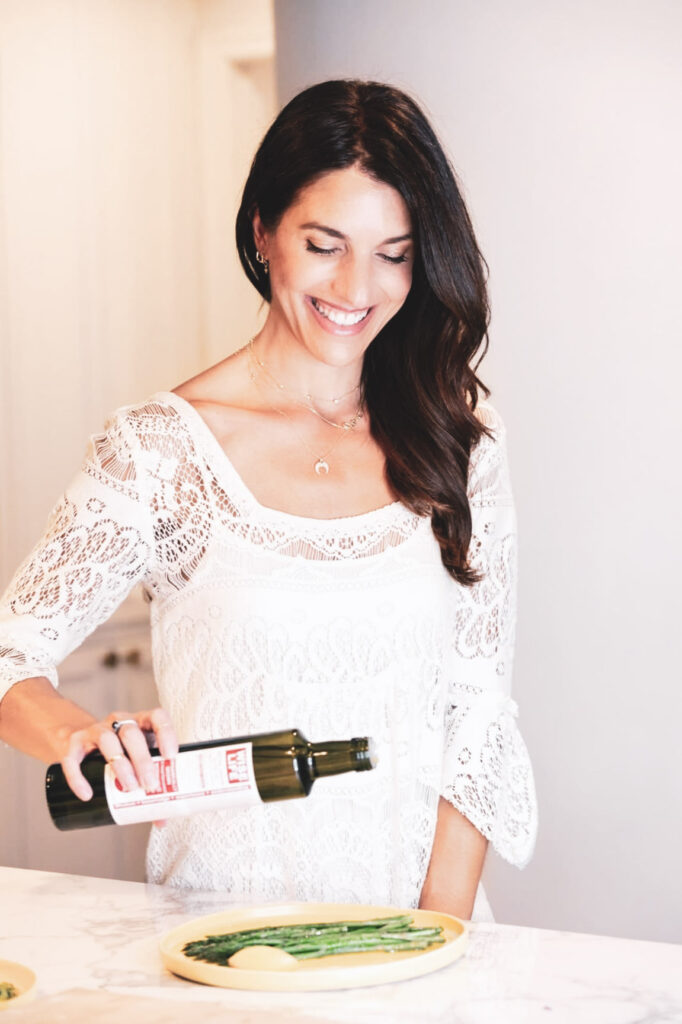
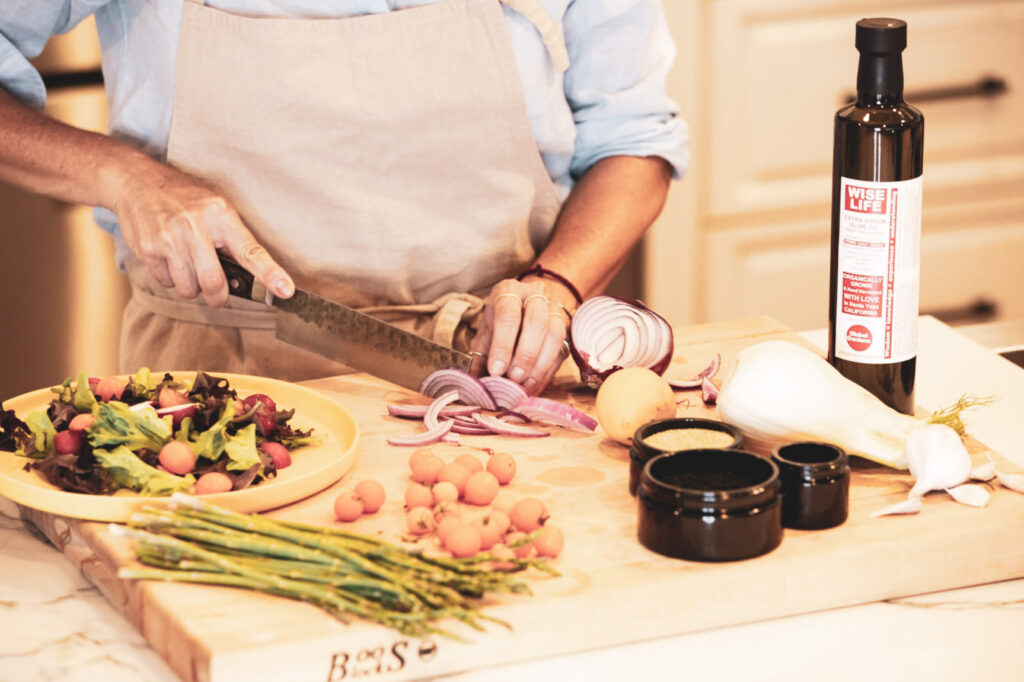
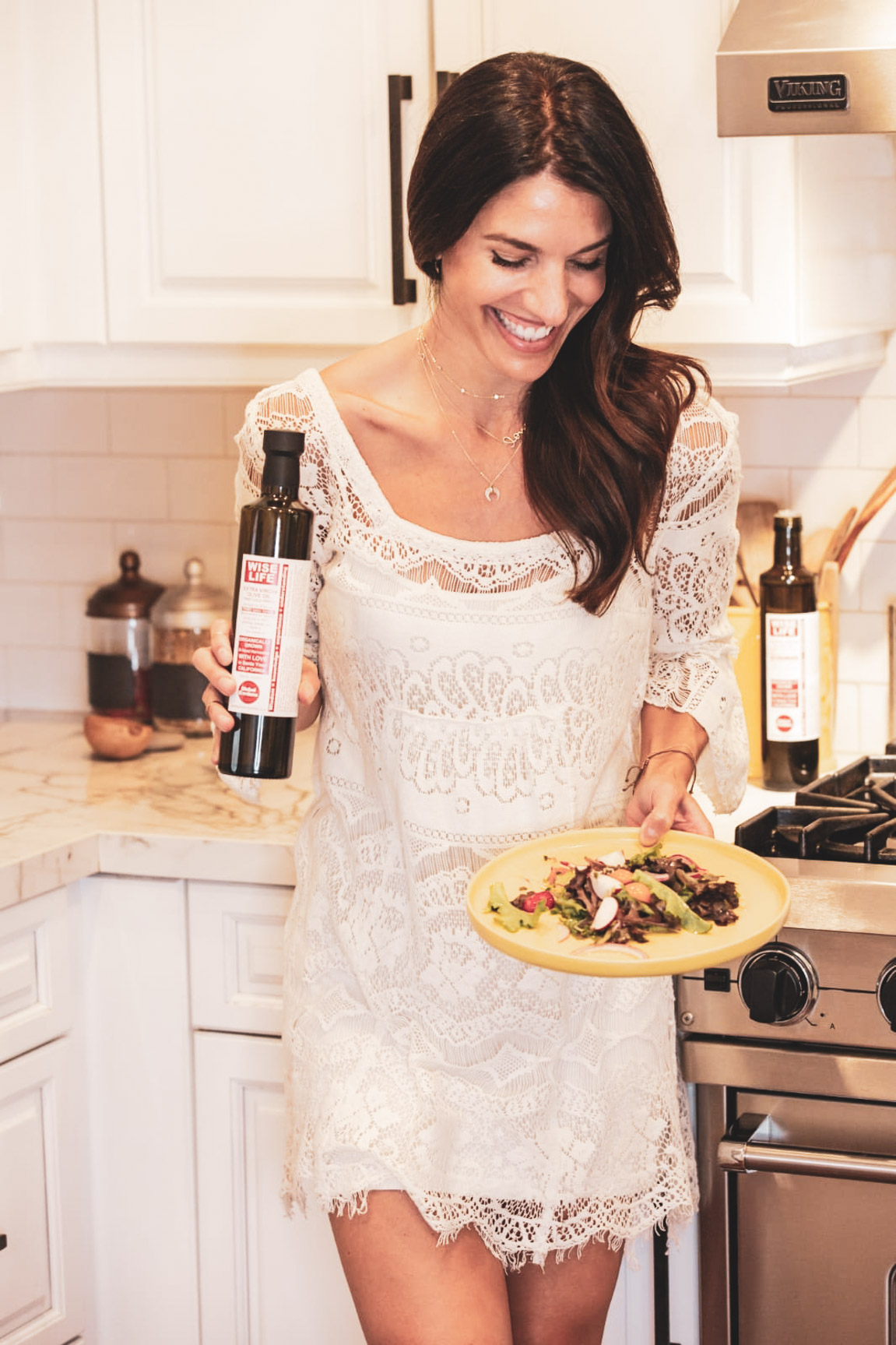
WISE LIFE is a limited edition first cold press run. It is organically grown, hand-harvested, guaranteed fresh, and made with love extra virgin olive oil. It comes in a beautiful 500ml black glass bottle that keeps the oil fresh and also just looks great in the kitchen. It will make for a beautiful gift come the holidays! Since it’s tricky getting around all of the fraudulent olive oil that’s in the market here in the US, I was thrilled to find a solution for my own kitchen. It had been years of searching and trying various olive oils that are here, but I was not able to find anything I was confident in and just loved. Creating this special blend with Global Gardens was my solution and I wanted to find a way to share it with others. It can be found at the Global Gardens.

How should people enjoy Wise Life?

I was looking to create something that could be used easily and on anything. I appreciate a great olive oil that allows the natural flavours to really stand out and that can make any dish enhanced. I love the kitchen and it’s important for me to find products that not only taste good but are great for you. Wise Life is just that and is perfect for drizzling on salads, sautés, frying, you name it. It’s quickly become my favourite olive oil in the kitchen. I should add, I also use it in my moisturizers! It’s fresh and pure so all of the health benefits olive oil has to offer are great for your skin too.

krystalan

Lavender Cove: Privacy, Tranquility and Natural Splendour

A collection of deluxe apartments and suites in the Corinthian seaside town of Korfos make for an idyllic year-round stay, just an hour’s distance from Athens! 

Korfos in Corinthia, is a destination that’s kept a bit of a secret by those who love it so dearly that they don’t want to see it ruined by tourism.

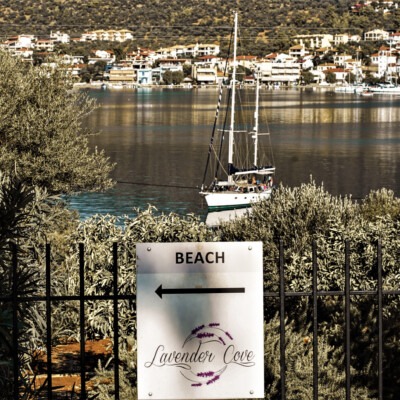
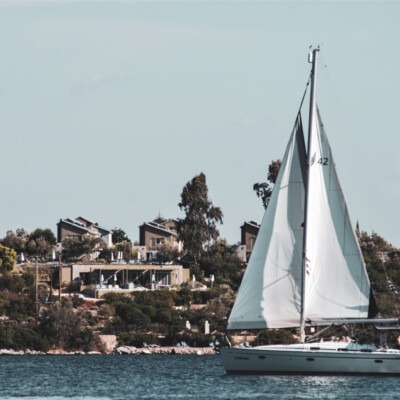
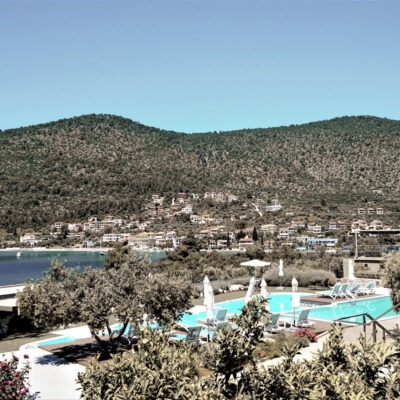
The tree-speckled shoreline is shielded from the wind, the central road is lined by rows of charmingly old fashioned tavernas and simple stores, above which rise a few tiers of picturesque houses on a verdant hill. All styles of boats bob in the waters, and sailboats and yachts are anchored at the marina. The amphitheatrically shaped fishing village is especially idyllic for those seeking refuge from the hustle and bustle of the city or more boisterous destinations. Only over an hour and a half from Athens, this is a wonderful destination for swimming in clean, lovely waters and sunbathing on pebble and sand beaches, eat fresh fish, trek along the lush hills or just savour a serene holiday.

Location

Korfos is in southeastern Corinthia in the Peloponnese, around 35km from the Corinth Canal. On your way down along winding roads take in the splendour of the blue sea and verdant hills that surround it. Just a short drive from Athens as well as being near Spetses and Poros, it can be a destination in itself, or a great base for lovely day trips by car or boat. It’s also a wonderful place for snorkeling, hiking, sailing, cycling, SUP and as of recently since a school opened up, surfing.

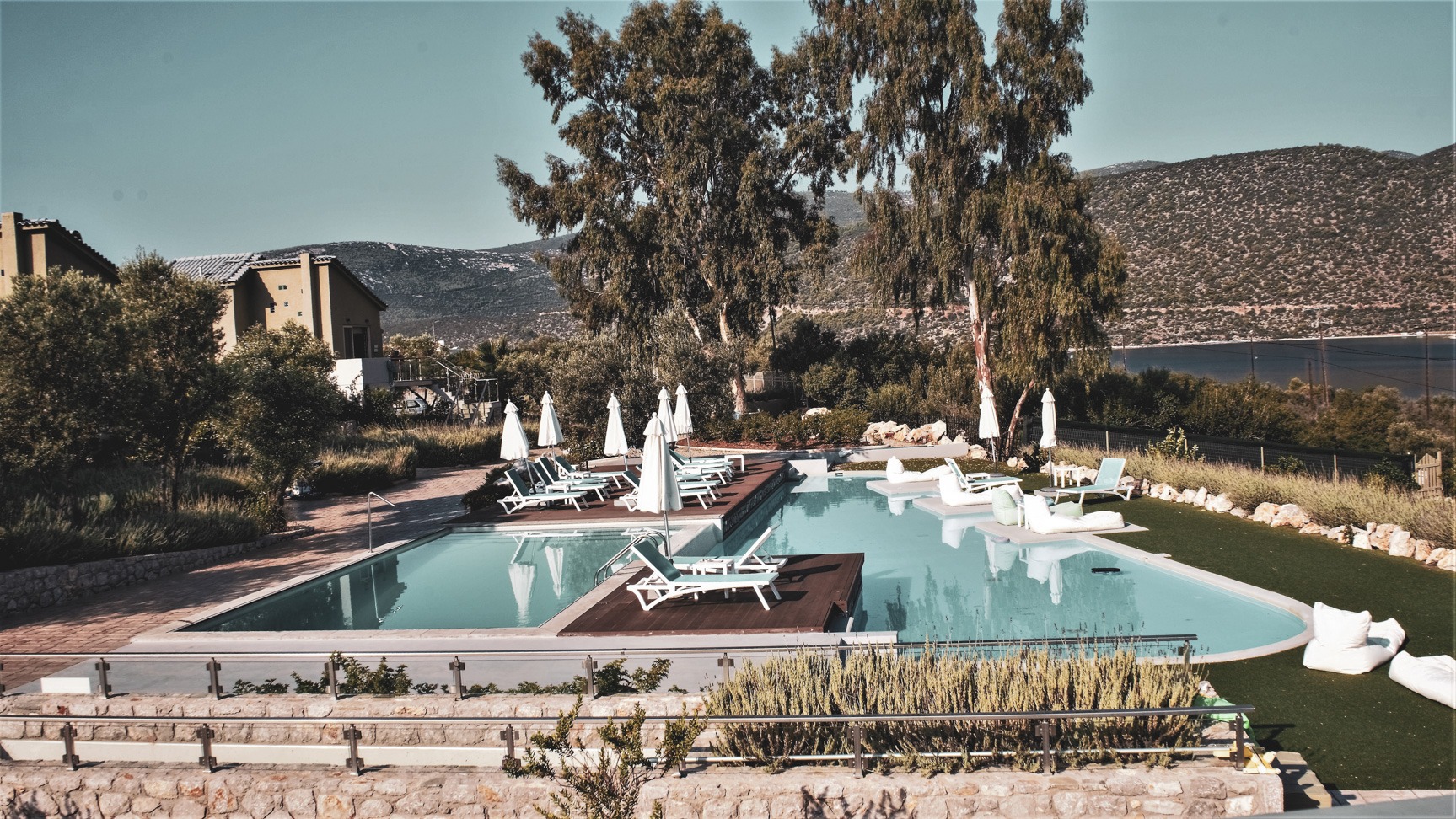
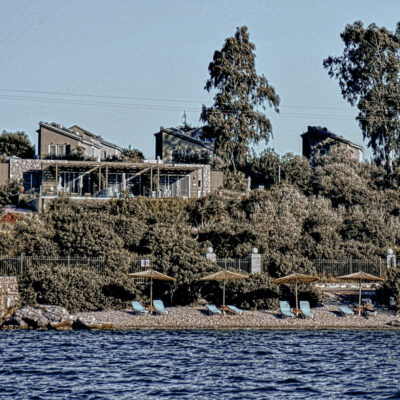
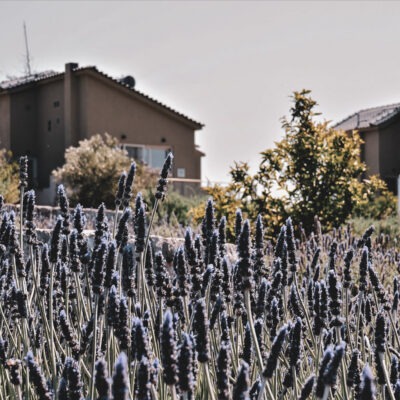
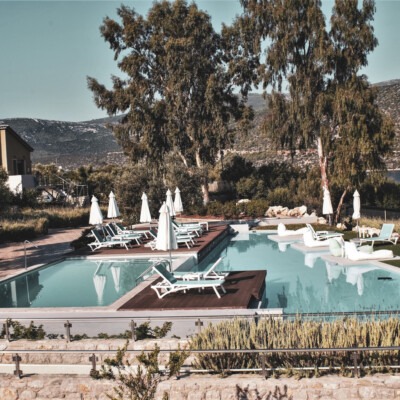
Built in 2017, Lavender Cove is a collection of beautifully built – and organically, artfully-integrated in the landscape – luxurious accommodations just minutes from a small, pretty beach. From apartments that face the garden or pool to larger sea-facing suites with a private pool, the accommodations provide facilities like a kitchenette, two large shared swimming pools surrounded by poufs, sun loungers, and umbrellas, and a sprawling lavender garden.

Services

The highly professional, familial, and very helpful Lavender Cove team expertly advises guests on everything from where to dine, hike or swim in the town to other activities in the vicinity. Visit monasteries, archaeological sites, nearby villages, isolated beaches with splendid waters, and beautiful trails. Lavender Cove also rents out bicycles free of charge and can arrange for you to have a yoga or other lesson upon demand.

Style & Character

Immediately upon arriving at Lavender Cove we enjoyed being immersed in the silence, beauty and allure of the surrounding nature. The lavender-filled garden (inspired by the lavender fields of France), includes many other indigenous aromatic herbs to discover, like rose geranium, oregano, thyme, rosemary and lemon verbena. The vibe is laid back, tranquil, quiet and restorative, and it’s particularly comforting to be staying in a beautiful place by the sea with no other buildings or infrastructure nearby.

Rooms

Lavender Cove is made up of five luxury villas that are separated into 10 apartments, and three luxury suites set on the sea-facing hillside of Korfos. The modern, clean and lavish accommodations are elegantly decorated in a soothing and uplifting style, with hints of local tradition and references to the surrounding nature. The minimalist decor combines the neutral tones of the floors, walls and furniture with pops of colours like blues, whites, yellows and greens, depending on the theme of each residence. The bathrooms include complimentary toiletries by Greek organic brand Korres. Free WiFi is offered to all visitors. The accommodations are held in high esteem by their foreign and local visitors, with ratings such as 9.2 on booking.com, 9.6 on hotel.com and 4.5 out of five on Tripadvisor.

Food and drinks

Guests are offered a feast-like breakfast, delivered by staff to beach accommodation between 8:30-10:30. You’ll receive baskets full of delicious foods and drinks, from warm local pastries to eggs, cheese, condiments, bread, milk, fresh juice, fruit, and more. Throughout the day guests can order a snack or light meal or drinks in-room or
stroll/drive to any nearby taverna for super-fresh fish or a grocery store to shop for foods that can be cooked in the private, fully-equipped kitchenette. Korfos has two seaside, casual bar-clubs but is mostly on the quiet side at night. Most of the tavernas here serve good food, but we especially liked Valera, known for its excellent fresh fish as well as quality grilled meats and many homemade sides (visit here at sunset and book a table on the beach for the best experience) and fish tavernas Celana and To Delfini. For drinks head to Exo All Day, where you can spend the entire day swimming too as it provides sun loungers and umbrellas for rent. For desserts like waffles and ice cream go to Psyllos on the coast.

Shop

Korfos has one modern pharmacy selling all the essential medications, supplements, and cosmetics, two mini-markets, a few shops like Kapouzi and Eleven selling beachwear, beach accessories (from masks and flippers to towels and umbrellas), and Souvenir Korfos where you’ll find stylish clothes and accessories like swimsuits, silk scarves, jewellery, and hats as well as tasteful home décor items.

Price range 

Between 150 and 350 € in the high season, depending on the accommodation.

Ideal for…

Families (the larger suites can be given joint access), couples, or a group of friends in the summer months. Retirees during spring or autumn. Writers, hikers, painters, or workshop organisers during the cooler months.

A Quarantine Diary For All of Us

Photographer Nikos Kokkas turned lockdown into a daily project during which he reflected about life, laughed at himself – and the world, fantasised and rebelled in self-portraits soon to be exhibited in Athens.

We all went through it, and some of us still are. Those endless days, weeks, months, nanoseconds of lockdown. That sense of warped ‘reality’ that veered us between fluctuating states; relaxed and weirdly soothed by a sudden abundance of Me-Time; Zen-spiritual ‘We Are All Oneness’; post-Apocalyptical horror, seismic uncertainty, paralysing boredom; harshly loneliness. Some of us jumped into online courses or jogged out into the streets to keep our brains or bodies active, others took up fantasizing of New Life beginnings or slipped into Alcoholism. Others still got really creative and productive, forging forward with revived verve and nerve.

Starring in the latter category is photographer Nikos Kokkas. He was born in Germany, with a childhood interlude in Thessaloniki, before returning to Germany in his teens. Nikos bought his first SLR camera, a Minolta X-700 at the age of 16 and started exploring the endless aspects of light, in colour and B&W ever sinceHe travelled around Europe before making Greece his base in 1995. Yet even upon ‘settling here, he didn’t keep very still, as his work travelled him nationwide but also far and wide across the globe, freelancing for major Greek and foreign projects. In recent years, he’s discovered an interest on portraiture. Which takes us to his recent project that has made an impact on many.

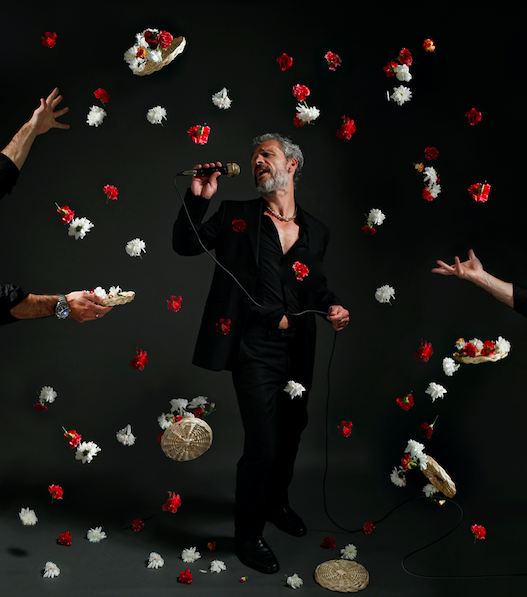
During the three months of lockdown in Greece between March and May 2020, Nikos started a photographic Quarantine Diary. As his friend on Facebook, his daily images brought me – and thousands of others – a sense of surprise and amusement at his creativity, artistry and life-force (read = discipline), with an underlying sense of thought-provoking introspection. Here, I interview him about how the process began and evolved for him; a process that the public will soon be able to see in at his first solo exhibition presented at “Agathi” gallery  at the end of October 2020.

What was your first reaction to lockdown?

By the time I realised that a kind of quarantine would be happening indefinitely, I felt a huge wave of discomfort; but it didn’t last long. I started to think of it as a global matter, realising that many people had it a lot harder than me. And to be honest, I kind of liked it a little, being part of such a historical incident.

Insights Greece - A Quarantine Diary For All of Us
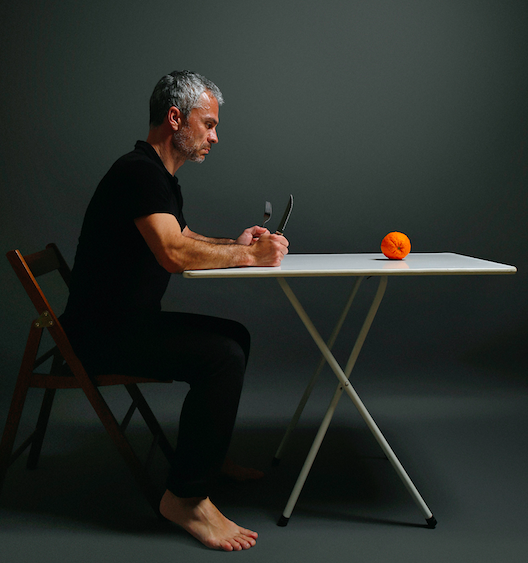
Isolation III – Dessert – Day 9

How / when did the idea of creating a ‘Quarantine Diary’ actually strike you?

I’d moved to my new home in Piraeus just a few months prior to this period and had managed to set up a small photo studio. So I thought, having almost nothing to do the whole day, why not start a story, starring the only person I had in my apartment? It started out as a communication game with the other people being in the same state, via social media. Actually, the first photograph of expressing the feeling of that day, was on March 16.

How did the project unravel?

Every single day I woke up at around 8 am. It was crucial to me to keep a routine, a schedule, a “normality”, to keep my mind and my body in shape. Until around 1 pm, after listening to the news, having communicated with friends, my parents, having read articles from around the world, a certain mood and certain thoughts were formed in my mind.

Was I feeling insecurity? Boredom? Was I angry about something? Was I missing something? Was I thinking of an unfulfilled “dream” (like being a tennis player for example)? Was I feeling lonely a bit more than other days?

I thought about how I could best express that mood in a picture. I immediately tapped into a sense of self-deprecation, which I think comes across quite obviously, and some theatricality by creating these pictures. I was thinking that I might touch a small chord of everyone who was in the same state as me. It turns out that Ι actually did.

Did this process bring out new qualities out in you for the first time, and if so, were you surprised?

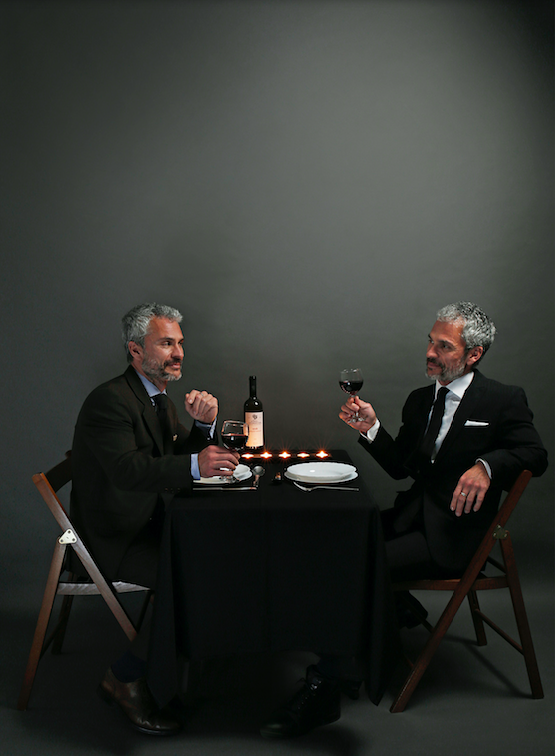
I really don’t take things very seriously, not more than I should, I mean. I see life as a great playground where I don’t make the rules. I tried to be “all of us” with these characters that I “created”. The “Last Supper” photo, where 13 characters meet at the same table, was not a conversation with blasphemy, quite the opposite. I like to think that we were all invited to that table.

How important was this lockdown diary for you as an artistic expression?

As a commercial photographer, earning your living from photography, your goal is to impress potential clients. That’s inevitable. As an art, as an expressive photographer, I try to photograph scenes, feelings and images according to my thoughts and creative state at the moment I shoot. Photography is an art. Expressing thoughts and feelings through it is its purpose, it is the tool not to need to use words.

Are you working on any other projects you’d like to share with us?

At the moment I’m expecting the publication of two different books that I worked on, in the past 18 months.

What have your travels around Greece offered you most?

I like discovering people’s stories. I don’t look for the perfect photograph or the most beautiful scenery anymore. I like to be near people, capturing their everyday living, their wishes, joy and grief, their optimism, creativity and fun!  And I love to photograph food, kitchens, cooks, farmers, wineries…

Everything that has to do with a real, peaceful life.

Follow Nikos Kokkas on Instagram

Visit his website: nikoskokkas